
EXCERPT: Instructional Coaching & Its Role in Career Development for CTE Teachers

What is an instructional coach?

Quality teacher professional development is essential to the outcome of student achievement. In their careers, teachers must be challenged with new ideas in order to foster a classroom culture of student engagement. The instructional coach is an embedded professional development practitioner who helps teachers attain these lofty educational outcomes (Blackman, 2010).

Instructional coaches share the responsibility of teacher leadership with administrators in the district. Typically, however, coaches are not teacher supervisors and serve a non-evaluative function (Hanover Research, 2015). Coaches employ their pedagogical expertise and the relationships built with teachers to influence change.

CTE and Instructional Coaching

Career and technical education teachers face unique challenges in the secondary educational setting, where many arrive from industry following a change in careeer. Though they may be experts in their subject matter, they often have minimal training in pedagogy (Foster, Hornberger, >amp; Watkins, 2017). New CTE teachers benefit from mentorship and coaching.

New CTE teachers must learn how to instruct in both classroom and lab environments. Training in classroom safety protocols is a priority. They must learn how to implement classroom management and best practices for engaging students. New CTE teachers also will benefit from understanding, more generally, the field of education. They need to be informed about work expectations, academic achievement, special populations and school policy.

In a large school district, as CTE administrators are busy with the day-to-day business of running the department, important communications with teachers can be lost. Instructional coaches provide mentorship to teachers and they also listen to the teachers’ aspirations and concerns. As a result, through listening, the CTE instructional coach can counsel the teacher on their goals.

Monica Amyett is a CTE instructional coach with Fort Worth Independent School District. Email her.

ACTE members can read the full article, “Instructional Coaching >amp; Its Role in Career Development for CTE Teachers,” in the May issue of Techniques. Not a member? Join! ACTE is the largest national education association dedicated to the advancement of education that prepares youth and adults for successful careers.
REFERENCES
Blackman, A. (2010). Coaching as a leadership development tool for teachers. Professional Development in Education (36)3, 421–441.
Foster, J., Hornberger, C., >amp; Watkins, D. (2017). CTE administrative leadership: 10 things to know in your first year. Alexandria, VA: Association for Career and Technical Education.
Hanover Research. (2015). Best practices in instructional coaching. Arlington, VA: Hanover Research.

Cybersecurity: It’s Everyone’s Responsibility!

With so many things connected to the internet, we all need to be aware of the dangers. More and more devices are connected to the internet all the time, which means more entry points and vulnerabilities. To secure the many “internet of things” (IoT) connected devices is a major cybersecurity challenge. A cyberattack can take down an entire organization. In fact, it can have a huge impact nationwide.
On a more personal level, even refrigerators can be hacked and used as a gateway into the network. If your smart watch is hacked, the hacker now knows your schedule for that day and when your home may be vulnerable. In one instance, an internet-connected fish tank was the entry point that led to a cyberattack.

“For careless operators, an IoT-connected device could lead to breaches bigger and more invasive than we’ve ever seen.” –Naresh Persaud, senior director of security at CA Technologies

The IT security classes offered at West-MEC in Phoenix, Arizona, provide students with an opportunity to learn how to secure computer networks and manage risk. Students who are enrolled in this career and technical education program learn ethical hacking defense, troubleshooting and how to mitigate security risks.

This year Bradley Whitaker, one of West-MEC’s IT Security instructors, hosted an event to help bring awareness to the public about potential vulnerabilities and how to avoid becoming a victim of a cybersecurity attack.

After The Evening of Cybersecurity event, Anthony Aranda, an IT security student, shared his thoughts on the event and why it mattered.

  1. Can you tell me more about The Evening of Cybersecurity?
    The Evening of Cybersecurity included a four-hour presentation on many topics that the IT security students learn during their time in this program. The event allowed students to educate the general public about what we are learning in our program at West-MEC, and on topics that can help the general public. Mr. Whitaker provided valuable support, though the event was planned and run by SkillsUSA students and those enrolled in the IT security class.
  2. How did The Evening of Cyber Security get its start?
    The Evening of Cyber Security started as an idea to get ourselves out there and let the public understand exactly what our program is and what it is about. This is the first year I have taken place in this event, but this is the second year that we have held this event.
  3. What were some highlights from this year’s event?
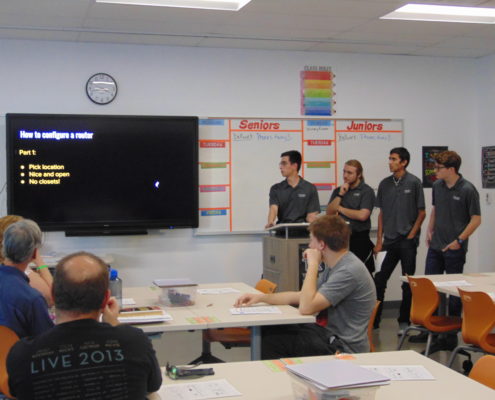
    The event began with a guest speaker, John McMillin, who worked in cyber defense in the U.S. Army. He talked about protecting our critical infrastructure and of its importance for the future. From there the students led the crowd to each student presentation where we discussed topics such as the anatomy of a computer, physical computer maintenance, live hacking/CTF, basic network configuration, staying safe online, OS optimization and maintenance, and cyber warfare and cyberattacks.
  4. What sparked your interest in cybersecurity?
    Personally, what sparked my interest in cybersecurity is the whole concept of it all. I love the idea of helping protect people while also preventing others from doing things they shouldn’t be doing. Cybersecurity is a very technical topic but it is also very interesting and can be really fun.
  5. Do you plan to pursue a career in cybersecurity?
    I would love to pursue a career in cybersecurity. Not only is the entire field very interesting and opens a lot of opportunities, the pay is also very good.
  6. What is your biggest takeaway from being enrolled in this program and how will this class contribute to future successes in your life?
    I considered myself knowledgeable with computers before but, as soon as I started at West-MEC, I learned so much more information. I have learned how to build, take care of, run, and troubleshoot computers with many Windows operating systems. This class will definitely contribute to my life as I have already earned my first industry certification and the year isn’t even over.

Rachael Mann speaks about the future of work and how educators can equip students for projected changes in the world around us. She is the director of professional development for West-MEC in Phoenix, Arizona, and coauthor of The Martians in Your Classroom. Contact Rachael to learn how you can create future-ready learning spaces in career and technical education.

Interested in learning more about a career in cybersecurity? Check out a CTE program near you!

Next Tech Showcase Highlights Student Achievement

The second annual Next Tech Student Showcase took place on Saturday, May 4 at the Carrboro
Century Center, in Carrboro, North Carolina. More than 150 community members were guided by Chapel Hill-Carrboro City Schools (CHCCS) students through the use of various tech tools including virtual reality (VR), Spheros, MakeWonder coding robots, Google Cardboards, 360 media, 2D games, MergeCube AR, and more.

The event provides CHCCS students an opportunity to showcase their work in tech fields as well as connect with businesses and community members. Student groups involved with the event included:

  • Chapel Hill High School (CHHS) FemSTEM (VR and Sphero leads)
  • CHHS Game Art Design (VR and 2D game content creation)
  • CHHS Tiger Tech Squad VR Team (equipment setup, tear down, and tech support
    throughout the event)
  • Smith Middle School AVID (coding and robotics showcase)

Additional booths included:

  • CHCCS Career and Technical Education (CTE)
  • CHHS Academy of Information Technology (AOIT)
  • Lenovo
  • Town of Chapel Hill Open Data Project
  • UNC Carolina Center for Educational Excellence

Sponsors of this year’s event were CHCCS CTE, Town of Carrboro, Town of Chapel Hill, Lenovo, and UNC CCEE. The Town of Carrboro provided the facilities, logistics and technical infrastructure needed to run the event. Beatrix Hutton organized the UNC CCEE booth, while Cameron Williams offered Lenovo Daydream sessions at the Lenovo booth. The CHCCS staff members that provided guidance to their respective student groups were Garrison Reid (Game Art Design/ Game Development), Jennifer Walker (FemSTEM, Tiger Tech VR Team), and Eric Zeigler (Smith Middle AVID). Additional support was provided by Darren Bell and Andy Vogel.

Do you have news?

Member Connected News is a new regular column on PAGES, a Techniques blog. Here is where we highlight the buzz about career and technical education. If you have something (program news, event news, award news or a note of appreciation) to share, we want to hear about it. Fill out the form and you might be featured next.

Family, Career and Community Leaders of America Give Back

During the 2018–19 school year, The Twiggs County Comprehensive Middle High School partnered with The Fort Valley State University and its Extension Agent Terolyn Chaney to feed the community and conduct resume writing workshops.
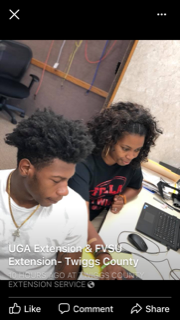
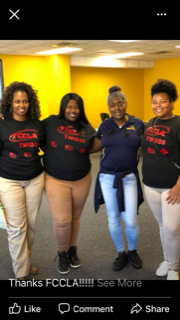
The FCCLA chapter and its advisor, TaQuila Thomas, and Chaney conducted several workshops throughout the year — teaching employment skills, polishing resumes, creating cover letters and doling out food to Twiggs County’s citizens.

These efforts were part of the initiative spearheaded by the FCCLA chapter whose focus is on “Family, Community and Self-love.” They look forward to helping Twiggs County again and extending a hand to other counties also.

Do you have news?

Member Connected News is a new regular column on PAGES, a Techniques blog. Here is where we highlight the buzz about career and technical education. If you have something (program news, event news, award news or a note of appreciation) to share, we want to hear about it. Fill out the form and you might be featured next.

Teaching Strategy: Build Vocabulary with Jenga

In a given school year, CTE students are challenged to learn more than 200 technical terms. Learning these terms, however, is only the beginning.

The art of teaching vocabulary lies in engaging students in conversations around technical vocabulary terms without them even realizing it. If you announce, “We are going to work on vocabulary terms for the next 30 minutes,” you will hear students sigh. It’s not their favorite activity. Knowing this, teachers can design engaging activities and games.

Gen Z learners prefer lessons that are experiential, participatory, image-rich and connected (EPIC). We know that most students want to learn; most want to perform well on tests. However, that does not mean you can create enthusiasm toward practicing and learning simply by stating it. CTE teachers must foster environments in which students want to say the terms, and willingly work with peers to build connections.

Why Tapping the Affective Domain is Important

Think back to some of your own high school learning. What are the first images to come to mind? I would guess these memories involved sensory learning or positive emotions, which trigger the release of dopamine. It is this dopamine surge that creates, in us, a desire to continue. It serves as our motivation.

As students engage in a round of Jenga, you will hear laughter. People are smiling and enjoying the challenge to recall the terms.

Explained below are two different versions of our game. I would highly encourage you to be creative and let students modify as they play new rounds.

The Strategy in Action

How long will it take?

20–30 minutes, depending upon how long you want students to play

What’s the gist?

This is best used as a review tool. It is an excellent tool for refreshing older terms students may not have used in a few months — tapping their neural pathways of memory.

How It Works

Object of the game: Winner is the player with the most points when the tower tumbles.

Version 1

Our focus is on making connections with the term in context.

  1. Someone volunteers to be the scorekeeper.
  2. Youngest player starts the game by removing a peg. Player reads the terms (two per) and then gives a scenario with one or both of the terms used.
  3. The other players at the table acknowledge if it is correct or not.
  4. If the player is correct, a point is given. If the player is not correct, the player to their left can score by explaining the term.
  5. The game repeats until the tower falls.

Version 2

Our focus is on asking questions.

  1. Someone volunteers to be the scorekeeper.
  2. Youngest player starts the game by removing a peg. Player reads the term (two per) and then creates a question to ask the player to their left.
  3. If the player answers the question correctly, a point is given. If the player is not correct, the player to their left can score by explaining the term.
  4. The game repeats until the tower falls.

Final Thoughts

Frequent use of formative assessments is the best way to gauge where students have gaps in their knowledge and understanding. However, with 20 or more students in a class, this can become challenging. By using games like Jenga with students, teachers become facilitators. Listen closely to a couple rounds of Jenga play and you will develop a good grip on where knowledge gaps lie. It is a win-win in the classroom, when learning and practice meet laughter and engagement.

Sandra Adams is a teacher and instructional coach with the Career Academy, Fort Wayne Community Schools. She co-wrote the ACTE-supported book But I’m NOT a Reading Teacher!: Literacy Strategies for Career and Technical Educators with Gwendolyn Leininger. Contact her to learn how you can implement theses certification test prep and other innovative teaching strategies in your CTE classroom.

Delaware Area Career Center Student Thinks Big

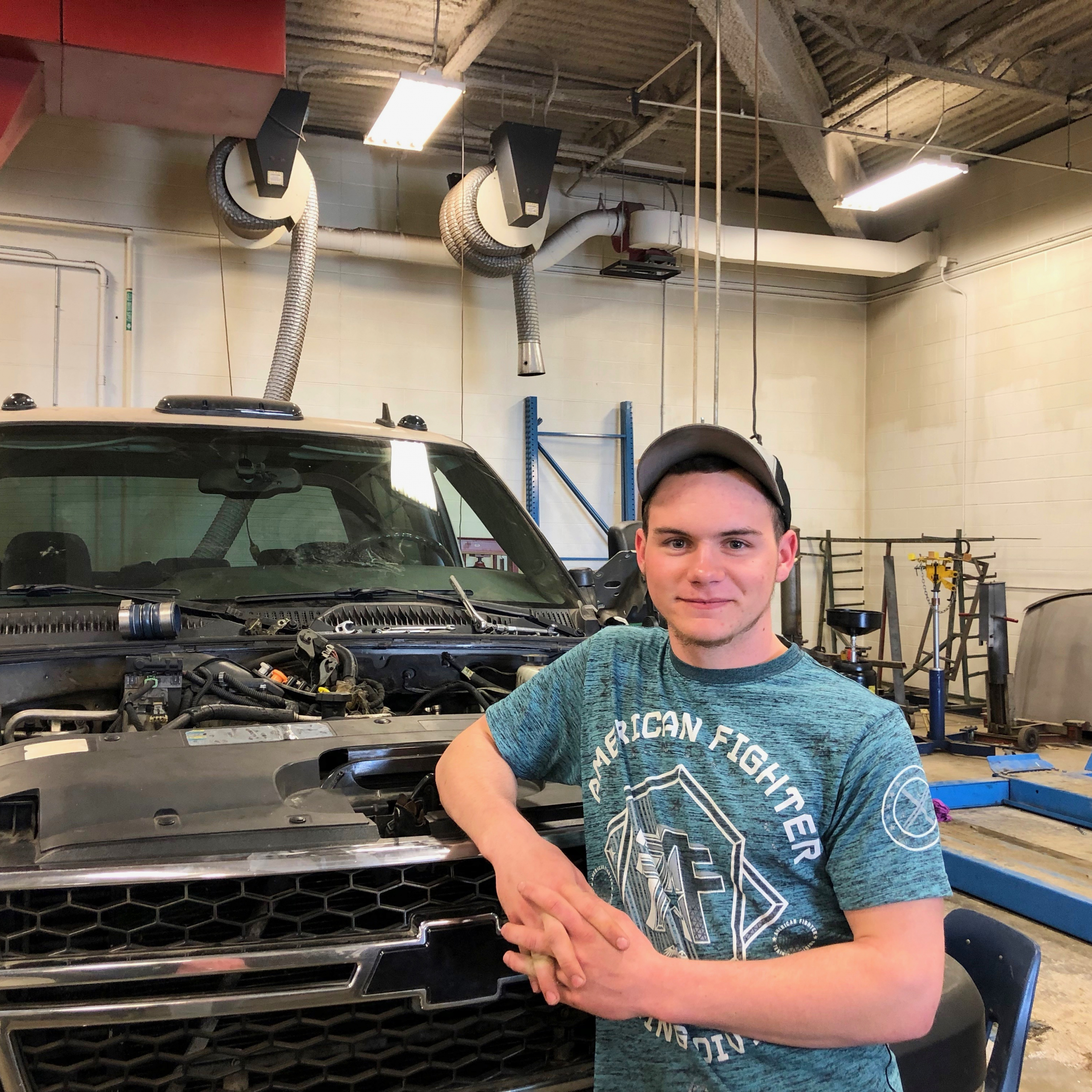
Triston Tuggle, a high school senior studying Power Sports at the Delaware Area Career Center (DACC), has been accepted into Caterpillar’s ThinkBIG Technician Education program. Tuggle is only the second student from DACC to be accepted into the program.
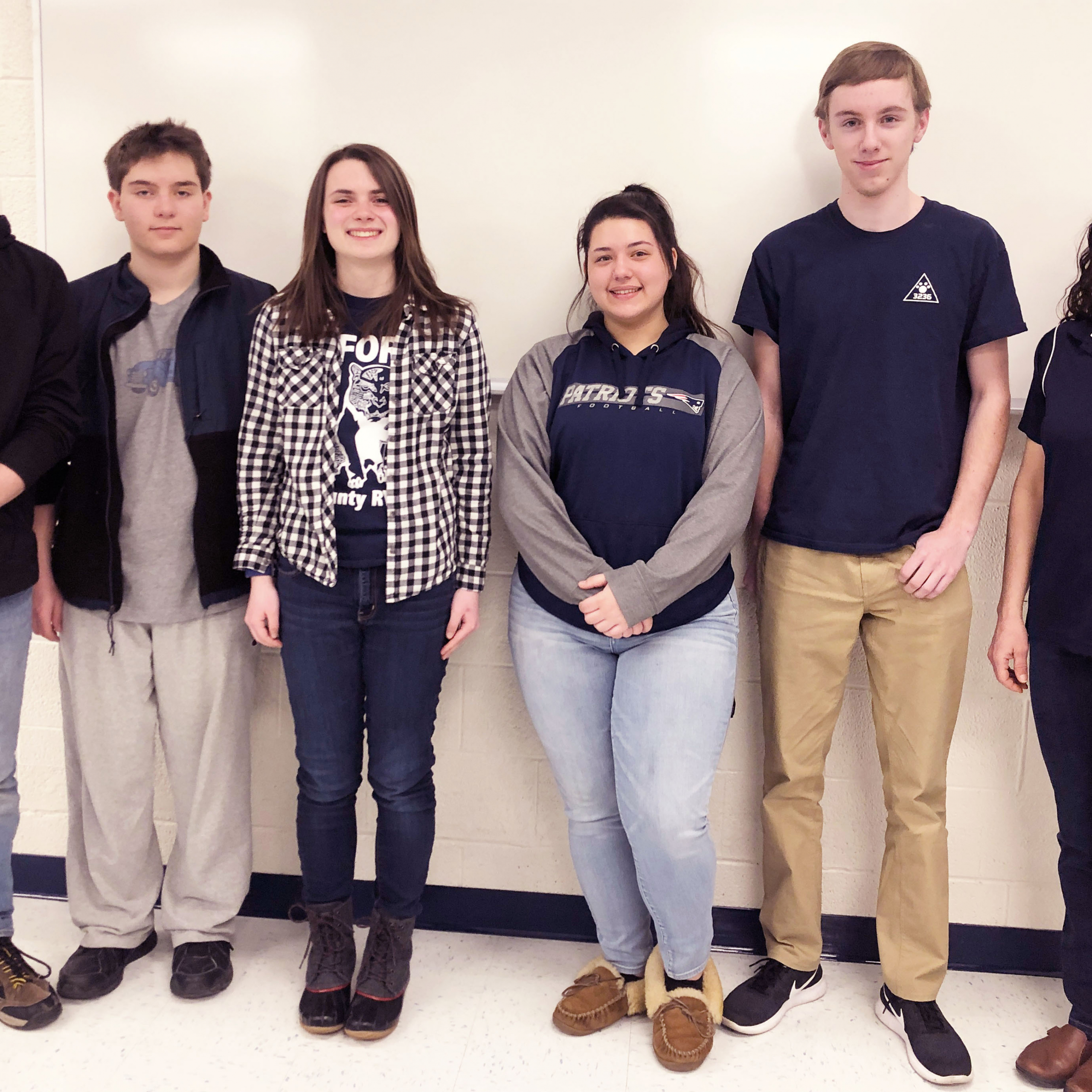
“I’ve always been a big fan of Caterpillar,” Tuggle said. “I’m happy I got accepted. I’ve always wanted to do diesel mechanics. My favorite part is knowing I’m heading down the right path, and I won’t be lost after I get out of school.”

The program will send Tuggle to Owens Community College for eight weeks, and then into the field for real-world, hands-on training. There he will learn “how to service Cat equipment using cutting-edge diagnostic and maintenance systems, advanced technologies and high-tech tools.

“ThinkBIG combines classroom work with hands-on learning in the field and in state-of-the-art labs, so students see technologies in real-world applications — solving problems and helping Caterpillar customers get their jobs done. Graduates of ThinkBIG receive an associate’s degree in applied science.”

Do you have news?

Member Connected News is a new regular column on PAGES, a Techniques blog. Here is where we highlight the buzz about career and technical education. If you have something (program news, event news, award news or a note of appreciation) to share, we want to hear about it. Fill out the form and you might be featured next.

Tri-County Team Designs Device to Travel into Space

Along with their instructor, three engineering technology students from Tri-County Regional Vocational Technical High School traveled to Houston, Texas, on April 15–17, 2019, to present a device they designed to NASA engineers and astronauts as part of the HUNCH program.

High School Students United with NASA to Create Hardware, or HUNCH, is an innovative, school-based program that partners NASA at Johnson Space Center, Marshall Space Flight Center, Langley Research Center, Goddard Space Flight Center, Glenn Research Center, Kennedy Space Center and AMES Research Center with high schools in states across the nation. The partnership involves students fabricating real-world products for NASA as they apply their science, technology, engineering and mathematics (STEM) skills as well as learning to collaborate and administer a project in teams and think creatively.

Five juniors Averi Ayre, of North Attleboro, Massachusetts; Katie Dion, of North Attleboro, Massachusetts; Colin Donoghue, of Walpole, Massachusetts; Eric Kugler, of North Attleboro, Massachusetts; and Jacob Lipson, of Franklin, Massachusetts, designed The Tool Pouch, an organized tool storage box that they hope will be used to solve a tool storage problem on the International Space Station. The project has made it to the Final Design and Prototyping Review scheduled at NASA’s Johnson Space Center at Rocket Park in Houston. If selected, their designs will likely be used by NASA astronauts in Space. This is the fourth year Tri-County’s team attended the event.

Tri-County RVTHS, located at 147 Pond Street in Franklin, Massachusetts, is a recipient of the High Schools That Work Gold Achievement Award and serves the communities of Franklin, Medfield, Medway, Millis, Norfolk, North Attleboro, Plainville, Seekonk, Sherborn, Walpole and Wrentham.

Do you have news?

Member Connected News is a new regular column on PAGES, a Techniques blog. Here is where we highlight the buzz about career and technical education. If you have something (program news, event news, award news or a note of appreciation) to share, we want to hear about it. Fill out the form and you might be featured next.

The Future of Career Development

As a third year teacher, I am still learning about CTE and what all it entails. When I first became a teacher, I was very fortunate to have a mentor that not only helped me get my school-based enterprise up and running, but advocated for Career and Technical Education and persuading me to be an ACTE member. It did not take much after learning how much CTE does for our students and their futures.

When I was in high school, we had CTE courses, but I did not realize how important they were. I did not have a teacher, administrator, or CTSO explaining their importance. Now that I am on the other side of things, advocating for CTE has become my mission.

Over the next 5 years, I see CTE growing and growing; especially if we have teachers like my mentor and myself who have a passion for CTE and want to shout if from the rooftops! While it is great to have teachers, advisors, and administrators as passionate as we are, it also has to stem from our students.

For CTE to continue to grow and market to those who may be clueless, our students have to lead the pack. They are the future leaders of our country and my vision starts with them. Our students must continue to engage, learn and SEE the affects that CTE has on them and their future. Once they experience that, they will become our advocates, fighting alongside with us.

Some of you may be wondering, “How do I get my students to engage?” Check out the blogs from February 2019. There are so many activities with CTSO’s, taking your students on hill visits to advocate with state legislators, and just getting up and doing something! Be passionate, let your fire loose, and show your students it is okay to stand up for what they believe in.

Therefore, I leave you with this. What are YOU doing to advocate for CTE and get your students to lead us to growth?

Cooks and Camo in Bartlett, Illinois

Students enrolled in upper-level culinary classes at Bartlett High School participated in Cooks and Camo, a competition-style event sponsored by the Illinois Army National Guard. Competitors were challenged to create an entree and dessert items inspired by military field rations, known as meals ready to eat (MRE).

“The students did a great job turning MREs in to unique (and tastier) meal creations,” said Kari Laga, a family and consumer sciences teacher at Bartlett High School, in Bartlett, Illinois.


Do you have news?

Member Connected News is a new regular column on PAGES, a Techniques blog. Here is where we highlight the buzz about career and technical education. If you have something (program news, event news, award news or a note of appreciation) to share, we want to hear about it. Fill out the form and you might be featured next.

Leading Digital Equity

One of the most relevant characteristics of leadership, according to leadership expert and author John Maxwell, is the ability to define reality in meaningful ways. Recently, equity issues have taken precedence in career and technology education (CTE) campuses to provide and support students in equitable manners. Educational equality means providing the same amount of resources and support regardless of their learning needs. Educational equity refers to the ability of providing resources and support based on individual needs. This discernment becomes even more relevant when using technology with student population who may or may not have easily available access to the internet. Moreover, teachers realize that equity issues often meet students’ needs more accurately and a variety of sources are use continuously to close the achievement gap. Thus, current reality is equitable access to technology of teachers and students, especially those dependent on improper funding methods. The duty of an educational leader is to develop an equitable strategy to help access technology and resources for teachers and students alike to close the achievement gap. Some of these strategies are discussed the following.

  1. Invest in technology to provide access and training to latest tech tools

Investing in latest technology ensures that teachers have access to modern tools to deliver lessons resembling area of study for which there is a labor market demanding a set of necessary skills.

  1. Invite social media to reach beyond classroom

Allowing social sites such as Twitter, Facebook etc. give your teachers the opportunity to reach to colleagues and stay abreast of professional development beyond the school and students the opportunity to connect in conjoined projects with their peers from various locations.

  1. Offer access to online paid professional learning communities and resources

There are many online teacher-led professional opportunities for teachers to attend and learn about the latest use of technology in the classroom. Teachers are able to attend professional development as well as learn from best practices. This ensures that teachers and students alike have the opportunity to apply best learning principles that help close the achievement gap.

As a leader, you have a transformational and transactional responsibility to meet the needs of your teachers and students. Make no assumptions, but rather ask, observe, and seek to enhance your teacher and student skill level. First seek out how students learn and what teachers need to teach successfully, and then dive into implementation process of new tech innovations. In essence, model effective approaches for your educators to teach and your students to learn.

# # # # # #