

 Woodworking teachers faced a challenge that might sound familiar to many career and technical education (CTE) teachers: how to make it work while distance learning. The answer: with strong support from industry. The Society of Wood Manufacturing (SWM) and its members donated materials, supplies and funding to benefit CTE students in California. SWM reallocated budget and resources to help as many teachers and students as possible. They identified three specific areas for support:
- Procuring wood materials for students
- Securing tools and supplies for students
- Assisting teachers to prepare materials and toolkits
Woodworking industry answered the call to support CTE in California.
SWM, a chapter of the Association of Woodworking >amp; Furnishing Suppliers (AWFS), requested donations of materials and supplies from AWFS member companies. Industry responded quickly and generously. In total, SWM collected and distributed about $60,000 in donated wood materials and supplies from the woodworking industry. In addition, SWM awarded 19 $500 grants to California woodworking teachers to use towards distance learning supplies.
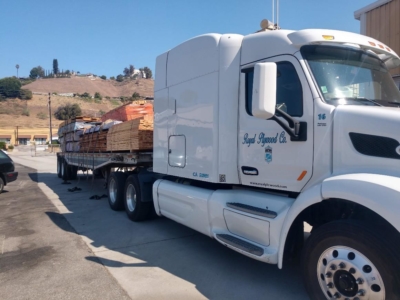
AWFS member company Royal Plywood of Cerritos, California, contributed more than $50,000 in materials. Donations arrived on two flatbed trucks; they included laminated panels and multiple species of hardwood. They also shipped materials from Roseburg Forest Products in Oregon. “We are thrilled that we could help out the local high school students by donating some of the materials we have in stock,” said Dave Golling, vice president of business development at Royal Plywood. We think this is a great program and will make a real difference for the woodworking teachers and students.”
SWM offered hands-on support for career and technical educators.
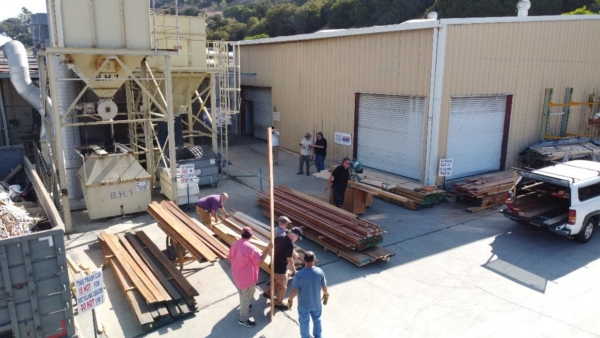
Saúl Martín, president of SWM and vice president of manufacturing at Architectural Woodworking Company (AWC), volunteered to cut and distribute wood materials for the teachers. He worked with several different instructors to help develop and send home woodworking kits for students. He then cut more than 20,000 pieces of poplar for students to use. Martín opened AWC to the teachers on three separate Saturdays to let them load as much free wood as they could take.
“SWM wanted to do something that would impact as many woodworking students as possible,” said Martín. “The teachers really needed some help from industry to boost their woodworking programs.”
About AWFS
The Association of Woodworking >amp; Furnishings Suppliers (AWFS), founded in 1911, is a nonprofit organization that wholly owns and produces the biennial AWFS Fair. The largest trade association serving the entire home and commercial furnishings industry, AWFS has more than 400 members, including manufacturers and distributors of machinery, hardware, software, tooling, lumber, components, wood products and supplies for the woodworking industry including cabinet, furniture, millwork and custom woodworking products.
>nbsp;

 ACTE’s CareerTech Virtual VISION 2020 featured live keynote presentations and hundreds of sessions, covering CTE innovations, timely topics and specific CTE subject-matter areas.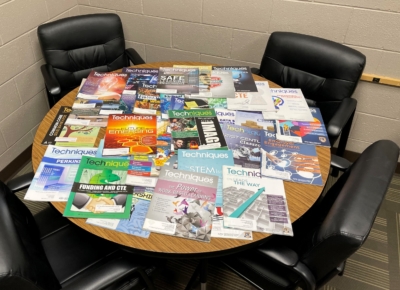
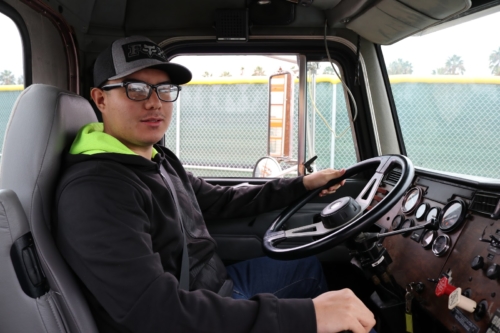
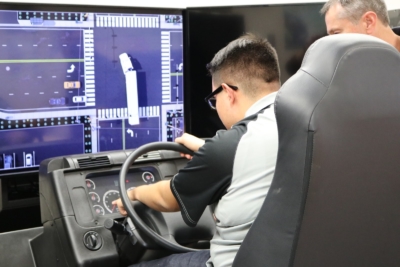 The United States is facing a crisis in its supply chain. At a time when Americans are relying on quick and efficient delivery more than ever, our nation’s already struggling transportation system experiences even greater strain. More than 70% of freight in the U.S. travels by truck (Costello, 2019). And this problem threatens to slow our supply chain to a crawl. ATA Chief Economist Bob Costello said the industry will need to hire
 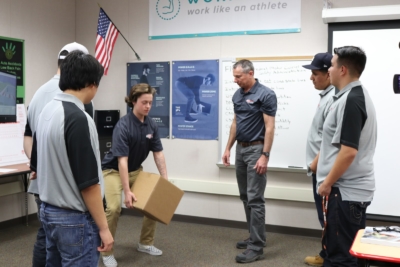 Students interact through the use of real-world applications and practice movements throughout the week to create muscle memory.
 Lindsey Trent works for Ryder. She also serves on the board of the Kentucky Trucking Association, Fairdale High School Advisory Board and started the Next Generation in Trucking Association. She resides in Kentucky with her husband and two kids and loves to golf, travel and read.

 now, I’m working on my master’s degree in robotics and intelligent systems, designing flexible robots that can grab satellites in outer space. In summer 2018 I interned at NASA Langley in Hampton, Virginia. As part of a joint project with Uber, our team built virtual reality simulators for a flying taxi service that Uber plans to offer in the 2030s. I worked primarily as a project manager, but I also helped wire and program the simulator. In addition, our team got to see a lot of the facilities and equipment that helped humans reach the moon during the space race.
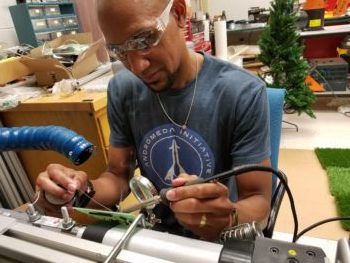 I got the fellowship and spent that summer working in a lab at school on my satellite capture robot. The next year, I applied for multiple internships at NASA and was contacted (and selected!) by the coordinator for the Aeronautics Academy at Langley.
 as smart and socially awkward white males, like Sheldon from “The Big Bang Theory.” It’s hard for individuals who don’t identify with those traits to see themselves in STEM careers. If teachers want to inspire more students to pursue science and engineering, I think it’s crucial that they share more stories in the classroom about the diverse people that make up the STEM fields.