
Welcome to our new series, COVID-19 Innovations. Here, we chronicle the innovative ways that career and technical educators continue to engage students as lifelong learners and prepare them for rewarding careers, even as the COVID-19 pandemic has upended the 2020–21 school year.
During COVID-19, Rachel Conover of Indian Valley Vocational Center in Sandwich, Illinois, has provided her students with choices. Conover’s culinary arts students demonstrated learning in various ways, including videos, photos and written reflections, using CTEfolio.

Documenting skills digitally
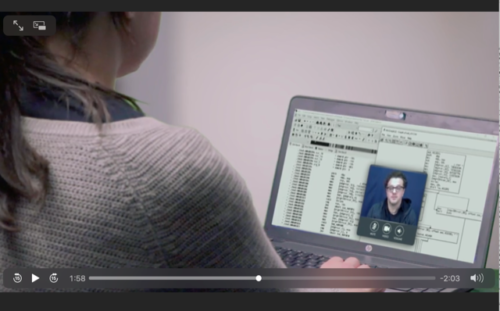
CTEfolio presents a digital portfolio of student knowledge, skills and experiences. Developed by CAST, a nonprofit education research and development organization, CTEfolio aligns with the principles of Universal Design for Learning (UDL). UDL is a framework for designing accessible and rigorous learning environments for all.
Through CTEfolio, students curate evidence that demonstrates their learning in one central location. Conover offers feedback directly on student work, and students make improvements based on her input. Learners have access to CTEfolio for five years after graduation, and employers can gain access to see evidence of student competencies.
Supporting students with disabilities
Tools like CTEfolio are particularly useful for learners with individualized education plans, Conover said. Students with disabilities can struggle to effectively navigate multiple digital platforms. She described how digital portfolios help students that struggle with verbal communication, memory, anxiety and organizational skills. In CTEfolio, students learn how to assemble and display learning and skills to instructors and potential employers. Built-in accessibility features — text-to-speech, speech-to-text, dictionary and translation — help achieve this goal.
Do you have a COVID-19 innovation to share?
ACTE wants to hear about the innovative ways you are coping with the impact of the pandemic on CTE and career development. Please fill out this short form, and you could be featured in this series. For additional ideas on remote, blended and socially distanced in-person learning for CTE, check out ACTE’s comprehensive guide High-quality CTE: Planning for a COVID-19-impacted School Year and CTE distance learning lesson plan resources.
 Welcome to our new series, COVID-19 Innovations. Here, we chronicle the innovative ways that career and technical educators continue to engage students as lifelong learners and prepare them for rewarding careers, even as the COVID-19 pandemic has upended the 2020–21 school year.

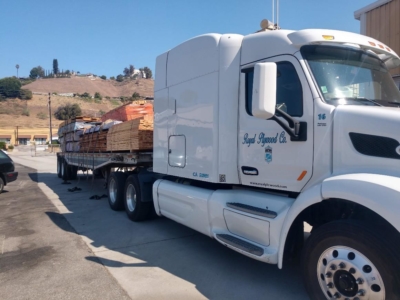 Woodworking teachers faced a challenge that might sound familiar to many career and technical education (CTE) teachers: how to make it work while distance learning. The answer: with strong support from industry. The Society of Wood Manufacturing (SWM) and its members donated materials, supplies and funding to benefit CTE students in California. SWM reallocated budget and resources to help as many teachers and students as possible. They identified three specific areas for support: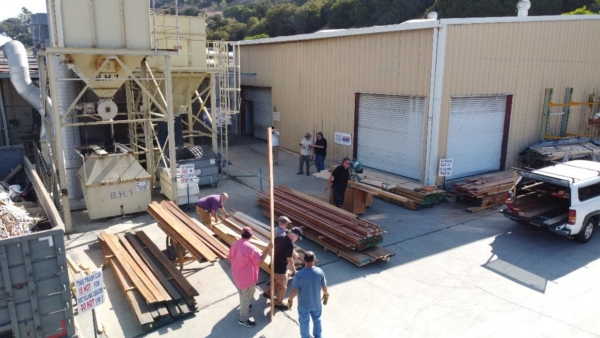
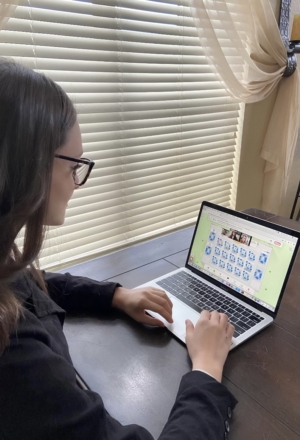 Welcome to our new series, COVID-19 Innovations. Here, we chronicle the innovative ways that career and technical educators continue to engage students as lifelong learners and prepare them for rewarding careers, even as the COVID-19 pandemic has upended the 2020–21 school year.
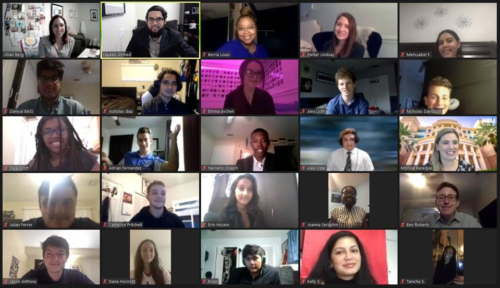
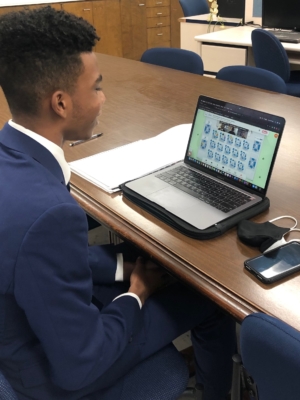 In spring 2020, VEI shifted its in-person learning experiences to online platforms. Students expanded their networks, engaging more actively with other student-run businesses across their state and in mentorship with business professionals in other states. In addition, more students are participating in virtual events because certain barriers to entry are eliminated. This particularly benefits VEI students attending schools in under-resourced communities.
 In a time when in-person internships aren’t possible, virtual internships provide valuable, real-world experience from the safety of home.