Preparing for the Road Ahead

What a wonderful time to be in CTE! We as educators have the opportunity to prepare students for the future. It can be exciting and scary at the same time. Barnett Kristy I have the pleasure of working with students with disabilities.  This means that the student has qualified under the Individuals with Disabilities Education Improvement Act (IDEA), under Section 504, or ADA.  Too many people see the “dis” in disability instead of the word “ability.” People with disabilities are the same as non-disabled people because they have individual abilities, interests, ideas, and needs also.

We get the opportunity to level the playing field and eliminate barriers in CTE for students with disabilities.  The most important thing we do for students with disabilities is to prepare them with a skillset that they can take with them into the workforce.  At Great Plains Technology Center, Lawton, Oklahoma we have students with disabilities enrolled in every career major offered. We are preparing individuals for success in work and life so that they can provide better opportunities for their families.

We help to prepare students by getting them on a career plan by using OK Career guide www.okcareerguide.com which helps them to explore and guide their future.  Students with disabilities are connected with various resources to assist with future employment.  Students are able to apply for internship programs, apprenticeships, are connected with transition programs, and Vocational Rehabilitation services.

It is a group effort to bring all parties to the table to benefit students with disabilities.  It is rewarding to see students that were lacking confidence and had low self-esteem be determined to receive training and knowledge pertaining to their specified skillset.  So are we preparing students for the road ahead? Yes, yes we are!! So again, it is a wonderful time in CTE to be able to train the future workforce for all students including those students with disabilities.

The Art of Listening

The end of the school year is rapidly approaching, which means the midway point of the 2018 ACTE Fellowship is on the horizon.  It has been an amazing experience
so far!  Each month, our Fellowship group meets online and we discuss multiple topics related to the profession of career >amp; technical education.  One of our requirements is to read leadership books and engage in chapter discussions.  During our last monthly Fellows meeting, another colleague was covering a chapter in John C. Maxwell’s “The Leadership Handbook:  26 Critical Lessons Every Leader Needs” book.  The name of the chapter was titled, “The Best Leaders are Listeners,” and it occured to me just how important the skill of listening has been in my professional career!

I currently serve as an administrator in a comprehensive high school and I find that I use my listening skills often.  I previously served as a high school counselor before entering my administrative journey and my graduate coursework in school counseling prepared me to succeed in both roles.  Regarding quality listening skills, I relate well to Stephen Covey’s book “7 Habits of Highly Effective People,” which mentions that people should “seek first to understand” when engaging in communication.  I enjoyed reading Covey’s book, especially this piece, and I have often looked at this particular habit, which is posted in my office as a reminder to reflect upon.

In Maxwell’s book, he states that leaders are more effective if they possess excellent listening skills.  When you listen well, you can learn a lot about people and start to forge solid relationships.  Listening also helps you learn about a person’s concerns.  Many times, I have had parents enter my office and I take time to genuinely understand their issues.  More often than not, listening skills, along with validating thoughts, have helped me quickly diffuse situations with parents.  This same skill set has also helped me effectively work with students and staff members.

In closing, Maxwell quotes in his book that Author Jim Rohn says, “One of the greatest gifts you can give anyone is the gift of attention.”  I couldn’t agree more!  Listening has  helped me earn trust with people in my building and it keeps problems from turning into bigger situations!  As a takeaway, I plan to use Maxwell’s advice and write an “L” on my notepad in future meetings, as it’s a good reminder to focus on listening when communicating with others.

Teaching Strategy: The Carousel

“I wish all students would participate in the discussion.”

If that sounds familiar, you might want to try this strategy.

The ability to engage students with hands-on learning activities has long been a strong advantage for career and technical educators. However, the excitement that students experience in the lab often does not follow into classroom learning. When an instructor announces, “Let’s head back to the classroom.,” the response is an audible groan from students. Their bodies slump. The students find lab activities more engaging than classroom instruction.

To fix this problem, leverage lab attributes that create engagement to design classroom lesson plans. Consider how:

  • Labs allow every student to be actively engaged (equity)
  • Labs allow for students to openly discuss ideas as needed
  • Labs allow for freedom of movement
  • The teacher serves the role of facilitator
  • There is a de-emphasis on grades (learning for the sake of learning)

Equity, Engagement and Productive Talk

Emphasize the power of speaking and listening between students — what is known as productive talk. Productive talk is speaking that leads to learning. It happens during conversations in which students do most of the talking, while teachers guide them to listen to each other, explain their thinking, question and challenge each other’s ideas, and revise their own opinions based on input from others.

Productive Talk Improves Literacy

When people participate actively in conversation, their brains sync, mirroring and anticipating the neural activity of the others in the conversation (Stephens, Silbert and Hasson, 2010). Engaging in conversation as we learn, rather than simply listening to new information, helps make this neural activity more likely. As we learn, our brains forge and strengthen new pathways through which information can travel.

The Strategy in Action

How long will it take?

20-30 minutes, depending upon how long you want to debrief students.

When should I use the Carousel teaching strategy?

As a pre-assessment or a review game of a broad, multifaceted topic. When you need to get everyone involved, instead of hearing from the same few students each time.

What’s the gist?

An extended, active version of Think-Pair-Share, the Carousel gets everyone moving around the room to write and discuss various topics.

How It Works

  1. Post 4–5 large sheets of paper around the room, with plenty of space between them. On each paper, write a different question or statement that can elicit a broad range of responses.
  2. Divide your students into 4–5 teams, and give each team a different colored marker. Each group begins at one of the posted questions.
  3. Set a timer for two minutes (or another amount of time). Instruct students as follows: “When I say go, you will have two minutes as a group to write as many intelligent points as you can on your board. When I call time, every group will take their marker and rotate to the left, just like a carousel.”
  4. When groups rotate, instruct students to read through what the other group(s) wrote. If a student or group disagrees with something written previously, they are encouraged to draw a line through the statement and respond. After that, students begin to post their own additional thoughts.
  5. Continue rotating until all groups have responded to every question. Then facilitate a class discussion. All it takes to get great conversation going is a couple of lines drawn through comments of another color.

Students encouraged to respond and defend their own words are more invested than if they were just listening to the arguments of others. By responding first in a group with short, written statements, students feel safe to critique and defend their own ideas and are more likely to discuss their ideas aloud afterward.

Example Prompts from an Automotive Classroom

  1. List everything you can think of that relates to Geometry (This is to connect to prior knowledge and emphasize the role of geometry involved with upcoming content on suspension and brake systems.)
  2. List everything you can connect to the concept: alignment.
  3. List every detail you know about wheel bearings. (This serves as an excellent pre-assessment tool, to gauge student knowledge on this topic.)
  4. How many ways can we connect tires to brakes? (This serves to launch the new learning and gives the instructor time to use what students already have told him to lead the discussion.)

Final Thoughts

Productive talk will flourish when your classroom culture promotes learning for its own sake. Decades of research, from 1933 onward, have made it clear that grades are often problematic (Kohn, 2011). Reliance on grades reduces students’ interest in the material, the quality of their thinking, and their intrinsic drive to take intellectual risks (Kohn, 2011). Risk-averse learners “downshift” their brains into a kind of survival mode, looking for the right answer instead of seeking understanding.

People do better creative work and engage more readily in learning when they know that what they’re doing is relevant beyond a quantitative assessment. When we use external rewards to motivate others, we may unintentionally undermine their intrinsic motivation (Pink, 2011) and risk extinguishing their love of learning. Especially in career pathways work, it is important for students to internalize and embrace the intrinsic value of the learning that could become their lives’ work. A class discussion will be more dynamic and productive when students, freed from a preoccupation with their own achievement, can take interest in the topic itself.

Sandra Adams is a teacher and instructional coach with the Career Academy, Fort Wayne Community Schools. She co-wrote the ACTE-supported book But I’m NOT a Reading Teacher!: Literacy Strategies for Career and Technical Educators with Gwendolyn Leininger. Contact her to learn how you can implement the Carousel and other innovative teaching strategies in your CTE classroom.

For more from Adams, find her at ACTE’s CareerTech VISION next week where she will be on site to sign her book, But I’m NOT a Reading Teacher! Adams will also deliver two educational program sessions: “The Technology Integrated CTE Classroom: Embedding 7 Future Survival Skills” on Friday, Nov. 30 and “Creating Equitable Access to IT Courses” on Saturday, Dec. 1 during the STEM is CTE Symposium.

REFERENCES
Kohn, A. (2011). The case against grades. Retrieved from http://alfiekohn.org/article/case-grades/.
Pink, D.H. (2011). Drive: The surprising truth about what motivates us. New York, NY: Riverhead Books.
Stephens, G.J., Silber, L.J. >amp; Hasson, U. (2010). Speaker-listener neural coupling underlies successful communication. Proceedings of the National Academy of Sciences. Retrieved from https://www.ncbi.nlm.nih.gov/pcm/articles/PMC2922522/.

Elementary and Middle School Career Development

It is very important to start career exploration at an early age for students to start thinking about career development. The conversations need to happen to get students career ready so that they are able to attain educational achievements and performance levels needed to reach personal and career goals. Career development gets the wheels turning in students minds so that they can start putting a plan in place for their future.
At Great Plains Technology Center-Lawton, Oklahoma career development starts at our Technology Center in the fifth grade. Fifth grade students attend a career development program called Discovery Zone. The purpose of Discovery Zone is for fifth grade students to start thinking about career exploration and awareness. The students are provided with hands-on activities and rotate through different career major modules that are offered at Great Plains Technology Center.

In the eighth grade, students attend Tech Know Zone. Tech Know Zone provides eighth grade students the opportunity to get hands-on knowledge regarding traditional and non-traditional career fields. Eighth grade is a crucial time because middle school students are transitioning into high school. Tech Know Zone allows for students to have more knowledge of programs offered so that the student can make an informed decision pertaining to their four year individual career academic plan.
Another career development opportunity offered at the middle school level is the Career Connection camp which is a two week, all day, camp offered to sixth through eighth grade students. Career Connections is an opportunity for middle school students to experience some of the exciting hands-on educational experiences offered to high school students at Great Plains Technology Center.

In order to get students career ready it is best if career development starts at an early age. At Great Plains Technology Center, we are able to see our hard work pay off because the students that attended Discovery Zone, Tech Know Zone, and Career Connections camp have become our high school students and enrollment and retention has increased! By implementing these opportunities to elementary and middle school students we are able to provide individuals with the training and skills necessary at the high school level for students to be successful and competitive in the workforce.

iTeachU: Building Upon National and State CTE Teacher Recruitment Efforts

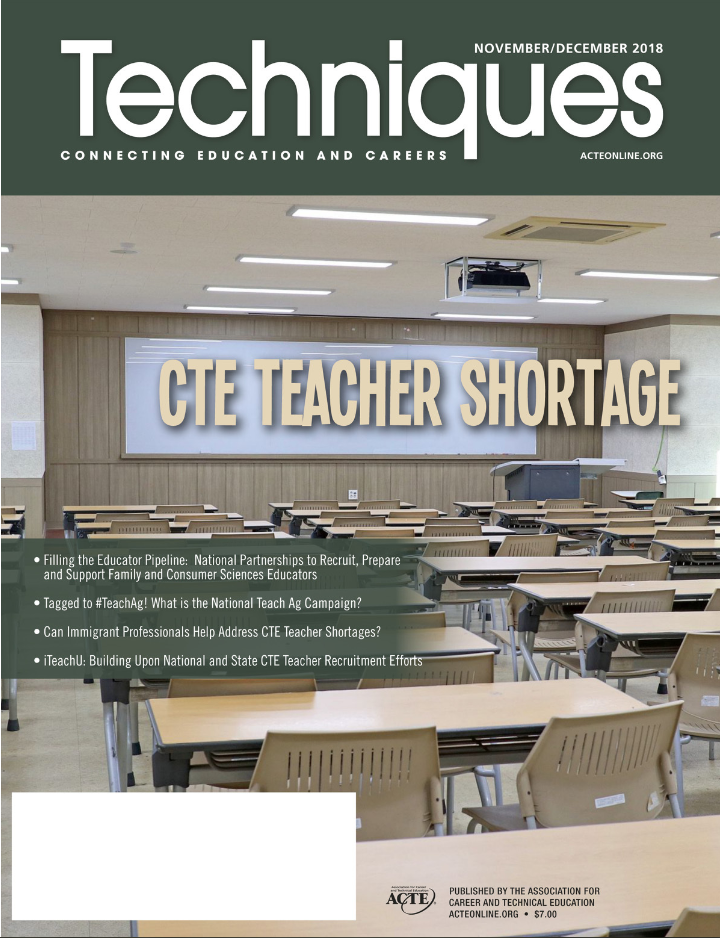
For more than two decades we have heard alarms, warning of the shortage of secondary teachers in content areas such as agriculture education and family and consumer sciences… In response, national initiatives emerged to address the need to recruit teachers into these career and technical education (CTE) fields. The National Association of Agricultural Educators (NAAE) (2018) began the Tagged to Teach Ag initiative in 2009 and turned a spotlight on the need to recruit and retain professionals in that space.

A Kansas-based campaign coined “Say Yes to FCS” was adopted in 2014 by the National Association of State Administrators of Family and Consumer Sciences (NASAFACS) (Randel >amp; Spavone, 2016). The American Association of Family and Consumer Sciences (AAFCS) hosts online resources to fill the FCS teacher pipeline. These campaigns and others have heightened an awareness of the need for teachers in these fields of CTE.

Statewide CTE Teacher Recruitment Efforts

Capitalizing on the buzz created by the national Tagged to Teach Ag and Say Yes to FCS campaigns, statewide recruitment efforts are underway to recruit the next generation of CTE teachers in South Dakota.

Each year, South Dakota FFA members who plan to attend South Dakota State University (SDSU) to major in agricultural education are invited to participate in the event, which mirrors an athletic signing. The student, their agriculture teacher and SDSU faculty sit at a table and sign a framed letter of intent to teach agriculture.

South Dakota has undertaken additional statewide efforts to recruit family and consumer sciences teachers… In addition to the traditional means of recruiting, SDSU implemented iTeachU in 2011. The one-day, annual event on campus is a joint effort between the agricultural education and FCSE faculty in the department of teaching, learning and leadership, and introduces participants to a career in teaching while simultaneously providing a glimpse into college life.

Associated faculty take on the logistical roles of organizing and planning the iTeachU program, while current SDSU students facilitate the event. This joint effort between faculty and students with diverse interests is purposeful. At SDSU, several of the core education courses are cross-listed between these disciplines, and many students, pursuing degrees to become agriculture and/or FCS teachers, will attend classes taught by both faculty throughout their time as students. These shared classroom experiences help students recognize the CTE connection that agriculture and FCS share.

ACTE members can read the full article, “iTeachU: Building Upon National and State CTE Teacher Recruitment Efforts,” in the November/December issue of Techniques today. Watch your mailboxes for the print edition to appear this week!

Not a member? Join! ACTE is the largest national education association dedicated to the advancement of education that prepares youth and adults for successful careers.

ACTE Student Trophy Design Contest Winners Set Standard for Excellence

ACTE is committed to providing career and technical education (CTE) students with opportunities to develop the skills they’ll need for success in a global economy. One such opportunity, the Student Trophy Design Contest, encourages secondary, postsecondary and adult CTE students in 3D design or CAD courses to develop and submit a trophy design that reflects the prestige of ACTE’s Excellence Awards program. Designs are then judged by ACTE staff and Stratasys Ltd. — a manufacturer of 3D printers and production systems — on visual appeal, function and structural integrity.

“Stratasys is pleased to partner with ACTE to create this contest for the students. It is clear that the educators are doing an outstanding job immersing the students in additive manufacturing and computer-aided drafting,” said Jesse Roitenberg, national education manager for Stratasys. “The trophy entries we have judged over the past three years are phenomenally designed and could not be created by any other manufacturing process.”

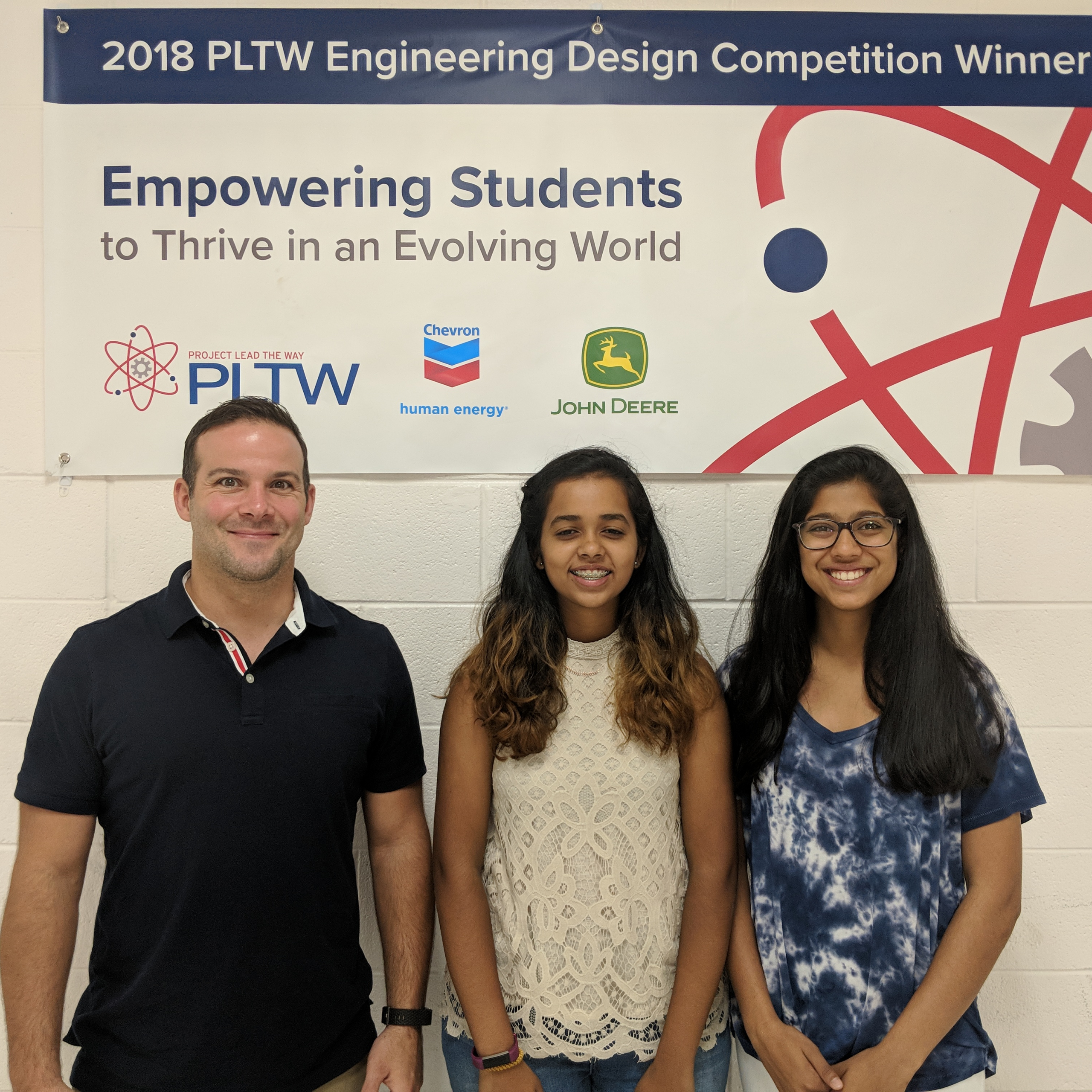
We are proud to announce that the winners of the 2018 ACTE Student Trophy Design Contest are Rashi Kejriwal and Shreya Santhanagopalan, of Ellicott City, Maryland, supported by their teacher, David Lucania.

The winners will receive a $1,000 scholarship prize, a one-year lease of a 3D printer (courtesy of Stratasys) and materials, and a trip to ACTE’s CareerTech VISION 2018 in San Antonio, Texas, where they will be recognized at the Awards Banquet. And here, an exclusive interview.

The Mount Hebron High School juniors, Kejriwal and Santhanagopalan, sat down with Techniques to discuss their interests in STEM now and in the future, and how they were inspired to enter — and ultimately win — the 2018 ACTE Student Trophy Design Contest.

Talk a little about yourself and your background, your school, your experience with CTE, and your plans for the future.

Rashi Kejriwal: I’m a junior in Howard County, Maryland, at Mount Hebron High School and I’m enrolled in the Project Lead the Way (PLTW) engineering classes at our school. Personally, apart from PLTW, I have always had a background in STEM. For example, I completed an assignment in elementary school in which students were tasked to design and build a city… Through these and other activities I have developed a strong interest toward multiple fields in engineering. In the future I want to pursue a career in which I can learn and contribute to society.

Shreya Santhanagopalan: I am also a junior at Howard County, Maryland’s Mount Hebron High School. From a young age, I was brought up to love engineering tasks and figuring out solutions to difficult problems. I began to learn to code when I was in fifth grade; in middle school I learned to create multiple apps with guidance. I am still exploring options for my future but I take great interest in computer science and engineering, and I plan to attend college until I receive a Master’s degree in my chosen field.

How and why did you decide to enter the ACTE Student Trophy Design Contest? What inspired your winning design?

Shreya Santhanagopalan: Rashi and I were intrigued when our teacher, Mr. Lucania, brought up the ACTE Student Trophy Design Contest in our shared Project Lead the Way class. After weeks of planning, in and outside of school, we had developed seven different design sketches…

Rashi Kejriwal: We combined the top portion of one remaining design with the bottom portion of the other to create our final design.

What guidance did your career and technical education teacher provide?

Rashi Kejriwal: When it came time to build the trophy, Mr. Lucania’s mentoring, along with the use of AutoDesk Inventor and its unique features, helped us turn our dreams into reality.

The trophy designed by Kejriwal and Santhanagopalan will be presented to ACTE’s national award winners at the Awards Banquet on Wednesday, Nov. 28. Check out the full list of finalists and make your plans to celebrate CTE on the first night of ACTE’s CareerTech VISION 2018, Nov. 28–Dec. 1, in San Antonio, Texas.

ACTE members can read the full interview, “ACTE Student Trophy Design Contest Winners Set Standard for Excellence,” in the October issue of Techniques today. Not a member? Join! ACTE is the largest national education association dedicated to the advancement of education that prepares youth and adults for successful careers.

EarSketch: Inspiring Persistence in Computing Through Music

“[EarSketch] teaches and sets us free. It’s like our own playground wherein we’re able to make whatever we want. We finished our projects,” said a young, female computer science student. “Yes, I consider myself a programmer.”

During a focus group, the student quoted expressed a changing perception of her interest in computer science and of herself as a programmer. This student exemplifies the significant improvement in both student engagement and content knowledge we have found to occur when students use EarSketch, a browser-based learning platform where they explore introductory programming through music remixing.

EarSketch engages students by enabling them to learn computing creatively through personal expression and music. Students learn elements of computing and mix music samples. They write Python or JavaScript code to algorithmically create music in popular genres including but not limited to trap, dubstep, hip-hop, rock and pop. Coding concepts (e.g., loops, lists, and user-defined functions) mix musical samples, beats and effects to develop tracks that students can access and modify anywhere with a broadband internet connection.

Curriculum and Teacher Materials

The EarSketch curriculum is aligned with the programming standards of the College Board’s advanced placement (AP) computer science principles (CSP) course, as well as a related (non-AP) computer science principles course that is standard for high school students in the state of Georgia. AP CSP was launched in the fall of 2016 with a goal to offer a rigorous introductory curriculum that would broaden participation in computer science. The course introduces students to the creative aspects of programming, abstractions, algorithms, large data sets, the internet, cybersecurity, and the impacts of computing across multiple domains (Astrachan et al., 2011).

Thirty-five CSP learning objectives are organized around seven big ideas and six computational thinking practices. Its curricular framework is broader than that of traditional computer science courses, with a focus on collaboration, analysis, communication, creativity and connections to other disciplines. In contrast to other introductory computing courses, CSP is language-agnostic. It does not mandate a specific programming language or problem domain: Students submit performance tasks created with a programming language and/or within an environment of their choice. This all facilitates the integration of EarSketch.

Computing teachers may be unfamiliar with this approach and the idea of teaching CSP within the domain of music. We have thus developed scaffolding and supports for teachers that include lesson plans, slides, worksheets, mini-tasks, rubrics and other teaching materials; face-to-face and online professional development; and an interactive community where teachers can ask questions, share materials and review additional training resources.

ACTE members can read the full article, “EarSketch: Inspiring Persistence in Computing Through Music,” in the October issue of Techniques today. Watch your mailboxes for the print edition to appear this week!

Not a member? Join! ACTE is the largest national education association dedicated to the advancement of education that prepares youth and adults for successful careers.

Teaching Martians: An Interview with Rachael Mann

You’re in for a treat! On Saturday, Dec. 1, educator and author Rachael Mann will lead a keynote luncheon at the 2018 STEM is CTE Symposium, during which she’ll address the martians in your classroom.

Aptly titled, Mann’s new book cowritten with Stephen Sandford, former director of space technology exploration at NASA, The Martians in Your Classroom reveals an urgent need for the convergence of STEM and CTE in every learning space. Mann and Sandford discuss the challenges and responsibilities that go along with preparing students for careers that don’t exist yet. They’re out of this world!

To talk about her new book, the STEM is CTE Symposium and interstellar professional development, Rachael Mann sat down with ACTE for an interview.

In what ways is it uniquely challenging to teach a “Martian” compared to previous generations?

In some ways it’s less challenging. Educators no longer have to be the only expert in the classroom. While students connect with rich resources readily available online — and through other digital means such as virtual and/or augmented reality — teachers serve as facilitators, guiding students as they discover, create and innovate.

It is challenging, in that students are able to access information at a rapid rate and it can be more difficult to keep their attention when using traditional teaching techniques. Educators must keep up with the rate of change. Teachers who rely on traditional lecturing, packets and worksheets will find their students tune out. I had a college professor who frequently said, “It’s a sin to bore a child.” In today’s classroom, teachers need to leverage resources and techniques to ensure that students are engaged and learning in a way that will prepare them for their future reality.

How can CTE teachers break down the classroom walls to create globalized learning spaces as referenced in The Martians in Your Classroom?

While we observe #globalcollaborationweek, what a perfect time to ask this question! The world reaches far beyond the walls of a classroom and should be reflected in our learning spaces. Educators and students are not only able to access a global database of information online, but they are also able to connect virtually with other students and industry experts around the world.

Students, employees and employers no longer compete against local talent, alone, as individuals are able to work remotely and they adapt more easily to new work locations and environments. This creates a more competitive workforce, both for the employer and employee.

What can attendees expect from your keynote luncheon at the 2018 STEM is CTE Symposium?

The Martians in Your Classroom isn’t just about space; it’s a metaphor for the future of education based on the forecasted changes in the world around us, both on and off of planet Earth. According to the Institute for the Future, 85 percent of jobs that will exist in 2030 haven’t been invented yet. That’s just 12 years away! Students in kindergarten in 2018 will enter this new reality when they graduate from high school. For many, the concept of preparing youth for this future can be daunting and overwhelming. Attendees will leave my keynote luncheon at the 2018 STEM is CTE Symposium with an understanding of the “Big 5” things they can do now to prepare students for tomorrow.

How does space exploration apply to varied subjects?

Career and technical education is the playground where STEM principles come to life. When we think of solving the world’s big problems — traffic, cancer, terror, world hunger or water crises — each solution requires STEM and CTE knowledge and skills, along with an innovative mindset. Space exploration is applicable to every content area and grade level and is a fantastic way to connect subject matter content to STEM. Consider a few examples:

Fire Science

On Earth, flames rise. In space, they move outward from their source in all directions. What does this mean for fire science in the context of space travel?

Culinary Arts

What impact has space travel already had on the food industry? What dietary considerations must be taken into account when planning a trip to Mars?

Biomedical

I encourage you to research NASA’s Vascular Tissue Challenge. What additional problems must be addressed in the realm of biomedical space travel? What advances have been made in medicine as a result of space exploration?

Construction

The construction pathway prepares future employees to build our future, whether it’s homes, corporate buildings, community facilities or off-planet structures. What additional considerations need to be made for off-planet structures?

Power, Structural and Technical Systems

Within this pathway students “design agricultural structures as well as machinery and equipment. They develop ways to conserve soil and water and to improve the processing of agricultural products.” This will become even more important in years to come. What can we learn about our own environment from the viewpoint of space? Will we be able to grow natural resources for human consumption?

Fashion Design

What impact has space travel already had on the clothing industry? What factors will need to be taken into consideration when designing space suits for the first martian colonists?

What tools can educators seek out for professional development, to help them teach effectively in these spaces?

The Martians in Your Classroom provides tons of resources for educators. They can visit the resources tab on my website and follow #MartianClassroom on Twitter, Instagram and LinkedIn for relevant information and ideas to incorporate in your learning spaces.

ACTE is a fantastic place to go for the most up-to-date AND projected trends in education and the workforce. Be sure to check out the magazine, Techniques, and its new blog! Attend ACTE’s CareerTech VISION 2018 in San Antonio, Texas, Nov. 28–Dec. 1, and the STEM is CTE Symposium on Saturday, Dec. 1 for even more resources and opportunities for collaboration.
A Celebration in San Antonio: ACTE’s CareerTech VISION 2018

San Antonio, Texas, is a city with something to celebrate. It also happens to be the host city for ACTE’s CareerTech VISION 2018, held Nov. 28–Dec. 1 at the Henry B. González Convention Center. VISION is the preeminent annual event for career and technical educators, where educators, industry representatives and business leaders connect, learn and grow — all, together, in an effort to promote career and technical education (CTE) fields as a viable and valuable career pathway.

The city of San Antonio honors its 300th birthday in the year 2018 and in what better fashion than by celebrating the diverse, multifaceted nature of CTE. ACTE’s CareerTech VISION 2018 will provide for attendees four packed days of high-quality professional development, prime networking opportunities and direct access to thousands of individuals invested in CTE. Make your travel plans and register today (The advance registration discount is on now, through Oct. 26!) to attend VISION because you won’t want to miss the:

  • Renowned keynote speakers, exploring new directions in CTE
  • 300+ concurrent sessions, covering the complete spectrum of secondary and postsecondary CTE
  • CareerTech Expo and interactive exhibitor workshops
  • Career Pavilion, providing essential resources on several CTE career pathways
  • Wednesday workshops and tours, offering insights into focused topics and CTE programming
  • Awards Banquet, a heartwarming gathering of dedicated CTE professionals and supporters
  • Opportunities to connect, collaborate and build lasting friendships with CTE professionals from around the globe
  • STEM is CTE Symposium, addressing diversity, equity and access issues to STEM fields via CTE programs

Education

Where the teacher becomes a student, and the student becomes a better teacher. With more than 300 concurrent sessions that span the spectrum of career and technical education, the educational program at ACTE’s CareerTech VISION offers something for everyone.

Wednesday, Nov. 28 kicks off the premier event for CTE professionals with hands-on workshops and tours that highlight model programs and industry partners in and around San Antonio, Texas. On Thursday morning grab a bite to eat at the First-time Attendee Orientation and Breakfast, generously sponsored by the U.S. Army, before gathering in the main hall for what promises to be an inspirational opening general session from Jenna Hager.

Jenna Hager, a former teacher in Baltimore, is effusive in her passion for literacy and education. As founding chair of UNICEF’s Next Generation, Hager has committed her life’s work to transforming lives through compassion, community support and educational opportunities.

VISION Program Highlights

With more than 300 sessions, the comprehensive VISION program covers key trends and innovations in nearly every aspect of CTE.

  • High-quality CTE Framework
  • Sequencing and Articulation
  • Student Assessment
  • Prepared and Effective Program Staff
  • Engaging Instruction
  • Access and Equity
  • Facilities and Equipment
  • Business >amp; Community Partnerships
  • Career and Technical Student Organizations
  • Work-based Learning
  • Data and Program Improvement
  • Funding and Perkins
  • Integration of Academics and CTE
  • Administrator Trends and Issues
  • Agricultural Education
  • Business Education
  • Family and Consumer Sciences Education
  • Guidance and Career Development
  • Marketing Education
  • Health Science Education
  • Engineering and Technology Education
  • Trade and Industrial Education
  • Postsecondary, Adult and Career Education

The full article, “A Celebration in San Antonio: ACTE’s CareerTech VISION 2018,” will appear in the September issue of TECHNIQUES. Watch your mailboxes for this and other great content from career and technical educators, for career and technical educators.

Launching PAGES, a Techniques blog

Hello, world! Welcome to PAGES, a Techniques blog.

Since joining the staff of ACTE in 2017, I have worked for this day. We’re live! PAGES will feature excerpts from articles in print and wholly original content (interviews, case studies, news items and more) based on the theme of each new issue. We’ll talk about topics trending in career and technical education (CTE). And we’ll highlight stories of educators and programs doing the work to ensure our students graduate college- and career-ready.

From PAGES it is my hope you will find increased value in Techniques online, expanded opportunities for engagement and even more stories of CTE success. Written for career and technical educators by career and technical educators, Techniques addresses the issues ACTE members care about most, providing input you can trust when making decisions for your classrooms, programs and school systems — in print and on the web.

Are you interested in writing for PAGES?

Let’s collaborate! View the 2018–19 Editorial Calendar and reach out via email to discuss your ideas. At conferences, in conversation with students and on the Expo floor at VISION, think of Techniques (and PAGES) often. Bring me your stories, because they are the stories that matter to CTE educators like you.

Check back next week for a preview of our celebration in San Antonio: ACTE’s CareerTech VISION 2018.

# # # # # #