
Lead Toward the Future: AI in FCS

Artificial intelligence (AI) is no longer contained to the realm of science fiction. Instead, it’s becoming more and more integrated into our daily routines. In the field of education, particularly in family and consumer sciences (FCS) classrooms, AI presents a unique opportunity to enrich learning and equip students with critical, 21st century skills.

As AI becomes more prevalent across industries, understanding how it can be meaningfully integrated into education is vital. AI not only offers the potential for personalized learning experiences but also can automate time-consuming tasks, enabling educators to focus more on mentoring, critical thinking and strategic planning. How can educators harness this technology to enhance student learning while maintaining the human touch that is so vital to education?

The current landscape of AI in education

AI has evolved from basic task automation to providing immersive learning experiences. For example, adaptive learning platforms like DreamBox and ALEKS tailor math instruction to students’ learning pace by analyzing their progress. In the FCS classroom, AI has a distinct role. Culinary arts programs can use AI to suggest recipe modifications based on dietary needs or simulate food safety scenarios. Likewise, AI-driven budgeting apps allow students to experiment with managing household finances. These tools help prepare students for careers where AI will play an increasingly critical role, from food science to resource management.

Why teaching AI literacy matters now

The Future of Jobs Report 2023, from the World Economic Forum, predicted that AI literacy will be among the top 10 skills in demand by 2027. Fields like the food industry already use AI for inventory management, and interior design relies on AI-powered tools to optimize space and sustainability.

Introducing AI literacy into FCS education goes beyond teaching students how to use tools. It prepares them to think critically about technology and its ethical implications. For example, students need to recognize potential bias in AI algorithms and question the accuracy of AI-generated solutions. Such critical thinking skills are essential for navigating a technology-driven world and making informed decisions.

AI applications in the FCS classroom

AI can significantly enhance student engagement by delivering personalized learning experiences and fostering critical thinking. In nutrition or financial literacy courses, AI-powered tools like MyFitnessPal and budgeting apps provide real-time feedback and allow students to interact with practical simulations. For instance, they can create meal plans based on nutritional goals or manage a household budget, receiving immediate feedback on spending and savings decisions. This interactive approach helps students understand key concepts while making real-world connections.

AI fosters critical thinking by encouraging students to ask targeted questions, validate AI-generated data and consider the ethical implications of their decisions.

Another key advantage is AI’s ability to tailor learning experiences to individual student needs. Adaptive learning platforms adjust the pace and complexity of lessons based on each student’s performance, ensuring that all students — whether advanced or needing additional support — are appropriately challenged. By providing these personalized and interactive learning opportunities, AI can deepen students’ understanding and engage them in the material, making the learning process more relevant and impactful.

1. Start small with existing tools.

Teachers can begin by integrating widely available tools like Grammarly or ChatGPT. These tools provide immediate feedback, helping students improve their work without overwhelming the teacher. As teachers grow more comfortable with these tools, they can explore more advanced applications like adaptive learning systems.

2. Conduct training and professional development.

For AI to be used effectively, teachers must be well prepared. Professional development programs should focus on building foundational knowledge, designing relevant assignments, considering ethical behaviors and mitigating bias. Furthermore, teachers need ongoing access to resources, online forums, and professional learning communities.

3. Align AI tools with learning objectives.

It is vital that any tool used aligns with the specific learning objectives of the course. Al should be implemented not merely because it is available but because it enhances the teaching and learning experience. For example, in an FCS classroom, an AI budgeting tool helps students meet financial literacy objectives by providing hands-on experience in managing real-life scenarios. Similarly, AI-driven nutrition apps align well with objectives in food science courses by allowing students to explore dietary planning and nutritional analysis.


To ensure successful AI implementation, schools must also consider infrastructure needs. Reliable internet access and updated hardware are foundational for AI integration. Education leaders may consider establishing partnerships with AI providers or seek grants to help cover the initial costs of implementing AI in the classroom.


Conclusion

AI can potentially transform education by promoting personalized learning, critical thinking and real-world applications. Technologies such as natural language processing, real-time emotional feedback systems and AI-driven simulations will continue to evolve, offering FCS educators new ways to engage students. However, thoughtful implementation is crucial in maximizing AI’s benefits while addressing its challenges. As we prepare students for a future in which AI will be omnipresent, our thoughtful integration now will help them thrive in the days ahead.

Melanie Schmitt, Ph.D., is an assistant professor of practice in the family and consumer sciences education program at Texas Tech University. She also serves as the curriculum specialist for The Curriculum Center for Family and Consumer Sciences. Previously, Schmitt spent 16 years as a secondary FCS instructor, pre-educator program teacher, and FCCLA adviser at Hackett Public Schools in Arkansas. She holds a Bachelor of Science in family and consumer sciences education from Harding University, a Master of Science from the University of Central Arkansas, and a Doctor of Philosophy in family and consumer sciences education from Texas Tech University.

Validate Language as a Skill

The abilities of multilingual students should be recognized and validated through proper credentialing. While world language programs offer tests to measure language ability, these opportunities typically fall outside of CTE programming as most students forgo a world language due to credit limitations when enrolled in a CTE program. fl. By providing avenues to certify their language skills, we can ensure that students from diverse language backgrounds, often from underserved populations, receive equitable recognition for their abilities.

What Upper Bucks did to support multilingual students

To address the untapped opportunity of leveraging language ability for career opportunities, UBCTS and Language Testing International developed a framework for implementing language credentialing in CTE, available to students regardless of how, when, or where they acquired their language ability. Recognizing language proficiency as a vital skill and a significant asset in the workforce, Michael Herrera, executive director at UBCTS, provides his CTE students from all backgrounds with equal access to economic mobility and employment opportunities through an industry-recognized credential.


Research has indicated that multilingual individuals earn, on average, 5%-20% more than their monolingual peers. Language credentialing can be a direct pathway to increased employability and economic mobility.


Why it matters

The need for multilingualism in the workforce is critical. A 2019 report from ACTFL revealed that one in four U.S. employers lost work due to a lack of foreign language skills, despite nearly all (90%) indicating a reliance on employees with skills other than English. Sectors with the highest need for multilingual candidates include manufacturing, hospitality, professional services, and health care.

The Future of Jobs Report 2023 from the World Economic Forum highlighted the growing importance of multilingualism. It was ranked among the top 20 skills needed in the workforce. World Economic Forum predicted its importance to grow by 38% from 2023 to 2027. This is particularly relevant in industries like electronics, chemicals, personal services, government, media and entertainment, sports, and oil and gas.

The U.S. Department of Education’s Raise the Bar initiative seeks to “lift up communities, unite people around student success, strengthen our democracy, grow our economy, and empower people everywhere to realize their dreams.” At a recent employer summit, the Department emphasized the importance of multilingualism, the need for language credentialing, and the economic impact of an increasingly multilingual and multi-literate labor force.

By implementing language certification in CTE programs, institutions can help students leverage their multilingual abilities and significantly enhance their employability, ensuring they are well equipped for the demands of today’s workforce.

Credentials and distinctions for multilingual students

    • The Seal of Biliteracy is a distinction for students who have attained proficiency in two or more languages by high school graduation, providing evidence of skills attractive to employers and college admissions offices.

    • ACTFL developed a proficiency scale that evaluates language ability in speaking, reading, writing, and listening. ACTFL assessments support academic placement, student assessment, program evaluation, professional certification, hiring, and promotional qualification, with over one million tests administered annually in more than 120 languages in 60+ countries.


Framework and implementation

UBCTS and LTI developed the “language as an asset” framework. This includes comprehensive assessment tools and targeted training for CTE support staff to identify students with the necessary linguistic competencies. The implementation guide includes these steps:

    1. Identify a point person to manage test ordering and score delivery.
    2. Inform families and obtain permission for student participation, if required.
    3. Recruit students by reviewing enrollment data, home language surveys, and demographic information.
    4. Set up testing accounts and prepare for testing, including ordering headsets and performing system checks.
    5. Schedule testing days and reserve a quiet space for testing.
    6. Administer a test demo to familiarize students with the process.
    7. Administer tests over multiple days to avoid test fatigue and scheduling challenges.
    8. Celebrate students’ achievements by recognizing their language certification in senior awards ceremonies or celebration events.


Objectives

    1. Establish language proficiency as important. Recognize and promote language skills as vital for career success across various industries.
    2. Develop comprehensive language assessment tools. Implement standardized assessments to measure students’ language abilities.
    3. Integrate language training into CTE curricula. Embed language instruction within CTE programs to ensure students develop technical and linguistic competencies.
    4. Create a credentialing system. Develop a certification system to validate and recognize students’ language skills, offering credentials such as the Seal of Biliteracy and official ACTFL certificates.


Michael Herrera, Ed.D.

Jennifer Dobberfuhl Quinland, Ph.D.

Read Techniques to learn more.

Empowering Equity: Inclusive CTE Strategies

Career and technical education (CTE) is a bridge that connects the classroom to business and industry. Innovative teaching methods combine traditional academic content with technical and employability skills development. By demonstrating strong support for high-quality CTE, we can all contribute to meeting workforce needs in our local regions.

Empowering Equity

Educational experiences grounded in equity, inclusivity, opportunity, and support are key to fostering engagement among students who have been marginalized, underrepresented, underserved, or underprepared. There are three skills that learners from all backgrounds must develop to build a foundation for the future:

    1. Critical Thinking
      Learners of all ages must be consistently engaged in critical thinking exercises. We must not give them answers but equip them with tools of inquiry and expression to ask questions and acquire the answers they seek. The “why” is more important than the “what.”Lessons and discussions centered around case studies that showcase diverse scenarios and disciplines provide opportunities for learners to practice data-informed decision-making. Considering different approaches and hypotheses to arrive at multiple conclusions can help to develop strategy, which is valuable for all members of society, particularly those who may suffer from marginalization.

    1. Relationship Building
      It is of great importance to emphasize the importance of human capital among transition-aged students by providing college- and career-readiness opportunities. Through this work, students develop the ability to build relationships. Teachers should consistently model how to create networks of support for their learning community, both present and future.

    1. Resiliency Through Flexibility
      The better one knows oneself, the better equipped they are to develop a flexible and open mindset. Learners must engage in practices of self-discovery, self-advocacy, self-awareness, and self-empowerment to navigate the world in which we live. High-quality CTE supplements academic and technical skills while providing context for real-world applications.Strategies that may increase CTE completion for students of color include mentorship programs, creating safe and inclusive environments, integrating social and emotional learning, and emphasizing human and social capital development.

Strategies for Inclusion

Several inclusive CTE strategies can help students of color reach CTE completion:

    • Embrace a Project-Based Learning (PBL) Approach
      Project-based learning integrates real-world scenarios into academic and technical curricula to foster transformative learning experiences.

    • Immerse Students in Real-World Problem Solving
      Gaining buy-in from students and building problem-solving competencies are key by involving them in solving real-world challenges.

    • Respond to Local Community Needs
      Design curricula that prepare students for the workforce by responding to the needs of the local community. Create opportunities for students to earn industry certifications at no cost to them.

    • Include Inquiry-Centered Prompts
      In the CTE classroom, asking and answering questions will lead to strategic planning, robust conversations, and problem-solving.

    • Build Human and Social Capital
      Encourage students of color to serve as ambassadors for the CTE program, speaking to broad audiences to market pathways and highlight their successes.

    • Grant Access to the World of Work
      Provide job shadowing, site visits, and networking opportunities to help students build professional contacts before they graduate. Teach them how to create and regularly update their resumes.

Ongoing engagement between industry and education helps align curriculum with new technologies and skills requirements. It also introduces students to potential employers and mitigates unconscious racial biases.


Reflective Practice

Inspire students to understand the benefits of reflective practice. Through reflection, they can authentically assess their prior efforts and discern success versus opportunities for growth. This habit will enable students to approach future activities with intention. Ask the following questions to help students hone critical thinking and problem-solving skills:

    • What about this project was easy?

    • What about it was challenging or difficult?

    • Did I receive the support I needed?

    • What kind of response did I receive from others? How did their responses make me feel?

    • If I had to do it all over again, what would I do differently?

    • Can I envision myself happy doing this every day and earning money from it?

    • What supportive adult do I know who can help guide me toward more learning experiences like this?


Conclusion

This article equips equity-minded educators with strategies to engage students of color in CTE environments. These tools can be implemented across various educational settings, from small classrooms to large institutions. They include mentorship programs, social and emotional learning, and community engagement initiatives that foster inclusive and supportive learning environments.

Lawrence V. Fitz, Ed.D., has served in educational and corporate leadership roles for more than two decades. His current administrative role is as the inaugural CTE district coordinator for the Hacienda La Puente Unified School District and he formerly served as CTE administrative dean for the Ventura County Office of Education.He previously worked with Southern California Edison, administering a workforce mentorship program. Fitz was awarded a service award of distinction by the California State Senate for his leadership excellence.

Learn more from the author at ACTE’s CareerTech VISION 2024, Dec. 4–7, in San Antonio, Texas.

Georgia CTI is breaking barriers & building confidence

Georgia Career and Technical Instruction (Georgia CTI) offers a comprehensive student leadership program experience explicitly for students with disabilities (SWD). Members attend conferences and competitions. Additionally, they often receive support services within their career and technical education (CTE) courses. This results in higher rates of CTE pathway completion. And perhaps most importantly, Georgia CTI helps students grow in their confidence and abilities to compete against nondisabled peers.

Promote meaningful learning.

Every aspect of Georgia CTI is crafted to ensure inclusivity and provide meaningful learning opportunities. At the heart of it all lies a collaborative culture, from the local school level all the way to the partnerships forged between state agencies, the Georgia Vocational Rehabilitation Agency (GVRA) and the Georgia Department of Education (DOE). These alliances have been instrumental in driving forward the mission of inclusivity in CTE for SWD. They lay the groundwork for a more accessible and equitable educational and workforce landscape.

Leverage business and community partnerships.

Georgia CTI fosters a seamless continuum of support from the classroom to the workforce, setting students up for sustained success. GVRA plays a pivotal role in providing support services to SWD, facilitating their transition from school to the workforce. Through individualized guidance and resources, GVRA helps students navigate the complexities of the job market. This partnership enhances Georgia CTI’s efficacy, further bridging the gap between education and employment and fostering sustainable career pathways for SWD.

Similarly, the collaboration with and support from the Georgia DOE underscores a shared commitment to advancing inclusivity in CTE. Through strategic initiatives and policy frameworks, the DOE champions the rights and aspirations of all learners. They work in tandem with Georgia CTI to dismantle barriers and expand opportunities for SWD. From curriculum development to teacher training, the DOE’s involvement enriches the program’s pedagogical foundations, ensuring that it remains responsive to the evolving needs of students and reflective of best practices in inclusive education.

Georgia’s approach to inclusion exemplifies the transformative power of visionary leadership and collaborative effort. As Georgia continues to refine and enhance its programming, we ask policymakers to champion equity in student organizations on a broader scale. Georgia CTI’s model holds the promise of catalyzing a national conversation. It offers a roadmap toward a more equitable and accessible educational and workforce landscape. Let us answer the call to action, ensuring that every student, regardless of ability, has the opportunity to realize their fullest potential in CTE.

Innovative & Community-Centered: CTE for All

At Pueblo Community College Southwest (PCCSW), educators bring career and technical education (CTE) directly to Native American learners rather than requiring students to come to the campus, where they often face cultural and logistical barriers to access, The Ute Learner Success program offers learning opportunities within the tribal communities of southwest Colorado.

Perry Pepper, PCCSW’s director of academic services, has cultivated strong relationships with the Ute Mountain Ute and Southern Ute tribes of the Ute Nation. And recognizing the flaws in the traditional educational model, Pepper continues to emphasize that the challenges lie in the structures themselves. Education leaders at PCCSW seek to shift the paradigm by embedding opportunities into learners’ communities.

Aligning with local needs to promote CTE for all

Increasing opportunities for Ute students benefits not only them, but the surrounding communities as well. And the same can be true for rural communities across the nation. Innovative, community-centered education starts with asking questions and seeking to understand the unique needs of the people.

For example, a substantial portion of the homes in the community of Towaoc, on the land of the Ute Mountain Ute Tribe, were constructed by the U.S. Department of Housing and Urban Development (HUD) in the 1960s and 1970s. Unfortunately, the federal government did not maintain the houses as intended, and many structures have begun to deteriorate.

The newest home was built in 1973. And while the tribe has been granted control over the HUD-built houses, construction skills are sorely needed in the community. Developing a construction trades program not only improves the job opportunities for the tribal members but develops a skilled community of neighbors to support each other.

Achieving community support

With the community needs at the forefront, PCCSW moved on to secure financial support to develop innovative programs. And they received funding via the Racial Equity in Adult Credentials in Higher Education (REACH) grant, from the Lumina Foundation. The REACH grant — which can fund entire programs, including textbooks and supplies — intends to increase credential attainment of African American, Hispanic, and Indigenous learners aged 25 and older.

PCCSW used the REACH grant funding to develop programs in construction, information technology and drone aviation. The drone class, taught by a local tribal educator, met its enrollment capacity within two hours! This made it clear that PCCSW tailored the right programs to the right locations.

Improving access to CTE for all

Key to their success are the ongoing partnerships between the college and the community. The college has expertise in program development and delivery. And the tribal members contribute cultural knowledge, community connections and the commitment to making education accessible. In particular, hiring tribal educators helped make many underrepresented learners to feel welcome.

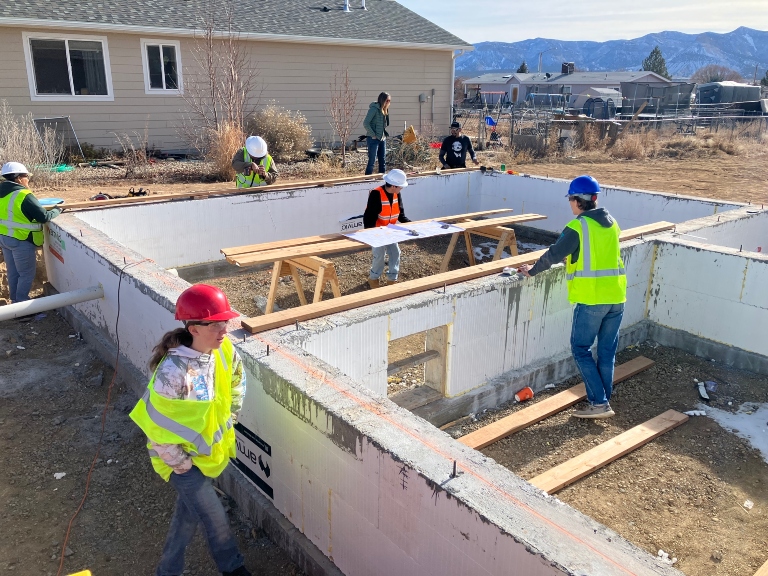
PCCSW’s construction trades students framed an entire house in partnership with Habitat for Humanity. Educators and community members expressed a desire for learners to participate alongside a diverse population, hence they included youth and adults, tribal members and other community members as well. The group worked side by side to frame each piece of the house in sections that were then transported to the home site, where the learners supported the assembly. Next, students in the electrical trades will work on wiring the home.

Empowering learners to challenge stereotypes

Fawnda Cotonuts, a Ute Mountain Ute tribal elder, embodies what empowerment through education can bring. She isn’t letting aging be a barrier to her continued learning. She said she “doesn’t have time to get old.” Instead, she’s learning how to operate power tools in the construction class. Not only does she want to be able to fix her own home in Towaoc, but she wants to leave a legacy of skills to inspire her children and grandchildren. She’s taking the drone class so she can check on the fences and her cows. And because she believes these classes can teach her community to become self-sustaining.

She shares that being on the ladder with her nail gun, she feels on top of the world and “If you could measure happiness, those days out there on the house would’ve been through the roof.” She has developed a sense of ownership over her education, and she is an advocate for herself and others.

Preserving cultural identity

Most importantly, for Cotonuts, these educational opportunities create role models for younger generations, demonstrating that higher education and career success are attainable goals, even in rural areas. They “let people see that there is life and money out there.” The celebration of education taking place in the community fosters a sense of pride, which then strengthens community bonds and motivates others to participate.

PCCSW and Habitat for Humanity have plans to continue their collaboration, connecting the building trades program with local needs. The construction of a new house makes a tangible impact on the community. And it emphasizes the importance of high-quality CTE for all. Upon its completion, a single mother will move in, and her children will hopefully find inspiration in the community energy vibrating in the walls of their home. PCCSW’s commitment to breaking barriers and fostering inclusivity serves as a beacon for all educators, inspiring each of us to transcend theoretical concepts, to address historical disparities, and to truly set the stage for economic empowerment.


Janae Hunderman works at the intersection of education and workforce development. She believes that each individual deserves to find work they enjoy: CTE for all! She is the workforce resilience program director for the Colorado Community College System and was a 2023 fellow in ACTE’s National Leadership Fellowship Program.

O.H. Perry Pepper IV studied American history as a nontraditional student, and he is deeply committed to not repeating history. He serves as the director of academic services for Pueblo Community College’s Southwest campus.

Read more in Techniques: Workforce Development in Underserved Communities.

Recruit diverse students in apprenticeship programs

To address the opportunity gap affecting learners and the workforce, stakeholders should seek to develop quality apprenticeship programs nationwide. This quantitative study compares the Federal Office of Administration Apprenticeship model to the State Apprenticeship Agency model in recruiting and retaining diverse students into apprenticeships.

Overwhelmingly, white men participate in apprenticeships at a far higher rate than any other group. This suggests that intentional efforts must be made to promote apprenticeship opportunities to all students beginning in K–12, but the question district and state education and industry leaders are asking is, “How?”

Show me someone who looks like me.

One of the most significant barriers to success is simply lack of exposure. Children are influenced by their immediate networks. And, historically, when children learn about careers, they see men in police, fire, construction, manufacturing and automotive careers. Where as women assume roles as nurses, teachers, bakers and office administrators. To break down gender-based misconceptions of who should do what, educators apprentice need to show students people who look like them in various occupations.

Seek out a diverse group of guest speakers from industry. Invite women engineers and male nursing faculty to participate. Being intentional in recruitment is a strong first step. To improve representation among women and students of color in apprenticeship programs, educators and industry leaders nationwide must collaborate and share best practices.

Collaboration is key.

As in all things, when we work alone, we will never achieve as much success as when we share promising practices through intentional collaboration. It has been my personal experience as a career and technical educator and administrator for more than 20 years that when industry and educators are given the opportunity to combine their efforts to develop strategic solutions, significant problems are solved.


When state and district education and industry leaders come together to consider solutions for the opportunity gap, they should ask themselves the following questions:

  • How are we providing students, as early as third grade, with opportunities to explore careers from all career clusters? What can we do better to showcase a diverse workforce?
  • How do we encourage all students to explore careers based on their aptitudes, not their genders?
  • What can we do to remove barriers in school and in the workplace?
  • How do we create a supportive, nurturing environment that makes it possible for all students to learn and achieve success?

Further, education stakeholders contend with the public image of apprenticeships as less desirable than college. This often makes recruiting difficult. And many employers have discovered that they need to begin their recruitment in ninth grade. Starting early provides opportunities for students and their caregivers to learn more and dispel any fears.

Diverse students succeed in apprenticeship.

CVS Health has developed robust and effective recruitment processes. When connecting with preapprentices, they provide detailed career information from the onset and continue to provide targeted support in the form of mock interview opportunities. Further, all enrollment decisions are made jointly with staff and their educational partners. The results re-emphasize the power of collaboration. CVS Health boasts a workforce made up of 80% female employees. Nearly half (49%) are Black and 22% are Hispanic or Latinx employees.

In Wisconsin, Joshua Johnson, the state apprenticeship director, said that he and his team go out into the community to promote apprenticeship opportunities. He explained that by working with the city youth programs and hosting community events and inviting people who “look like them,” they can achieve success with their recruitment efforts.

In conclusion, persist.

Work must continue to increase funding and access to apprenticeships. When leaders collaborate to share knowledge gleaned from experience, we move a little closer to equity. Create awareness campaigns that begin early and spotlight a wide range of careers in critical industries. These efforts will result in the continued growth of new opportunities. And they will improve existing apprenticeship programs that seek to better serve diverse groups of learners.


Joy Rich, Ed.D., lives in middle Tennessee and has worked in career and technical education for over 20 years. She received her doctorate in educational leadership from the University of the Cumberlands. Rich began her career as a high school marketing teacher and has served as a CTE consultant for the Tennessee Department of Education and as the director of experiential learning for the Tennessee Board of Regents. Currently, she is the assistant vice president of workforce development at Motlow State Community College.

Read Techniques in April 2022 to learn more.

test-Neurodiversity and CTE 2

More than two million manufacturing positions may go unfilled by 2028. In order to close this gap, we must ensure that all students have the opportunity to learn about career pathways.

r
One important session at ACTE’s CareerTech VISION 2023 — Neurodiversity and CTE: Meet Your Future Workforce — will feature a panel discussion on how to include autistic students in your career and technical education (CTE) programs.r
r
The Mitsubishi Electric America Foundation (MEAF) has worked toward disability inclusion since 1991 with a mission to help young people with disabilities maximize their potential and participation in society with a focus on empowerment through increased employment. MEAF works toward this mission by investing its grant dollars in youth preparation and employer education. The foundation connects the talent of neurodivergent youth with opportunities that lead to successful careers in fields like manufacturing and technology.r

Meet the Neurodiversity and CTE session panel

r

    r

  • Aspiritech is a Chicagoland nonprofit that was founded in 2008. They work to empower neurodivergent individuals to fulfill their potential through meaningful employment combined with social opportunity. Aspiritech provides training and employment in quality assurance (QA) and software testing pathways.
  • r

  • Blue Star Recyclers is an award-winning social enterprise based in Colorado. Since 2009, they have created permanent and competitive jobs, directly and indirectly, for more than 100 adults with disabilities. And they’ve recycled more than 30 million pounds of electronics.
  • r

  • Teaching the Autism Community Trades (TACT) was founded in 2016 by parents who wanted to create more opportunities for their son and other children like him. The mission of TACT is to encourage and empower a full spectrum of individuals through education and employment in the skilled trades.
  • r

  • The Uniquely Abled Project (UAP) began its efforts in 2013 and has since launched the Uniquely Abled Academy. The UAP trains, places and supports employees and their employers in the manufacturing industry.
  • r

r

Meet the Moderator

r
Tara MP Havlicek serves as program manager for the Mitsubishi Electric America Foundation. With over 15 years of experience in corporate philanthropy, her focus lies on national grantmaking and corporate employees volunteer programs. She also serves as an advisor with the National Disability Mentoring Coalition.

test-Neurodiversity and CTE

More than two million manufacturing positions may go unfilled by 2028. In order to close this gap, we must ensure that all students have the opportunity to learn about career pathways.

One important session at ACTE’s CareerTech VISION 2023 — Neurodiversity and CTE: Meet Your Future Workforce — will feature a panel discussion on how to include autistic students in your career and technical education (CTE) programs.

The Mitsubishi Electric America Foundation (MEAF) has worked toward disability inclusion since 1991 with a mission to help young people with disabilities maximize their potential and participation in society with a focus on empowerment through increased employment. MEAF works toward this mission by investing its grant dollars in youth preparation and employer education. The foundation connects the talent of neurodivergent youth with opportunities that lead to successful careers in fields like manufacturing and technology.

Meet the Neurodiversity and CTE session panel

  • Aspiritech is a Chicagoland nonprofit that was founded in 2008. They work to empower neurodivergent individuals to fulfill their potential through meaningful employment combined with social opportunity. Aspiritech provides training and employment in quality assurance (QA) and software testing pathways.
  • Blue Star Recyclers is an award-winning social enterprise based in Colorado. Since 2009, they have created permanent and competitive jobs, directly and indirectly, for more than 100 adults with disabilities. And they’ve recycled more than 30 million pounds of electronics.
  • Teaching the Autism Community Trades (TACT) was founded in 2016 by parents who wanted to create more opportunities for their son and other children like him. The mission of TACT is to encourage and empower a full spectrum of individuals through education and employment in the skilled trades.
  • The Uniquely Abled Project (UAP) began its efforts in 2013 and has since launched the Uniquely Abled Academy. The UAP trains, places and supports employees and their employers in the manufacturing industry.

Meet the Moderator

Tara MP Havlicek serves as program manager for the Mitsubishi Electric America Foundation. With over 15 years of experience in corporate philanthropy, her focus lies on national grantmaking and corporate employees volunteer programs. She also serves as an advisor with the National Disability Mentoring Coalition.

Unlock Career Success for Native Learners

Raise the Bar: Unlocking Career Success is an initiative that reimagines how our nation’s high schools prepare all students to thrive in their future careers. It blurs the lines between high school, college and career, providing students with accelerated and innovative opportunities to earn college credits and gain real-world career experience.

This joint effort — across the U.S. Departments of Education, Labor, and Commerce — supports public and private sector leaders, government agencies and other community-based organizations to help students earn postsecondary degrees and industry credentials that our employers need and our economy demands.


Key strategies to unlock career success

  1. Dual enrollment
  2. Work-based learning
  3. Workforce credentials
  4. Career advising and navigation

Under Perkins V, the Department of Education’s Office of Career, Technical and Adult Education administers the Native
American Career and Technical Education Program (NACTEP), the Native Hawaiian Career and Technical Education Program
(NHCTEP), and the Tribally Controlled Postsecondary Career and Technical Institutions Program (TCPCTIP). These three
statutory discretionary grants support delivery of high-quality career and technical education (CTE) programs with respect to Native culture.

Dual enrollment

Chief Leschi Schools, a tribal school in the Puyallup Valley in Washington, supports dual enrollment in several CTE programs, such as culinary arts, education, technology and health care. Admin have implemented a successful practice to centrally manage dual enrollment across the region. The initiative was created and is maintained by local CTE directors.

Through dual enrollment, Castle High School students can earn industry credentials and college credit toward a medical specialty. Castle High School (a subrecipient of ALU LIKE Inc., a nonprofit in Hawaii) established an early college partnership with Windward Community College (WCC) to ensure that dual enrollment credits earned in high school are aligned to college majors.

Work-based learning

In California, the Blue Lake Rancheria tribe offers paid work-based learning experiences with the option of student-designed or business-designed opportunities. Mentors emphasize employer expectations and provide job coaching. In addition to hands-on experiences with community mentors, students have access to Native student clubs, dual enrollment and industry certifications.

The Coeur d’Alene Tribe, in Idaho, hosted an Indigenous Summer Youth Internship Program that provided participants a
thorough history of the tribe. The summer program offered learning tracks in climate exploration, advanced art and animation, photography, medicinal plants, and storytelling and animation. The program empowers students to pursue college enrollment and to design a career continuing the work of restoring lands, water and people.

Workforce credentials

Navajo Technical University, in New Mexico, trains students to be self-sufficient and independent. Degrees and certificates (industry-recognized, tribal, state and federal) are offered in various CTE majors, such as the electrical trades and health care. NTU uses experiential learning activities, project-based learning, inquiry-based instructions, differentiated instruction, and co-curricular activities to improve student persistence, retention and graduation rates.

In North Dakota, United Tribes Technical College (UTTC) is a tribal college that provides quality postsecondary education and training to enhance knowledge, diversity and leadership for all Indigenous nations. Striving to build culturally empowered, educated and healthy leaders, UTTC offers a variety of academic and CTE programs. Workforce credentials are an important part of the equation.

Career advising and navigation

The Choctaw Nation of Oklahoma’s secondary career counseling begins with expanding tribal members’ interests through career exploration. Exploration opportunities include camps, monthly meetings with workforce professionals, and certification sponsorships. Postsecondary career advising also includes education success supports, family support services and employment guidance.

Kapi’olani Community College, Windward Community College and Marimed Foundation (subrecipients of ALU LIKE Inc. in Hawaii) integrate college and career advising in their CTE programs. Kapi’olani Community College provides students with academic, financial and career-readiness support while integrating the Native Hawaiian community and culture. WCC provides career advising services, coordinates Native Hawaiian guest speakers, considers their messaging, and provides continuous support.

Marimed Foundation offers best practices.

  • Create a safe environment.
  • Invite family members to student-led career plan presentations.
  • Create relevant work-based learning experiences.
  • Celebrate each student’s career accomplishments.

Daphnne L. Bonaparte is chief of the college and career transitions branch within the Division of Academic and Technical Education at the U.S. Department of Education’s Office of Career, Technical and Adult Education (OCTAE).

Patti Beltram Ed.D., is an education program specialist with OCTAE.


Read more in Techniques: Cross-disciplinary collaboration.

# # # # # #