The Wake of COVID-19

In the wake of the COVID-19 quarantine, educators are scrambling to find ways to continue the learning online. Unless you have lived in an area that was devastated by a natural disaster, you probably have not had experience with a disruption of education. Natural disasters wipe out physical resources as well as electronic ones, at least for a period of time. With a quarantine, we have an advantage in that an electronic means of teaching and learning is still intact. Still, we are scratching our heads and asking, “How can I effectively teach online with little notice? I’m not prepared for this!”
Two days before the start of my senior year of high school, an F5 tornado destroyed my school and much of my hometown and surrounding area. Twenty-nine people died and hundreds were injured. I would have been at the school’s tennis courts that day except the first match of the season was at a neighboring town. Less than an hour after the tornado, my teammates and I arrived back at the school to a massive pile of rubble and wondered if anyone was still alive. When we got off the bus, the sound of silence was deafening – no people out and about yet, no power lines buzzing, no cars moving, no birds singing, nothing. Crying mothers soon arrived… screaming, pointing at the school, and wondering where their practicing football players were. I can still see their faces.

I have been reflecting on this event much during the past couple of weeks. Although it happened nearly 30 years ago, the experience is still clear in my mind. More specifically, though, I have been examining this perspective: How did our teachers manage to get us learning less than three weeks after a tornado leveled the school?

Luckily, we were able to relocate to a vacated school about 10 miles away. In 1990, teachers taught with books and chalkboards and curriculum filed in three-ring binders, all stored in heavy metal cabinets and most of that was gone. We didn’t use the Internet. We did not have email or text messages and we certainly did not have apps like Zoom. Call waiting was still a coveted luxury.

I’m certain that no curriculum-based learning was accomplished during the first month. We were all just trying to keep our heads above the water. After all, many students and teachers lost their homes. Some narrowly escaped death. One teacher was killed in his classroom as he was preparing for the start of the school year. I find myself thinking of the strength the teachers must have had to return to the classroom just a couple of weeks after suffering tremendous personal and professional losses.

But as a student, what do I remember? I remember teachers who smiled and tried their best to make sure we were OK – whatever that was supposed to look like. I am sure lesson plans changed drastically, both in what was going to be taught and how. Donations of supplies poured in and some of it was usable and some was not. Teachers made do with what they had. We weren’t learning curriculum; we were learning life. We were learning resourcefulness and collaboration. We were learning problem solving and critical thinking. We were learning resilience and compassion. Our teachers did not teach these things to us. They modeled them.

This is not unlike what we are experiencing with COVID-19, except we do not have a visual reminder of rubble to signify what has been temporarily taken away from us: the physical aspect of teaching. Our schools are still there; we just aren’t in them. Teachers are scrambling to figure out how to teach their classes with new tools (technology) whether or not they possess the skill to do so. “Donations” are pouring in from companies offering free access to their online tools, often overwhelming teachers because there are so many options. Many can relate to their lecturing-was-the-only-option educator ancestors who, when handed a book fresh off Gutenberg’s press, thought, “What in the heck do I do with this?”

Here’s what I do know: you will not be able to teach what you intended to teach and you certainly won’t be able to teach it the way you intended. This kind of disruption forces creativity and innovation. It forces us to think outside the box. If our teaching doesn’t change as a result of this experience, we will fail to grow as educators.

We will also fail if we do not check on the well-being of our students throughout the rest of the semester. And I mean, throughout. Some of them will not be OK even after they have gotten used to the quarantine life. Some will be affected by COVID-19 directly but every single one of them is being affected indirectly. Some of my classmates are still not “fine” after the tornado. Giving students a worthwhile experience in your online class may be the only sense of normalcy they have right now. You know it’s not the best you can do for them, but it’s all you can do right now. Your students appreciate your effort.

Tell them you are trying. Tell them you are in unchartered waters. Tell them you are all in it together and that you are going to give them the best experience you can possibly give them, with whatever means you have. But above all, be brave. They will notice. We noticed. And almost 30 years later, I still remember.
HB 155 Testimony

Alaska, it’s time to recognize the increasing importance of CTE in preparing students for post-secondary education, training and the workplace. Our policies must match our priorities.

As the President of the Alaska Association for Career and Technical Education, I have the opportunity to work with school districts and post-secondary institutions across Alaska. Our board and members of our association are all united in the mission to ensure all Alaskan students have access to quality Career >amp; Technical Education. While CTE, or vocational education as it was once known, has been a part of the American Education system for well over a hundred years; the outcomes of CTE programs have changed significantly in those 100+ years. Gone are the vocational programs that isolated advanced academics as a separate track.  Gone are the vocational programs that only focused on low skill, entry level careers or homemaking. Today, CTE programs in Alaska prepare students for highly technical careers in oil >amp; gas production, mining, maritime, healthcare, aviation, telecommunications, and much more.  CTE programs today are preparing the next generation of engineers, dental assistants, data analysts, GIS technicians educators and phlebotomists. What these careers have in common is the opportunity to begin a pathway of study in high school and the need to continue onto post-secondary education or training.

In Alaska CTE programs provide some of the only career exploration opportunities for students, which is critical to helping them understand how their skills, interests and aspirations align with the workforce needs. Without CTE, many students will make college choices based on little to no experiential factors. While this can work for some, most will not make informed post-secondary education and training decisions which can lead to large amounts of debt, dissatisfaction and dropout. What we know is that students who concentrate in a CTE pathway graduate at a higher rate than their peers. In Alaska, CTE concentrators have a graduation rate of 95%. CTE students are bright, driven, and skilled. Many CTE students are already earning college credit before they even leave high school.  Another important statistic I want to share is that 41% of Alaska’s CTE students are economically disadvantaged, a trend that has been on the rise for 5 years.  So, we have to ask why CTE isn’t recognized as an important component of post-secondary readiness.

As our nation and state begin to recognize the critical role that CTE plays in closing our skills gap and preparing our next workforce, we must ensure that our policies reflect that priority. We have to allow students to take full advantage of post-secondary financial resources in preparation for in-demand careers. Let tell you the story of “J”.  She and students just like her are the reason I am so passionate about CTE.  These students deserve the opportunity to qualify for the Alaska Performance Scholarship.

“J” is a full time student in our district with a 3.8 GPA.  She has great attendance, gets high accolades from her teachers, counselors and administrators. Next week “J” starts an internship with a local business that focuses on sustainable home goods. She has spent the last month doing market research for this company and is working toward her Lean Six Sigma certification.  “J” plans to attend college. But “J” doesn’t qualify for APS because our policy prioritizes a foreign language over the highly marketable skills and dual credit she has already earned in her CTE courses.

I am not here to argue that a foreign language is less important than a CTE pathway, but I am here to urge our state leadership to recognize that CTE is just as important as a foreign language in preparing students for post-secondary education and training.

House Bill 155 is an important step forward in recognizing the value and rigor or Career and Technical Education.  Please reach out to our state and local leaders to urge them to support the amendment to the APS Scholarship program.

>nbsp;

>nbsp;

Educators Play a Part in Students’ Work-based Learning Experiences

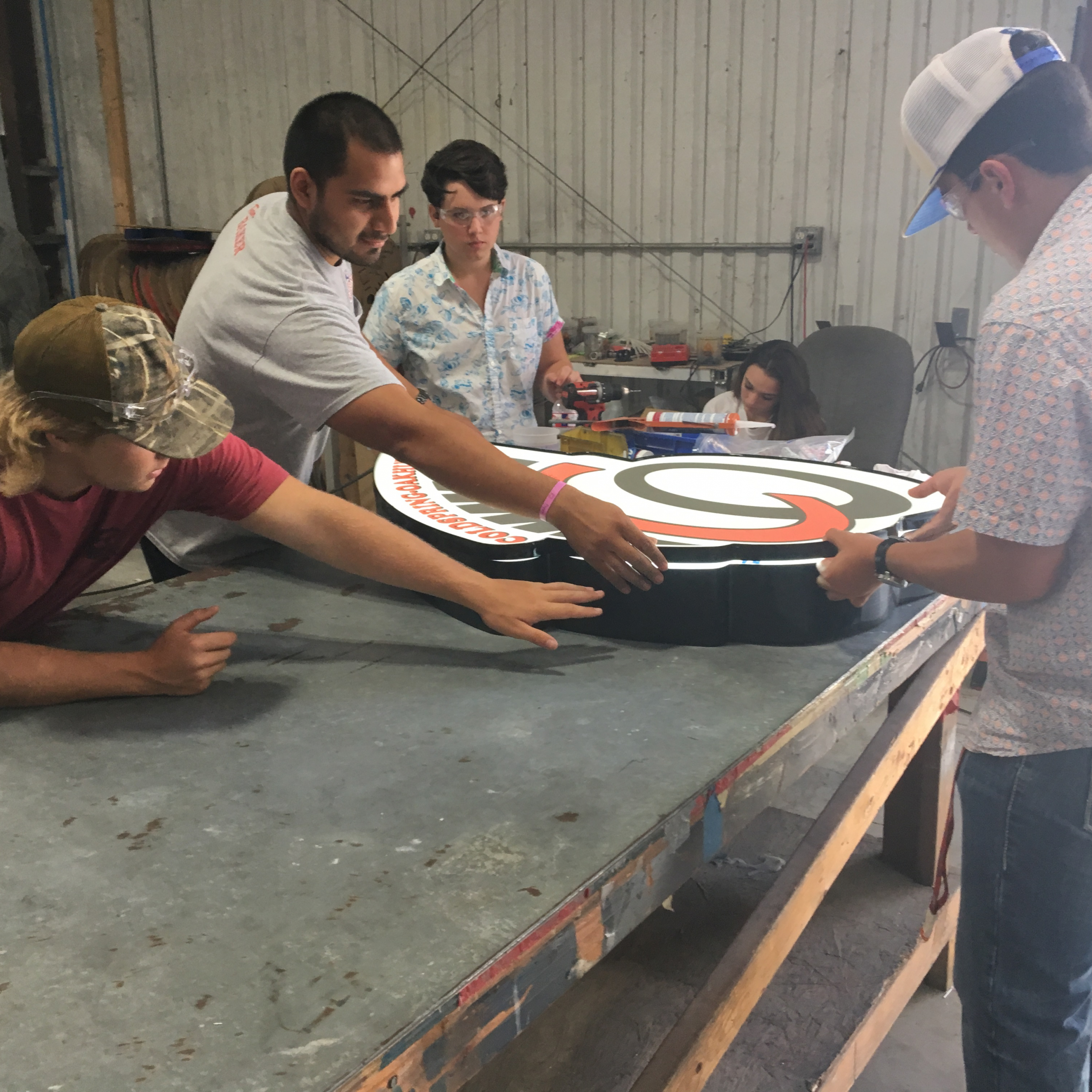
Bakers’ Signs and Manufacturing, Conroe, Texas

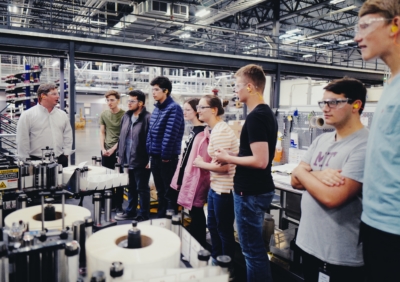
Students who have an opportunity to train on the latest equipment may have an advantage when it comes to being hired. Companies that build a relationship with students can attract much-needed workers — and know something of what they’re getting.

But what’s the role of — and benefit to — educators in work-based learning programs? Several sign, graphics and visual communications companies have successfully developed these programs and offer insight.

Understand the Industry

Each year, sign, graphics and visual communications companies participate in the annual Sign Manufacturing Day event, which opens doors for tours so that students can learn more about the industry. This introduction can help students envision their futures — and make educators aware of solid careers in an industry that often flies under the radar.

These companies produce all types of signs, from small printed products to massive digital displays. In between are branded signs like those famous Golden Arches or wayfinding signs that point to a specific building on a campus.

The sign, graphics and visual communications industry — like many other technical trades — is desperate for workers. It is a rapidly growing industry, too.

“It’s extremely hard to find workers because the sign industry is so competitive,” said Sarah Norris, human resources director for Cummings, a national sign company with high-volume production facilities in California and Alabama. “We’ve experienced the rapid pace of growth, so we’ve staffed up our plants.”

These rapid rates of growth can be seen across the spectrum: from small companies with just a handful of employees to the largest national and international sign manufacturers who may have thousands of workers.

Norris said she had hired 26 employees at one factory in the previous month. Skills needed range from welding to electrical, installation and fabrication. The sign, graphics and visual communications industry offers plenty of opportunity for long-term career growth. Within just a few years of launching a co-op with a local community college, one student is now a team lead at Cummings, Norris said.

“It’s an industry that allows you to grow in what you’ve been hired at, or to move up,” said Melanie Gillis, human resources manager for Ramsay Signs in Portland, Oregon. “We will not stop anybody from their growth.”

Students encounter signs hundreds of times per day but may never think about what it took to get the sign there, from concept to creation, and fabrication to installation.

“I can honestly say I never met anyone who thought of the sign, graphics and visual communication industry as a viable career option in high school or college,” said Matt Baker, co-owner and current operator of Bakers’ Signs and Manufacturing in Conroe, Texas. “That’s unfortunate because of the career opportunities we have in the industry. I’ve got several people making six figures this year. In terms of financial viability, there are huge pros to the sign industry as a whole.”

Impact Signs, Awnings, Wraps, Sedalia, Missouri

Because the products created make tremendous contributions to customers, the industry offers a “huge sense of accomplishment at the end of the day,” Gillis said. “It’s creative. It’s artistic. It’s technical and it’s not boring. You always have the next project that you get to create.”

A Collaborative Approach

The sign, graphics and visual communications industry is built on a collaborative approach. It collaborates with customers to land on just the right visual display and marketing techniques. It works with local cities on permitting approvals. It brings the same collaborative spirit to work with educators, too.

“Sign Manufacturing Day has really helped us to build better relationships with teachers,” said Jason Buxton, owner of Midwest Light >amp; Signs in Farmington, Missouri. After the 2018 event, two students applied for internships. But it is the ongoing relationship with the educators that has been the most beneficial, he said. “Not only are they trying to help; we’re helping them, too.”

Buxton has spoken with classes about trends in the industry and has advised on equipment purchases.

Baker said educators can learn a lot by engaging with the industry. “Software is changing every year. There are new tools and equipment coming out all the time. If teachers aren’t staying in touch with us, they may be teaching outdated methods.”

Baker’s participation in Sign Manufacturing Day pays dividends for the participating schools as well. Baker will reach out to the local school to ask if they need a sign on site. A Bakers’ employee will design the sign and the students will create it on the tour.

“Students have the ability to show off their craftsmanship, and every time somebody walks by that sign in the hallway, it allows us the ability to continue the dialogue,” Baker said.

An added bonus for the students and schools: Baker allows teachers to bring groups of students to pull from scrap products to use for welding. “It’s creating a path of least resistance to the materials that I’m going to donate and we get them exposure to the materials that we’re working with.”

There are long-term benefits, too, says Jane Mosey-Nicoletta, business development and community outreach professional with Ace Sign Company in Springfield, Illinois. “The more they can experience this, the better informed they are when they complete school,” she said. “What if they go through all this training and decide they hate it? Touring facilities, talking to people in the industry and job shadowing can help them make a determination about whether this is a field they’re passionate about.”

Constant Contact

Even if the timing isn’t right at the moment, things can change quickly. Maintaining communication is important.

When Gillis met a high school senior interested in graphic design, she kept in touch until he turned 18. “I kept reminding him we had a job for him if he was willing to be trained.” She uses the same approach with educators. “Staying in touch reminds teachers that there are jobs for their kids here.”

There are things that companies want from teachers, too, particularly when it comes to employability skills.

Sleek Advertising Ltd, Regina, Saskatchewan

“Students really need to know how to present themselves,” Norris said. “How to shake hands, ask questions, follow up. Resumes can give a snapshot of experience, but for students who haven’t had a job, a resume is important to detail what you’ve learned in school, the classes that you’ve taken.”

And if there’s one thing that Norris values most, it is “open, honest communication.” That, she believes, is a skill that “can always get somebody to the next level.”

In an industry that is rapidly expanding and in need of new workers, getting students and educators in the door is the first step in an ongoing relationship.

Alison Kent is director of workforce development for the International Sign Association. In addition to creating training programs for sign, graphics and visual communications companies, she assists them in recruiting workers into the industry. Email her.

Plan for High-quality CTE in a COVID-19-impacted School Year: A guide & call for innovations

The Spaces You’ll Go: An Interview with Author Rachael Mann

It was a stellar experience for attendees at ACTE’s CareerTech VISION 2019. The event kicked off with an opening general session address from former NASA astronaut Garrett Reisman, and we launched Rachael Mann’s new book, The Spaces You’ll Go, which takes children and parents on a lighthearted romp through out-of-this-world careers for little big dreamers.
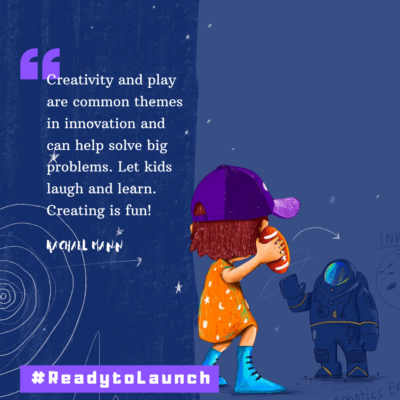
To prepare for VISION and her book launch, Rachael Mann sat down with PAGES, a Techniques blog, for an interview about The Spaces You’ll Go and the importance of dreaming big.

Who are the characters in The Spaces You’ll Go?

Cas — short for the constellation Cassiopeia — is the main character, along with her sidekick Kanga Blue. Kanga Blue is a stuffed toy by day and a life-sized robot Kangaroo during her dream phase. Together, they dream of the exciting things they may someday do related to space exploration.

What do you hope that children will get out of this book?

My hope is that children and adults alike will be inspired to dream bigger, aim higher, and believe that they can do whatever they dare to dream.

Why is your book important?

The Spaces You’ll Go is meant to empower young people to believe that they can do and be anything. Dreams always come before reality and when you encourage little dreamers to look beyond the planet we call home, you expand their horizons. They begin to see opportunities and occupations that do not exist yet. Our world needs dreamers, explorers and innovators, people who ask, “How can we?”

That is why it is important to give kids the freedom to discover what they love, what they are curious about, what they do well and what the world needs. At the intersection of these points lies their destiny.

For what kind of future are we preparing the next generation? How can we?

We are not only preparing kids for careers that do not exist; we are preparing them for lives that could quite literally be out of this world! That being said, the intent of this book is to let kids be kids… to spark wonder…. to inspire young people to imagine and visualize where and what their future will be.

What was your favorite book as a child?

The Little Engine That Could. This book sits on my nightstand still today! As a child, I had a condition called in-toeing and femoral anteversion, and I wore leg braces. As a result, I was typically the last child picked for teams in gym class. I found the story to be relatable and empowering.

What was the most surprising thing you learned in creating The Spaces You’ll Go?

I have wanted to write a children’s book for a long time and was surprised by the unique challenges of writing The Spaces You’ll Go. The total word count for a children’s book is less than that of one page in my first book, The Martians in Your Classroom. Initially, this seemed as if it would make for a much easier book to write, but, I discovered, the smaller the word count, the more each word counts!

In addition, the task of explaining complicated ideas in simple — and fewer — words is not easy, I also discovered that the audience for a children’s book isn’t necessarily children. The audience is the parents, grandparents, librarians, teachers and others first, and then the children.

I have had many people tell me that they have always wanted to write a children’s book. My advice after writing The Spaces You’ll Go is this: Do it! Put your words on paper and see where they lead. Enjoy the journey, and allow yourself to remember what it means to be a child and to dream and wonder. The process itself is as rewarding as the outcome.

Draw on the power and pull of space to get your kids interested in STEM at a young age. I hope this book serves as a launchpad to inspire wonder about the universe we live in, one we are only just beginning to understand.

Purchase a copy of The Spaces You’ll Go for the little big dreamers you know, available now in ShopACTE online.

For bonus resources, please visit rachaelmann.co; follow the author on social media @RachaelEdu. Join the conversation using hashtags #ReadytoLaunch and #SpacesYoullGo.

Rachael Mann is an author, educator and keynote speaker who is passionate about preparing today’s youth for the future. She speaks regularly on the topics related to STEM, career and technical education, space, education, and disruptive innovation.

Napa Educator Externships Expose Teachers & Students to Local Industry

In summer 2019, the California-based nonprofit NapaLearns partnered with the Napa County Office of Education to launch a yearlong, three-phased, work-based learning program called NEXT — Napa Educator Externships. These externships took place over three days and provided participants with comprehensive, on-the-job experiences. Participating teachers received a true picture of the work being performed, the challenges encountered, and the structure of a typical workday in various roles and departments within our local health care, hospitality and wine industries.

In the second phase of the program, they took the information learned and created a proposed unit of study or a project that integrated these industry skills into their existing academic curricula, which they presented to each other and their business hosts. Last, in spring 2020, the teachers will present the finished projects and the results to their business hosts in a showcase event.

What does NEXT mean to our teachers?

Almost 60 K–12 teachers spent their summers immersed in what it takes to run a business: sales, marketing, finance, human resources, manufacturing and much more. They developed employability skills, communicating and collaborating in daily meetings, and technical skills, using Excel spreadsheets and working in a lab.

Hear from Betsy Whitt, an integrated science teacher at Redwood Middle School in Napa:

We received many, many positive comments across the spectrum of K–12 teachers:

“We learned so much and felt we were given access to a world that we would never have been able to navigate otherwise,” said Keenan Hale, a visual arts teacher at New Tech High in Napa, California. “I’m so excited to share my own experience with my students who are interested in professions in this industry — students can be involved with healthcare on so many levels, and there are so many different entry points to find out if it is right for them.”

“It was really cool to see the skills I teach my students in action in the hospitality industry,” noted Kayla Bryant, an elementary school teacher at Napa’s Northwood Elementary. “It helped broaden my perspective on why collaboration and communication are so important by seeing these skills applied in real-world situations during every moment of our visits. It gave me a deeper understanding of the kinds of jobs some of my students may have when they enter the workforce and consequently made me feel more prepared to teach them and get them ready for their future.”

What does NEXT mean to our business partners?

During the externship, teachers got to see a variety of professions in-person and ask their business hosts questions that they had about the roles. By sharing their time and talents with participating teachers, businesses had the opportunity to support students, build relationships with local schools, and invest in their potential future workforce.

However, NEXT meant a lot more than that to the businesses: It was about building community and sharing their passions for what they do with the next generation growing up in Napa Valley.

One of the wine industry participants was Trinchero Family Estates (TFE). TFE is the second largest family-owned winery in the world and the fourth largest winery in the United States. It has a global presence in 50 countries and, according to Wine Business Monthly, it produced 20 million cases of wine in 2018 (Caporoso, 2019). They enthusiastically introduced teachers to their business.

“Trinchero Family Estates was happy to provide the teachers with a nearly end-to-end look at how we develop, make, market and distribute our products. Many of our staff are Napa residents and there is a strong sense of community within our industry,” said Kent Mann, director of operations for Trinchero Family Estates. “What was particularly satisfying was seeing some of our floor level operators, who were former students, come up to the teachers to say hello. The teachers, as well as the TFE folks who were involved, were fully committed to this program, and I believe that it was a very rich experience for all.”

What comes after NEXT?

The relationships between the teachers and businesses have been further strengthened by business employees becoming guest speakers in the classrooms and by hosting students for on-site or virtual field trips. For example, Trinchero Family Estates recently hosted 15 CTE computer science students from New Tech High School at their manufacturing facilities to learn about the role of robotics in the production and distribution of their wines.

The net effect of NEXT is to enrich the classroom experience for students through the teachers’ hands-on participation in the working world. According to the U.S. Department of Education, the average student-to-school counselor ratio is 482–1 (Fuschillo, 2018). Because this is such an important role, participating NEXT teachers are becoming “career ambassadors,” exposing students to job options that are available and the skills they need to obtain them.

NEXT provides the opportunity for more teachers to participate in CTE and to teach specific career skills to their students. Many students — and their teachers — are unaware of the rich employment opportunities available in Napa County and nearby regions. NEXT is a way to inspire and prepare our students for a wide variety of high-wage, high-skill and in-demand careers that are going unfilled. By integrating traditional academic teaching with career education, NEXT teachers are building high-quality classroom instruction and enriching their curricula.

Peg Maddocks, Ph.D., is executive director of NapaLearns, where she is responsible for advancing innovative programs to improve the educational outcomes of students in public schools throughout Napa County. While Maddocks has spent most of her career in private sector leadership positions, she began her professional life as a teacher, principal and program director in a K-12 public school district. Maddocks holds a bachelor of science in early childhood education/special education, a master’s degree in school administration from Rhode Island College and a Ph.D. in instructional psychology from Michigan State University.

REFERENCES
Caparoso, R. (2019). A listing of Lodi grown wines produced by non-Lodi wineries. Retrieved from https://www.lodiwine.com/blog/A-listing-of-Lodi-grown-wines-produced-by-non-Lodi-wineries.
Fuschillo, A. (2018). The troubling student-to-counselor ratio that doesn’t add up. Education Week. Retrieved from https://www.edweek.org/ew/articles/2018/08/14/the-troubling-student-to-counselor-ratio-that-doesnt-add.html.

AVTEC Online Professional Development Opportunity

Online Professional Development Opportunity! January through April 2020, AVTEC – Alaska’s Institute of Technology is offering a Methods of Instruction course covering Teaching methods/styles, learning styles, responsive teachers, create learning objectives, classroom management and assessments. Contact Trish Hart for more details. trish.hart@avtec.edu.

[pdf-embedder url=”https://www.acteonline.org/wp-content/uploads/2019/11/Methods-of-Instruction-Flyer-v2.pdf” title=”Methods of Instruction Flyer v2″]

AVTEC Practicums

Professional Development Opportunity: AVTECH is offering Practicums in Diesel Heavy Equipment, Maritime, Business >amp; Office Technology, Culinary Arts and Carpentry – February through April 2020. Contact Trish Hart for more information, trish.hart@avtec.edu.

[pdf-embedder url=”https://www.acteonline.org/wp-content/uploads/2019/11/CTE-Practicum-Flyer-2-sided-2020.pdf” title=”CTE Practicum Flyer 2 sided 2020″]

>nbsp;

2019 Professional Development Conference Wrap-Up

The 2019 Alaska ACTE Professional Development Conference is in the books!!!  It was a FANTASTIC 4-day event that provided hands-on learning, workshops, breakout sessions and tours of secondary and post-secondary CTE programs.  We are so energized by the quality of presenters that shared best practices at the conference!

Keynote

Dr. Kevin Fleming kicked off the conference with an inspiring message about the 4 skills and 4 steps for career planning.  Dr. Fleming shares our passion for helping students develop a career plan that stacks together skills and knowledge in preparation for the future.  He is an advocate for CTE programs and believes in the competitive advantage we give students in their preparation for future career goals.

Membership Meeting

The 2019 Membership Meeting was held on Tuesday, October 15th.  The membership voted on 3 items.

Section 4. Board Election Procedures – Passed

A Nominations and Elections Committee shall be appointed by the Board of Directors and will be responsible for nominating a slate of prospective officers, regional and sector representatives.

The Nominations and Elections Committee shall be assisted by the Secretary in conducting the election to occur during the fall, prior to the Professional Development Conference, and make public to the membership  at the Professional Development Conference with newly elected officers, regional and sector representatives taking office on November 1.

To be eligible for election as a voting member of the Board of Directors the candidate must have been a member of the Alaska ACTE for at least one year immediately prior to nomination.

In the event that not all board positions are filled by election, the newly elected President may submit to the Board of Directors at the first meeting of the new fiscal year, names of qualified individuals for direct appointment to fill the vacancies

Resolution 2019-1 – Passed

Alaska ACTE supports the reauthorization of the TVEP program for at least five years and requests the Alaska legislature continue funding this essential program. Read the full resolution here.

Resolution 2019-2 – Passed

Alaska ACTE supports HB 155 and requests the Alaska legislature to pass legislation that will provide avenues for students to incorporate CTE courses in their APS application. Read the full resolution here.

Awards

The annual awards ceremony is one of the most anticipated events of the conference.  This is a time where we recognize outstanding CTE teachers, leaders and industry partners in Alaska.  Details about this year’s winners and information can be found on the Awards Page.

Save the date

The 2020 Alaska ACTE Professional Development Conference will be October 11 – 14!  Save the date and stay tuned for more information.  We plan to continue adding full-day, hands-on workshops next year.

>nbsp;

Making Connections: Nonfiction & Postsecondary Success

On Oct. 4, 1917, Virgil Cook from Unionville, Missouri, enlisted at age 19 to serve in the U.S. Army. He was expected to understand words in context (specifically, medical terminology). He was asked to interpret, synthesize and use evidence found in a wide range of sources, whether that be from hand-drawn maps, weather data, verbal directions, his own common sense, or applying knowledge of the fighting in Central Europe before the U.S. entered the War. The aptitudes demonstrated by Cook and thousands of other World War I soldiers are universal; many of these essential skills that are now tested on the SAT: problem solving, reading comprehension, vocabulary, data analysis, algebra or geometry.

Although I never met Virgil Cook, I work with many high school students who mirror his characteristics. Why teens decide what path to pursue after graduation is, in large part, a mystery. We do know that providing a sound instructional base of essential skills in problem solving, literacy and math will prepare students to make reasonable decisions regarding life after high school. As educators, we need to provide appropriate and engaging reading options for students so they remain invested in their education.

The SAT Reading Test always includes the following:

  1. One passage from a classic or contemporary work of U.S. or world literature
  2. One passage or a pair of passages from either a U.S. founding document or a text in the Great Global Conversation they inspired, such as the U.S. Constitution or a speech by Nelson Mandela
  3. A selection about economics, psychology, sociology, or some other social science
  4. Two science passages (or one passage and one passage pair) that examine foundational concepts and developments in Earth science, biology, chemistry, or physics

The above list may seem like a challenge to use in just one content area. There are many nonfiction choices available for student reading that will resonate with all students.

  • The National Council of Teachers of English offers extensive lesson plans utilizing nonfiction. My favorite is “Analyzing Famous Speeches as Arguments” highlighting Queen Elizabeth I’s speech to the troops at Tilbury in 1588. This speech is a contrast to the one given by King George VI in 1939.
  • The National Council for the Social Studies features new books, lesson plans and a discussion board appropriate for teachers, parents, and students. Links to state social studies consortiums are also available. For example, Mark T. Kissling and Jonathan T. Bell, both from Penn State University, have integrated history, science, economics, and data analysis in their study “Climate Change and Pennsylvania Social Studies Teaching.” This approach to climate change can be duplicated by any high school and a comparison then made between the new findings and Kissling and Bell’s work.

Learning the vocabulary, systems, applications, and history of scientific areas is an intense process for any student. However, teens with no interest in biology or chemistry, for example, might resonate with physics.

  • The Science Teacher published by the National Science Teaching Association focuses on high school applications. Michael Blair researched my favorite approach in “Applying Age-Old Physics to Teach Modern Physics Concepts.” Blair highlights spears, atlatls, and trebuchets. Many of these inventions were first conceptualized by Leonardo da Vinci in the early part of his career over 500 years ago. My students created a reflection (essay, art, new machine, podcast) on Blair’s quotation “When once you have tasted flight, you will forever walk the earth with your eyes turned skyward, for there you have been, and there you will always long to return.”

Nonfiction options for reading and instruction are not limited to reading, writing, social studies, science and math. Nonfiction infuses music, art, dance, theatre and the movies. From each of these disciplines we reflect on various events in history with honor and perspective, and even see our own vision of the future. No matter where a school is located, there are always opportunities in the arts that are not geographically near enough for individual/class study. But opportunities abound in our digital age! Several outstanding museums have their entire collections online with accompanying lessons and essays, including The Louvre, Solomon R. Guggenheim, National Gallery of Art, British Museum, Smithsonian National Museum of Natural History, and more.

Nonfiction is also found in our own personal letters and family treasures, and here is where we return to Virgil Cook. After serving his country, Cook wandered back to Missouri and then to northwestern Nebraska, where he began a new life as a rancher. He and his wife raised one child, my father-in-law. His story is reflected not only in family lore, but in the archives of the Imperial War Museum. The IWM was founded in the midst of the First World War with a mission to preserve and tell the stories of all kinds of people. The museum sites feature a unique collection of objects that tell the human stories of lives engulfed in war and show how conflict has shaped the world in which we all live. This resource alone could engage teens in reading, history, geography, math and technology.

We have many Virgil Cooks in our classrooms across this country. We, as career and technical educators, have a responsibility to these students, to help guide them toward postsecondary success — whatever shape that path may take. To accomplish that, however, they need that synergistic spark: to learn and feel and lose themselves in our best writing, to discover topics they never knew existed, and to understand the interconnectedness of all subjects, all topics in the past, present and future.

Leanne Cook is a postsecondary education specialist as well as gifted education coordinator at a small, rural high school in Colorado. Learn more and discover additional options for nonfiction reading that will resonate with your students at ACTE’s CareerTech VISION 2019, where she will present a session — Nonfiction Options = Increased CTE Skills and SAT Scores — on Thursday, Dec. 5. This is an event you won’t want to miss! Register today; the VISION advance registration discount expires Friday, Oct. 25.

# # # # # #