Work-Based Learning in the Real World

Work-based learning (WBL) opportunities offer students an arena in which to apply theoretical knowledge in real-world scenarios. WBL students engage in hands-on experiences that mirror professional environments. And they gain practical skills. But the benefits extend beyond skill acquisition.

WBL students can gain a sense of social responsibility through community service. They develop empathy, cultural competence and a deeper understanding of societal issues. Through teamwork, communication, problem solving and adaptability, students learn to navigate diverse work environments effectively. These interpersonal competencies complement technical proficiency, ensuring students are well-rounded and prepared for the challenges of the modern workforce.

Work-based learning in the real world

The Randolph-Roanoke Career Tech Center (RRCTC) in Wedowee, Alabama, has joined forces with Habitat for Humanity of Randolph County on a project that could transform residential housing design and construction. The project follows a design concept developed by a retired high school construction and architectural drawing and design teacher. This innovative approach to housing development combines micro living design trends — with system-built (or modular) efficiencies and speed — and traditional, stick-built construction with conventional materials. In Alabama, they’re using a hybrid off- and on-site build process to construct unique micro box-style homes.


The product

The product is created by stacking boxes in a unique manner, ultimately rendering a modern architectural style in a uniquely designed, cool-looking configuration. An important feature of the individual boxes is their “micro” size. They are designed to be built on, or loaded onto, standard deck-over trailers for over-the-road transportation within the Department of Transportation limits. This means the boxes can be easily and economically delivered to job sites with half-ton pickup trucks — and without any need for wide-load flags and banners or escort vehicles!

The process

The process begins with construction and site plans. Singleton Designs LLC, developed and donated the home plans. And the site is located on one of four half-acre lots nearby. As the site is developed, a foundation will be built by Habitat for Humanity contractors. Then the RRCTC Construction program students will complete the framing of four structural modules. Framing includes waterproof exterior sheathing and roof decking. Students will also install windows and exterior doors off site and, with collaboration and support from the professional contractors, they may rough-in the plumbing and electrical too.

The process continues on site with a small crane and rigging crew to place and anchor the boxes to the foundation, and stitch and seal the joints. Now it’s ready for exterior surfaces and trim and the installation of mechanicals; the construction process will proceed to completion. Finally, Habitat will receive the keys to a house that will be someone’s home.

The opportunities for learning

This WBL project offers a strong example of how fostering workforce development can help address the needs of the underserved in our communities. In the landscape of today’s evolving workforce, CTE programs play a pivotal role in preparing students for success beyond the classroom. One innovative avenue for student growth lies in the partnership between Randolph Roanoke Career Tech Center and Habitat for Humanity. This collaboration not only fosters career exploration among students but also cultivates essential employability skills and promotes community service.

Students emerge as competent, compassionate and empowered individuals. And truthfully, everyone wins in this scenario. Habitat for Humanity advances its vision of a world where everyone has a decent place to live, and CTE educators have established partnerships to provide high-quality technical training. The Wedowee, Alabama, community’s economy benefits, and the new homeowners do as well! Embracing such innovative approaches not only enriches educational experiences but also lays the foundation for a brighter tomorrow.


Larry Singleton is a retired CTE teacher and a residential designer.

Logan Cofield is director of the Randolph-Roanoke Career Tech Center.

Read more in Techniques.

Diamond Don: Telling Stories That Matter

This is my CTE story.

When I started high school, I was a solid academic student; however, I lost my way. I began to struggle academically because I was too busy chasing girls, success in sports or popularity. Over time this approach left me feeling disconnected. I didn’t feel like I fit in anywhere. I became a loner. And by junior year, my GPA dropped to 1.9.

Suddenly, I was going nowhere fast. Then I learned about a radio station course offered through my high school’s CTE program. I had always been interested in radio, so I signed up.

Creating a lifetime of learning

Nothing was more exciting than going to my fifth hour CTE course every day and playing around on the radio station. Creating elements for different radio programs. Creating assets and drops and stingers. As I entered my senior year of high school, a good friend and I got our first radio show! On Monday nights, 8:00–10:00 p.m., we played house music and mixes. We took live calls and gave shoutouts, and it was fantastic!

Our radio show broadcast for a six- to 10-mile radius around the school. That low-powered FM station had an outstanding reach when I think about it. It was the most exciting time of my life.


My CTE story: The radio station gave me a reason to go to school.

While I was in high school, the Specs Howard School of Media Arts came to give a presentation. (The school is now part of Lawrence Technological University.) At the time I was struggling and unsure about what my next step was going to be. But their talk stood out in my mind. And I knew that, somewhere in my journey, I would go to this school. I knew I wanted to continue training in this field that I had grown to love so much in a short time.


Thanks to the encouragement and dedication of a fantastic teacher, with whom I’m still friends, I graduated from high school with a 2.2 overall GPA. I made it out, barely.

Learning what not to do

I needed postsecondary counseling and real career direction that I never received. I only went to college because someone had seen me play football and thought I could benefit their team. Turns out, I didn’t make it past football camp. And I was committed to a school I never wanted to attend. I skipped a ton of classes. I did absolutely no classwork. There was a lot of partying and drinking, and in certain moments, my outlook was dark and depressing.

By November, I was back home with my parents. I remember my mother said, “You can live here, but you better be working.” So, I worked jobs in retail; for the city’s forestry department, trimming trees and chipping bushes and branches; and as a janitor. After a while, I realized what I needed to do. I needed to go to Specs Howard.

I had no idea what I would find as I continued my education in radio. What I found was my village. I found people doing something that they loved.

Once, I submitted an audio production to a statewide broadcast contest sponsored by a local conference. I spent all day working on that submission, making the smallest changes. My instructor sent me back and forth to the lab. And when I got frustrated, he would look at me and say, well, if you want to win, this is what you got to do. He was right. Plus, I truly loved what I was doing. I submitted the work, and I took second place.

I went from skipping high school and college classes to never missing a day. In fact, I was only late three times. My previous C+ average became an A by the time I graduated from Specs Howard. Even on my off days, you could find me in the audio lab area, experimenting with editing and mixing sound. At graduation, I remember the director of education calling me the “hardest working man in radio.”

At Specs, I got my first internship, which led to my first part-time job in radio as a board operator on Saturday and Sunday mornings. It was here where I met my first African American teachers, whose feet I sat at every single day. Representation does matter. It was the first time I ever saw people who looked like me in front of me, teaching.

Telling my CTE story

From there my life opened. My first full-time job was off-air in a major market. This then led to me moving away from home and working full-time on-air in a medium market. Later, I came home to go back to college. This time with direction, purpose, and nine credits that would transfer thanks to an articulation agreement. I spent the next 10 years going to school part-time while working full-time at Specs Howard, teaching what I loved.

My skill set began to grow. I took the experience I had gained into the public school district, where I worked as the program director, audio production director and liaison for their public radio station. Later, I became a digital media producer for the district; I developed video vignettes for the communications department.

Eventually, I re-enrolled at Specs Howard and got my digital media certification. Then I took a job as the director of multimedia for a local high school CTE program. I went back to school again, got a Master of Business Administration, and met my future wife.

Now I am a national CTE trainer for CAST; a second-year doctoral student focusing on curriculum and critical social inquiry; and a postsecondary leadership fellow studying diversity, equity and inclusion. Thanks to career and technical education, I found my self-esteem. I became a creative. I expanded the boundaries of what I could do, and I have never “worked” a day in my life. CTE gave me all of this. All I had to do is say these words on-air back in high school: “88.3 WSHJ. This is Diamond Don, and you’re in Dance Mix 86.”


Donald Walker is a CTE educator and a former radio DJ.

Read more in Techniques: Tell Me a Story of CTE.

How-To: Support CTE Students

“One of the biggest challenges facing postsecondary CTE students is the school-life balance. Developing creative strategies for support systems is important,” wrote Taija R. Jackson, vice president of student affairs at UBTech and a current participant in the NextLevel Postsecondary CTE Leadership Program. “Institutions can address these challenges with supports that include creating on-campus support centers that provide academic and emotional support, basic needs items such as food, and connection to other community resources like health care, housing, or utility and financial assistance. Supports could also include addressing the rapid technological advancements of the last decade and the needs this creates for some students.”

Each year, the fellows talk to Techniques with a common goal: to support our students.

“Our adult students come to us with jobs, family, and other obligations that they must figure out how to balance with becoming a student,” said Pam Gibson, dean of engineering and applied sciences at Fayetteville Technical Community College. “As educators, we must offer more flexible scheduling options, competency-based education, and credit for prior learning to meet the needs of our diverse adult learners.”

The NextLevel fellowship program provides professional and career growth opportunities to the next generation of postsecondary CTE leaders.

Alumni have described it as engaging, individualized, and memorable. The NextLevel Postsecondary CTE Leadership Program is made possible through the generous support of the ECMC Foundation. ECMC Foundation is a Los Angeles-based, nationally-focused foundation. Their mission is to inspire and to facilitate improvements that affect educational outcomes — especially among underserved populations — through evidence-based innovation.

“Thank you, NextLevel Postsecondary CTE Leadership Program. Thank you as well to ACTE, Techniques (Hi, Lia!), staff, my mentor Dr. Christy Ponce, and ECMC Foundation,” wrote Speranta Klees, postsecondary partnership manager at West-MEC. “I am learning so much this year, thanks to all of you.”

Engage with ACTE.

This program offers a unique opportunity for postsecondary CTE educators. Grow in your career! And engage with ACTE too. Fellows work alongside a cohort of peer professionals and an experienced mentor. They learn to communicate, collaborate, network, problem solve, and use time and resources effectively. Learn more.

Virginia Tech research faculty member Jim Egenrieder shared another way to get involved. “A newly formed postsecondary committee within the Work-based Learning Division is welcoming new members. Join us to explore and address challenges related to WBL in postsecondary CTE.”


Read more in Techniques: A How-to Guide.

Learn & build relationships

Meet Rana McVay, assistant director of business and industry services (BIS) at Tulsa Technology Center in Tulsa, Oklahoma. McVay is a founding member of ACTE’s Inclusion, Access, Equity and Diversity (IAED) Advisory Group. Her interview appears as part of a spotlight series on advisory group members and educators striving to increase access to high-quality career and technical education (CTE).  

Please share a little bit about yourself. What inspired your interest in CTE?

I started my first real job in January 1995 as a homeowners’ claims adjuster for a major insurance company. But after two years of climbing roofs and arguing with contractors, I decided to change gears. I followed my heart and applied for a teaching position. 

My first teaching role was as a business, marketing and information technology education instructor at U.S. Grant High School in Oklahoma City. I attended my first summer conference (Oklahoma’s annual CTE conference) in August 1997. And I didn’t have a clue what to expect, but that conference changed my life.   

While walking around during the lunch hour, a Black gentleman stopped me and said that I should attend a luncheon being hosted by the Oklahoma Association of Minorities in Career >amp; Technology Education (OAMCTE). It was as if the heavens had opened up. I walked into a room full of people who looked like me and who also were in love with CTE. 

That interaction jump-started my leadership journey. I served as secretary, scholarship chair, and for two terms as president of OAMCTE. Because of the knowledge gained through this experience, and through my desire to stay on the leadership path, I became president of Oklahoma ACTE (OkACTE) in August 2019. I’m proud to say that I am the first Black person to serve as president for this state organization, which supports more than 4,000 members. 

CTE and I fell in love at an early age.

Throughout my career I have worked as a classroom instructor and a CTE program supervisor, and currently, I serve as the assistant director with BIS at Tulsa Technology Center. Twenty-six years later, I’m still searching for opportunities to serve. My passion for CTE and these organizations have launched my career in directions I could not have imagined.  

What was your education experience like? What did you study?

I attended Northeastern State University in Tahlequah, Oklahoma, and obtained a bachelor’s degree in business education. I was fortunate to attend college on the President’s Leadership Class academic scholarship, which paid for my tuition, fees, and room and board. Had it not been for that financial assistance, I’m certain I would not have received my degree directly after high school. Then, with consistent encouragement from my current director, Matt Litterell, Ed.D., I went back to school in October of 2019. I received a Master of Arts in educational leadership from Southern Nazarene University located in Bethany, Oklahoma, in June 2021.One of my barriers was the expectation that I would not attend college. It wasn’t that I didn’t have the academic ability. But I didn’t have the financial means. I grew up in a single-parent household, where I was the first to graduate from high school. I am number three in a family of four girls, and both of my older sisters had children by the time they were 16 years old. Because I was determined to not become a part of that statistic, I became more involved in school activities and developed relationships with like-minded folks to help me stay the course. There were adults who noticed my determination and love for education and invested their time in me. I am where I am today because of them.   

One of my mentors is Jocelyn Payne, Ed.D., who I met when she was a vice president at Northeastern State University. And she is responsible for me applying for the President’s Leadership Class scholarship. I consider her as another mother to me. She also coordinated my wedding. 

I must say that my mother, Cheryl Adkins, was the most influential person in my life. She taught me how to carry myself and what it meant to be a woman devoted to the success of her children. She had it tough, and she was tough on us. But as an adult, I have the greatest appreciation for the unique and somewhat unorthodox teaching moments that she delivered. She was a preschool teacher for many years and watching her pour into the children of others motivated me to want to pour into the lives of others as well. 

Please briefly discuss your role with ACTE’s IAED Advisory Group.

I am one of the original members of this advisory group, and I am proud to say that I have been an active participant in redefining ACTE’s IAED community. There are so many unforeseen challenges to this work. But after deliberation and a host of constructive conversations, we agreed on a path forward to develop the IAED Mentorship Program. This would open a door to building relationships and a better understanding of how ACTE serves underserved and underrepresented populations. 

I have volunteered as a mentor for the past two years, and the relationships developed from this work are priceless. Because of that, I’m encouraged to stay the course. I am dedicated to the work associated with IAED, and I am determined to remain engaged. 

In your opinion, what are the greatest challenges facing education today? And how can CTE leaders act courageously to develop stronger, more inclusive learning environments for all? 

Our greatest challenges are people. People don’t fully respect or appreciate one another and their differences. If people did those things, there would be no need for initiatives and programs that address inclusion, access, equity and diversity. But we can’t stop talking about IAED.  We have to continue to be uncomfortable until we can get more comfortable.  Sharing and training others on how to build relationship must continue; it’s how we deliver it and how we share it that’s going to have the greatest impact on our society. 

What can Techniques readers expect to gain from participating in ACTE’s IAED activities? And why do you think they are important to offer the larger ACTE community at this time?  

There’s a huge opportunity to network. If you’re not familiar with the IAED work, that’s okay! Showing up is one of the most important steps. Through these networking opportunities, there is exposure. There is increased awareness, and there is relationship building. You could experience a type of growth that you may not otherwise, just by being present. 

ACTE is a national organization with a membership of diverse individuals.  

As educators, we’re always seeking best practices to influence students as well as our colleagues. With the support of resources and activities led by ACTE, there are many more conversations to be had — within institutions and our homes — to strengthen IAED relationships across the country and the world. 

Is there anything else you’d like to share?

Thank you for allowing me to participate and share my point of view. Education, not just CTE, is my passion. I try to walk in my truth each and every day and I pray that as we continue to learn from one another that we get to know each other as well. I’m an open book who is willing to have a conversation with anyone. If we talk together, we grow together. 


Learn more and join the book club

Book club will occur as the culminating event of ACTE’s 2022–23 IAED in CTE webinar series — in April 2023. Those who wish to participate are encouraged to read one or both books listed below. Then consider how the work of Glenn E. Singleton, Ijeoma Oluo, Donald Walker and you can change people and hearts and entire organizations.

Courageous Conversations About Race: A Field Guide for Achieving Equity in Schools

Schools, like all organizations, face a nearly insurmountable hurdle when addressing racial inequities — the inability to talk candidly about race. In this timely text, author Glenn E. Singleton enables you to break the silence and open an authentic dialogue that forges a path to progress for racial equity.

So You Want to Talk About Race 

The stakes could not be higher, and the task ahead seems daunting. Ijeoma Oluo guides readers of all races through subjects ranging from police brutality and cultural appropriation to the model minority myth in an attempt to make the seemingly impossible possible: honest conversations about how racism infects every aspect of American life.


Learn more about CTE education leaders working to advance IAED in CTE.

>nbsp;

CTE teaching is awesome!

Meet Matthew Green, a career and technical education (CTE) teacher, instructional coach and building leader at On Track Academy in Spokane, Washington. Green’s interview appears as the latest installment in a spotlight series on education leaders and members of ACTE’s Inclusion, Access, Equity and Diversity (IAED) Advisory Group.

What inspired your interest in CTE?

After 10 years teaching math at a comprehensive high school in Spokane, I joined the staff at the Riverpoint Academy (RA). RA was a radically collaborative, interdisciplinary, project-based high school located in a neighboring school district. And there I taught engineering, design, rapid prototyping and computer science.  

The school district paid for each of us to earn CTE certification. So, my teaching partner and I designed and built a makerspace and supported making across the curriculum. It was an incredible opportunity and one that changed my trajectory for teaching and leading forever.  

What was your education experience like? What did you study?

I was a good enough student in high school, and during college and graduate school. I had a home, supportive parents and enough financial resources. And I recognize that I am a child of privilege.  

I earned a Bachelor of Arts in mathematics from Whitworth University and a graduate. degree in educational technology from Boise State University. I’ve also completed coursework for a Doctor of Philosophy in mathematics and science education at Washington State University. I’ve come and gone from that program twice, leaving each because my deep love for the study of teacher education was eclipsed by my present work in innovative learning spaces. And by my desire to be a good partner to my wife and dad to my children. Maybe I’ll get another degree someday. Maybe not =) 

I am self-taught in most things I teach now. This has involved lots of false starts, many experiments and a very circuitous route to expertise. But the journey has helped me become a savvy, flexible learner >amp; teacher.  

What barriers did you face in pursuit of education?

I said it before, traditional education “worked” for me. By most metrics, I succeeded. But after 20 years of teaching in a variety of environments, I can say with confidence that I didn’t really engage in learning. High school didn’t really feel like it was for me. I got through it. I was active in sports, and I got along well enough socially, but I never felt all that connected with what I was learning. 

Please briefly discuss your role with ACTE’s IAED Advisory Group.

The work of IAED is close to my heart. I believe the gifts and opportunities I have been given are for sharing with others. I feel a beautiful obligation to make room for everyone. As a white man, I won the privilege lottery and am driven to help eliminate the deep systemic inequities that exist in our society.  

I care deeply about each student’s access to high-quality learning experiences. I have had the chance to work closely with educators, students and their families, and I’m convinced that radical access and co-design are the means to increasing student agency and buy-in. Humans crave the opportunity to shape their own experiences. All students can flourish if we work with them to eliminate the barriers in our learning environments. 

In your opinion, what are the greatest challenges facing education today? And how can CTE leaders act courageously to develop stronger, more inclusive learning environments for all? 

Students need access, belonging, personalization, agency, and the opportunity to find meaning in their work. As educators we share a beautiful obligation to strive ever onward. Co-create high-quality learning experiences alongside students. If we work to recognize that the student, guide (educator) and environment are equally important in any learning endeavor, and that students and guides all influence the environment, then we may gain the tools we need to work together. 

ACTE is excited to host its IAED book club this month! What can Techniques readers expect to gain from that experience?

I’m excited about the conversations that come from book club! I’m a CTE/STEM educator who could have been just as content in the humanities. I love the opportunity to connect with other people and share experiences and ideas. Book clubs, and the discussions they foster, can meet so many needs. They can spur and inspire. They can challenge; they can encourage and validate. I’m optimistic that those who choose to engage will find value for themselves and others. I hope you’ll join us so we can be inspired and learn from you! 

Is there anything else you’d like to share?

CTE teaching is awesome! It comes with so many opportunities! But they do come at a cost. More paperwork, more time, more details, more challenges. I think CTE teachers can feel unappreciated or unseen.  

We see you! We see how much extra time you put in to develop pragmatic and meaningful learning experiences. Your work will springboard them into the future. Thank you! 


Learn more and join the book club

Book club will occur as the culminating event of ACTE’s 2022–23 IAED in CTE webinar series — in April 2023. Those who wish to participate are encouraged to read one or both books listed below. Then consider how the work of Glenn E. Singleton, Ijeoma Oluo, Donald Walker and you can change people and hearts and entire organizations.

Courageous Conversations About Race: A Field Guide for Achieving Equity in Schools

Schools, like all organizations, face a nearly insurmountable hurdle when addressing racial inequities — the inability to talk candidly about race. In this timely text, author Glenn E. Singleton enables you to break the silence and open an authentic dialogue that forges a path to progress for racial equity.

So You Want to Talk About Race 

The stakes could not be higher, and the task ahead seems daunting. Ijeoma Oluo guides readers of all races through subjects ranging from police brutality and cultural appropriation to the model minority myth in an attempt to make the seemingly impossible possible: honest conversations about how racism infects every aspect of American life.


Learn more about CTE education leaders working to advance IAED in CTE.

>nbsp;

Serve, lead, effect change

Meet Donald Walker, a career and technical education (CTE) trainer working with CAST. Walker delivers in-person and remote professional learning, technical assistance, coaching, guidance and support in a variety of contexts across the country. His efforts also support CTE-based grant writing, data analysis and content development. CAST is an educational research center that seeks to expand learning opportunities so that all students may succeed.


Walker’s interview appears as the second installment in a spotlight series on education leaders and members of ACTE’s inclusion, access, equity and diversity (IAED) advisory group. As ACTE strives to build an inclusive culture — celebrating the diversity of the CTE community — the advisory group provides recommendations, expertise and outreach to support this important work. Read on to hear from Donald Walker as he discusses his educational experience and what education leaders can do to develop more inclusive learning environments.

Please share a little bit about yourself. What inspired your interest in CTE?

I am a radio broadcaster and now a video storyteller by trade. I have spent the last 31 years teaching in a trade school and later working as a videographer and editor for Detroit Public Schools Community District. Then I became director of the multimedia program at the Detroit School of Arts.

CTE was my savior in high school. I found the high school’s radio station and quickly found it was something I could claim as mine during a time when I was rather lost. I was good at it, too.

When I tried college as I was expected to do, I failed miserably because I was too distracted and did not have a plan. Though I was smart enough to go to college, I was not ready for that life.. But I was ready for my passion, which was (and still is) radio. My trade school was a place of extreme pride and joy. I excelled! Later, I returned to work at that school to give to others what I received… a chance to achieve their dreams. The rest is history!

What was your education experience like? What did you study?

As I mentioned, my first attempt at college was terrible. I was not ready. So, my true educational experience began at the Specs Howard School of Media Arts. It was fantastic! I loved spending every day connected to what interested me. I worked harder than I had before, and I was the first in my class to get a full-time job “in the business.” (In 2020, I was inducted into the Specs Howard Hall of Fame along with several of my peers.)

After working for about a year, I went back to college to get my degree, fulfilling a promise I made to my grandmother. I studied communications and worked part-time in the radio business and taught at Specs Howard. It took me 10 years, but I finished cum laude! I went on to earn an MBA, and now I am a doctoral student at Wayne State University.

What barriers did you face in pursuit of postsecondary education? How did you overcome those obstacles?

Having been a first-generation college student, I found that people don’t really understand how much of a barrier that really is. Not knowing how to navigate the system, how to deal with professors, how to handle the homework load, etc., can be daunting. Especially since I was working full time! I wanted to drop out more times than I can say. At every level this has been a challenge, except now at the doctoral level, because my wife has her doctorate and she has been guiding me!

Lack of representation is a barrier.

When I enrolled in college, I did not realize how important it was to find someone who looked like me until I met Dr. Lyn Lewis. Having someone who understood my culture and challenges as an African American was invaluable. She knew how to challenge me, and she was someone I could look up to. She reflected and understood parts of me; I didn’t have to explain. Often, I wonder where I would be if I had met more teachers who looked like me and who could have helped guide me through the college life experience.

Please briefly discuss your role with ACTE’s IAED advisory group.

I am new to the group, so my role is being defined with each experience. For now, I want to serve and provide whatever insight I can, leveraging my personal, professional and academic experiences. I hope to open doors and minds, challenge people’s thinking, and expand my own perspectives.

How can education leaders act courageously to develop stronger, more inclusive learning environments for all?

Introspection. Honest, deep, courageous introspection. Honest introspection leads to awareness, which can be frightening and requires true courage but leads to growth. Growth leads to innovation, expanded thinking and positive action, which support everyone.

I’m paraphrasing Frederick Douglass (1857) when I say, if there is no struggle, there is no growth. For progress to occur in our education systems, educators must engage in reflection. Everyone who interacts with our students — elementary, middle, high, postsecondary — must dig deep, be brave and grow.

What can education leaders expect to gain from engaging in professional development around IAED in CTE?

Recent webinars and the upcoming book club event are fantastic tools to generate conversation, gain insights and learn. These are the tools to serve an introspective mindset! Participation may result in some feelings of discomfort, but with a positive mindset to challenge issues and ways of thinking, not people, this is a great way to grow!

Is there anything else you’d like to share?

I’m honored to be a part of this community. And I look forward to serving all those I can.


Learn more and join the book club

Book club will occur as the culminating event of ACTE’s 2022–23 IAED in CTE webinar series — in April 2023. Those who wish to participate are encouraged to read one or both books listed below. Then consider how the work of Glenn E. Singleton, Ijeoma Oluo, Donald Walker and you can change people and hearts and entire organizations.

Courageous Conversations About Race: A Field Guide for Achieving Equity in Schools

Schools, like all organizations, face a nearly insurmountable hurdle when addressing racial inequities — the inability to talk candidly about race. In this timely text, author Glenn E. Singleton enables you to break the silence and open an authentic dialogue that forges a path to progress for racial equity.

So You Want to Talk About Race 

The stakes could not be higher, and the task ahead seems daunting. Ijeoma Oluo guides readers of all races through subjects ranging from police brutality and cultural appropriation to the model minority myth in an attempt to make the seemingly impossible possible: honest conversations about how racism infects every aspect of American life.


Learn more about CTE education leaders working to advance IAED in CTE.

Inspire growth

Headshot of Kris Elliott (he/him) who wants you to participate in courageous conversationsMeet Kris Elliott (he/him), Ph.D., associate director of the Oregon State University (OSU) Extension Service and a valued member of ACTE’s inclusion, access, equity and diversity (IAED) advisory group. We’re so glad he took time out of his busy schedule to chat with Techniques. Because, in conjunction with a new IAED webinar series that launched this fall, we’re planning a big book club event in April 2023. He hopes you’ll be there!
Read more to find out what Elliott had to say about his experience in career and technical education (CTE), and how he believes courageous conversations are necessary for personal and professional growth.

Please share a little bit about yourself. What inspired your interest in CTE?

I didn’t grow up loving school. It was often hard for me to connect with what we were learning; I didn’t always get the “why” behind what we were doing. But that all changed in high school. As a rural kid with a farm background, I enrolled in the agriculture program.

The combination of hands-on learning in the CTE classroom and the opportunity to further develop my skills in FFA ignited a passion for learning I hadn’t experienced before. Eventually, this passion led me to a career in CTE! I have worked as a high school ag teacher, a school district administrator, and now I work in extension and engagement at Oregon State University. My passion for CTE continues in my current role because I’ve seen the positive difference it can make in the lives of students.

What was your education experience like? What did you study?

I’ve always loved the intersection of agriculture and science. We experience challenges in producing enough food and fiber for our growing population while continuing to care for our natural world. I believe science and technology can help us overcome this challenge and being a part of this work is exciting.

Further, FFA helped me learn to communicate about agricultural issues. I started out as a shy ninth grader, but through participation in events and projects, I quickly learned how to advocate for agriculture and education issues. As a high school teacher, I found it rewarding to give back. Hopefully I inspired my students in the same way my agriculture teachers did.

What barriers did you face in pursuit of postsecondary education? How did you overcome those obstacles?

I was the first person in my family to go to college. And I experienced quite a few access issues, just because we didn’t know. I remember learning about requirements for financial aid, from a friend, after the FAFSA deadline. I remember struggling to complete college applications on my own, from home, on a 14k dial-up modem. And I also remember the financial struggle, without student aid, to make it through my first year of college.

Once I got there, my university offered many great resources for student aid and part-time jobs to assist with tuition and housing. And I did graduate with student loans but was able to pay them back over time; I also earned a few state grants to help pay back my loans. The good news is, I think the awareness and support for first-generation college students has come a long way since 1996 when I graduated high school. But there is still a lot of work to do in higher education affordability.

Please briefly discuss your role with ACTE’s IAED advisory group.

My passion for equity has grown and continued to grow during 20+ yearslong career in education. I want to work toward a world where students can truly thrive in high-quality CTE programs, regardless of their background, identity or ability. In particular, I work with ACTE’s IAED advisory group because there is important work to do in CTE. We need to break down stereotypes and ensure that our programs eliminate any bias or barriers to success. The IAED group, with the support of ACTE’s board of directors and staff, is helping to do just that. This is challenging work, and I appreciate the CTE educators and professionals who are leaning in to create more equitable opportunities for all of our students (and ACTE members).

In your opinion, what are the greatest challenges facing education in 2022–23? And how can CTE leaders act courageously to develop stronger, more inclusive learning environments for all?

Just as we started to see some positive change, some educators face policies and procedures that prohibit them from discussing race and sexual or gender identity. And this erases the identity of many of our students — and educators for that matter. These should not be political issues. Educators should be empowered to acknowledge students’ identities and their own. In order to learn, students need to feel safe, seen, cared for and loved.

This fall, ACTE launched a new webinar series exploring IAED in CTE. And there’s another project we’re really excited about: book club! What can Techniques readers expect to gain from that experience?

We know discussing issues of equity, particularly around race, can be challenging and even scary. What if we say the wrong thing? What if something I hear triggers me? How can we engage in a brave way? We can’t shy away from these difficult conversations anymore. This book club will provide us an opportunity to talk, share experiences, and encourage each other — in hopes we can all engage in a collaborative process to create more equitable CTE programs of study for all students.

Is there anything else you’d like to share?

As a queer man, I have experienced being othered, teased and bullied. I am passionate about this work because I want to ensure we create positive learning environments for all of our students. No student should ever feel less than. No student should feel they need to change who they are to fit in. We want every student to belong in our programs, and this requires that we, the adults, work toward creating inclusive spaces. Our students are counting on us.


Learn more and join the book club

Book club will occur as the culminating event of ACTE’s 2022–23 IAED in CTE webinar series — in April 2023. Those who wish to participate are encouraged to read one or both books listed below. Then consider how the work of Glenn E. Singleton, Ijeoma Oluo, Kris Elliott, the IAED advisory group and even you, yourself, can change people and hearts and entire organizations.

Courageous Conversations About Race: A Field Guide for Achieving Equity in Schools

Schools, like all organizations, face a nearly insurmountable hurdle when addressing racial inequities — the inability to talk candidly about race. In this timely text, author Glenn E. Singleton enables you to break the silence and open an authentic dialogue that forges a path to progress for racial equity.

So You Want to Talk About Race 

The stakes could not be higher, and the task ahead seems daunting. Ijeoma Oluo guides readers of all races through subjects ranging from police brutality and cultural appropriation to the model minority myth in an attempt to make the seemingly impossible possible: honest conversations about how racism infects every aspect of American life.


Learn more about our work to advance IAED in CTE.

EIM Spotlight: Cindy Friedemann (Moore Norman Tech)

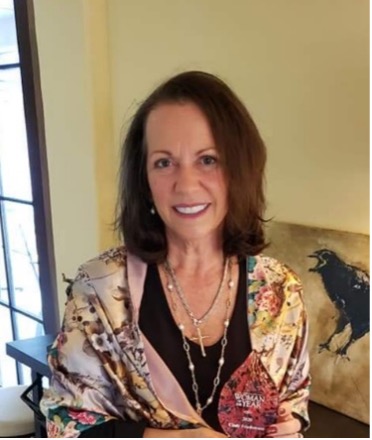
Image of Cindy Friedemann, director of strategic partnerships at Moore Norman Tech in Oklahoma. Moore Norman is an EIM with ACTE.Meet Cindy Friedemann, director of strategic partnerships at Moore Norman Technology Center in Oklahoma. Friedemann’s spotlight interview appears as part of a spotlight series on ACTE’s educational institution members (EIMs).

Established in 1972, MNTC is viewed as one of the nation’s premier educational and training institutions. MNTC is one of 29 technology centers within Oklahoma’s globally recognized CareerTech System. With two campuses in the Oklahoma City, Oklahoma, metropolitan area, MNTC places an emphasis on experiential learning and hands-on training. Adult and high school students gain meaningful career and technical skills that, in most cases, lead to state and national certifications and employment.

Students at Moore Norman may enroll in more than 30 career programs and more than 600 short-term courses. Recent areas of focus include state-of-the art public service and aviation programs. These programs are attracting industry and community interest and support.

Cindy Friedemann, Moore Norman Tech, EIM

What is your job title and what do you do?

As director of strategic partnerships at MNTC, I engage in state and national relationships to support and provide meaningful connections for our educators. Relationships with industry are crucial to successful and relevant career programs. I serve on state, local and national boards to bring additional awareness to CTE.

Further, I am currently the president of the National Council of Local Administrators (NCLA), which is a great resource for current and aspiring CTE leaders nationwide.

I have been a proud member of ACTE for 30 years, and NCLA is a great partner with ACTE, working together to produce a highly rated annual conference in September. This year, ACTE’s and NCLA’s Best Practices and Innovations in CTE Conference meets in Cape Cod! And it should be one of the best conferences yet!

What was your education experience like? What did you study?

My brother and I both were career and technical education (CTE) students all through our high school years at Eau Gallie High School in Melbourne, Florida. Go Commodores! Our family valued the ability to work with our hands. In fact, our parents repeatedly reminded us, “That’s fine if you want to attend college. But you are going to have a skill to support yourself first.”

My brother studied construction trades, served in the military, and went on to become a general contractor in Florida building for Walt Disney World, SeaWorld, the Ritz Carlton; taking on specialized large construction projects in Orlando, Florida. CTE provided a great foundation for his success.

On the other hand, my dream was to design women’s clothing. So, I studied family and consumer sciences. And my teacher, Mrs. Butler, was a stickler for teaching us to use all the machines. In addition to commercial and at-home garment construction machines, I learned to use and repair industrial sewing machines. This training prepared me to later help my college professors fix our classroom equipment! Then, later, when I held my dream job as a head designer in Atlanta, my CTE training helped me teach and coach the staff who manufactured my designs.

But that career ended when our family moved to Oklahoma. I achieved my master’s and was hired as a program planner for the state Department of Career and Technical Education in Oklahoma and have never looked back. It has been wonderful to translate seasonal fashion forecasting to forecasting industry needs. The skills I learned in my FCS education now help me support the development of new CTE programs.

What barriers did you (or you family) face in pursuit of higher learning?

I wanted to attend college and knew it would help me achieve my career goals and provide education to support me throughout my life. However, I knew I would have to pay for college on my own. I found a way to take 21 to 24 credit hours in a semester, and I worked in the library where there were opportunities to study and work. I set a goal to graduate in three years. It was a lot of work, but it was worth it. Nowadays, I would probably attend a community college first. That is another great way to achieve your goals and avoid student loan debt.

What led you to your current role at Moore Norman Technology Center?

A positive and longstanding relationship with the superintendent, Brian Ruttman, led to my current role. Ruttman and I worked closely together to create Centers of Excellence as colleagues and executives at our former employer, Metro Tech. I am delighted to have an opportunity to work with him again. He is a visionary leader who cultivates a positive culture and encourages industry engagement throughout our entire organization.

How do you like working in CTE?

I love the positive impact we make as CTE leaders, providing opportunities for individuals to pursue their passions and to thrive along with their families. I love seeing how our students can enjoy their lives with financial security.

When we in CTE work with intention, opening the doors to career options, our adult and high school students can find pathways they truly enjoy. Maybe we can all strive to reach that blissful state: to “never work another day in our lives,” because our jobs are fulfilling and financially rewarding.

Do you have any advice that you would offer to students who intend to pursue postsecondary education in CTE?

It is sometimes hard to know your gifts, and to know how to apply those gifts to a career. Everyone (students of all ages) should invest in themselves by taking the available, and often free, career assessments through local school and college counseling services. Don’t ignore the opportunity to take the ASVAB as well. The answers you find from these assessments can help you find career success. My other advice is to prepare yourself for challenging days. Do not give up when you face obstacles but become tenacious and resourceful, and you can succeed.

Is there anything else you’d like to share?

I have learned from many of the superintendents and state directors that I’ve worked for. My husband, Tom Friedemann, Ph.D., former superintendent of Francis Tuttle, has been an especially wonderful sounding board and personal resource. I have learned a lot from his leadership.

Learn more about educational institution membership with ACTE.

Meet Scott Stone, ACTE president

Meet Scott Stone, incoming ACTE president. To say hello and welcome, Techniques conducted an interview, which originally appeared in print in April 2022.


What is your job title and what do you do?

I am an agriculture instructor and FFA advisor at Centralia High School in Centralia, Missouri. I teach ninth- through 12th-grade students about agriculture. My course load includes:

  • Ag Science I
  • Ag Science II
  • Advanced Animal Science
  • Veterinary Science
  • Greenhouse Production
  • Floriculture

What was your education experience like? What did you study?

I received my high school education at Williamsburg High School in Williamsburg, Pennsylvania, where I focused on college prep and agriculture courses. Then I attended Penn State University and majored in agriculture education. I finished my undergraduate education and received a bachelor’s degree in agricultural education — teaching option — from the University of Missouri – Columbia. My master’s degree also came from the University of Missouri. I took that in career and technical education (CTE) with a focus on agriculture.

In your opinion, how can CTE conduct more effective outreach to diverse populations of students, faculty and stakeholders?

I think the job of any organization or group is to make sure that they are not unintentionally putting up barriers that make it difficult for diverse populations to become involved. As CTE educators, we have a unique opportunity to prepare students for future careers. We must ensure that any student, faculty or stakeholder who wants to work in this space has an opportunity to do so.

What do you hope to achieve as ACTE president?

My main goal as ACTE president is to make sure our Association is working as hard as we can for the profession. If the past two years have taught us anything, it is that we have no idea what may happen tomorrow. As an Association, we need to stand on the cutting edge of those changes and be prepared to help our membership where possible.

More specifically, I want to grow our membership. There is strength in numbers. We need to rely on each other. ACTE offers its members so many great benefits. And I don’t want any CTE professional to miss out on those benefits. I would love to see 100% of our states unified. We need strong state CTE associations to provide the support and resources each state needs. The only way we can build strong states is by joining and becoming involved on the state level.

Further, I would love to get preservice teachers more involved in ACTE. It is no secret that we have a shortage of highly qualified CTE professionals. I strongly feel that, if we can connect preservice teachers with professionals in the fi eld and support their needs, they will be more likely to enter — and remain in — CTE.

Finally, I would love to see more CTE professionals utilizing the excellent resources we have in CTELearn. This platform offers a wealth of knowledge for our professionals at a minimal cost. Our members can receive valuable training from the comfort of their homes or classrooms.

How has your experience in leadership at ACTE informed >amp; enhanced the work you do to provide high-quality CTE for all students?

I am proud to say I am a 25-year teaching veteran. I have always sought out ways to be involved in our profession. My involvement has allowed me to serve in leadership roles with the Missouri Vocational Agriculture Teachers Association, MO ACTE, the National Association of Agricultural Educators, and ACTE. Each of these experiences helped me to develop valuable partnerships with people I can call on when I have questions or need help. These resources, in turn, help my students receive the highest-quality education.

Serving in leadership roles has allowed me to attend conferences, such as VISION and the NationalPolicy Seminar. While at those conferences, I attend workshops that are relevant to my content area. I take the skills and knowledge I learn back to my classroom to become a stronger teacher for my students. In fact, my students often complain that I will make them try something new that I learned while away at a conference. They are usually right.

What advice would you offer someone who wants to become more involved in ACTE leadership opportunities?

I never saw myself as a leader. My first leadership role happened because no one else volunteered for the job. So, I said I would give it a try. I am not sure how successful I was in that role, but I loved the fact that I could make a positive difference for teachers and students. One position led to another. I just kept saying yes to different roles.

My focus never lied on what I could gain from the position, but instead what I could do to help the profession. Leadership is never about you; it must always be about the people you serve. If you are interested in becoming more involved in leadership, I would say go for it. If at first you don’t succeed, try something else. There are plenty of opportunities to become involved if you have the desire.

Is there anything else you’d like to share?

We have a fantastic ACTE board of directors and ACTE staff . We are here to serve the membership. Let us know what you need. We want to hear from you.


Meet ACTE’s board of directors.

Meet Chaney Mosley, ACTE president-elect

ACTE president-electMeet Chaney Mosley, incoming ACTE president-elect. To say hello and welcome, Techniques conducted an interview, which originally appeared in print in April 2022.

What is your job title and what do you do?

At Middle Tennessee State University (MTSU), I am an assistant professor of agricultural education in the School of Agriculture. There, I provide training and development for preservice agricultural education students. In this role, I teach courses on program management and teaching methodology in addition to supervising student teachers. I also work as an assistant director of theTennessee STEM Education Center at MTSU. In this role, I collaborate with other faculty to research and conduct outreach aimed at improving K–20 STEM education. Additionally, I’m a captain in the Tennessee Army National Guard where I coordinate joint military support to civil authorities during domestic emergencies.

What was your education experience like? What did you study?

I attended high school in the 90s when students were tracked into either a college preparatory path or a technical path. A lesser-known option I discovered was the dual path, which offered more flexibility in my schedule. So, in high school, I took agricultural education courses for four years. But I also took business education coursework and a family and consumer sciences course my senior year so I could learn how to cook!

I earned a Bachelor of Science in agriculture business with a minor in secondary education at MiddleTennessee State University. During my second year of teaching high school agriculture, I enlisted in the United States Army Reserve and received training as a medical laboratory technician while completing an associate of health science degree from The George Washington University. I later earned a Master of Education in administration and supervision from Middle Tennessee StateUniversity and an educational specialist degree in educational leadership from the University ofWest Georgia. Further, I completed a Doctor of Philosophy in agricultural and extension education from Virginia Tech.

In your opinion, how can CTE conduct more effective outreach to diverse populations of students, faculty and stakeholders?

This is a multifaceted question. But generally speaking, one of the most essential practices for reaching diverse populations is through representation. People are more likely to engage in CTE when they see, hear and interact with those who share identities and experiences. In theory, the concept is easy to digest. In practice, though, not so much. By nature, humans desire a comfortable environment in which to work, where people express like-minded thoughts and opinions. When someone challenges that comfort level with a different thought or experience, it becomes uncomfortable — not because we don’t want to work with diverse populations, but because we don’t know how.

Personally, I don’t like having my assumptions challenged. But I have enough self-awareness to realize my perspectives are not always correct. And my ideas are not always the best, so I intentionally engage with those who come from different backgrounds. And I’m willing to have uncomfortable conversations and learn from the lived experiences of others.

So, to conduct more effective outreach in CTE, we must be intentional. Invite diverse populations into our kitchen to cook the meal, even if they bring unfamiliar ingredients. A seat at the table isn’t enough. Ultimately, it is the responsibility of those in leadership positions at all levels to make this happen.

What do you hope to achieve as ACTE president-elect?

When I joined ACTE, I didn’t realize how valuable membership was. After completing the fellowship program and realizing there were many opportunities, I became very involved with the organization.And I hope others will do the same! By serving on the ACTE board of directors for the past three years, I’ve worked to increase member engagement by communicating, collaborating and creating, and I want to carry that same purpose into the office of president-elect.

Communication must go both ways. Therefore, I want to ensure ACTE has systems in place to gather input from members about their interests and opinions, and to learn more about how ACTE can better meet their professional needs. Invite members and others to serve on committees or task force groups, and to present at conferences, ACTE will continue to grow its collaborative network of people who want to be involved. Committee and task force work often results in recommendations, policies, and programs. Showcasing this work demonstrates how the voices of members affect decision-making.

How has your experience in leadership at ACTE informed >amp; enhanced the work you do to provide high-quality CTE for all students?

Providing high-quality CTE for all students is not easy but it is something I continue to work on. My own lived experiences inform my efforts to provide high-quality CTE for all students. And, further, my work is informed by the opportunities I’ve had to develop as a leader.

I champion the notion of CTE for all because of past experiences when I felt excluded. I choose to engage where I may not be welcomed because, without participation in these spaces, change will not occur.

In ACTE, I found a space where I felt welcomed. And I have observed barriers to access being removed. I have participated in conversations aimed and facilitating inclusion and equity for all members and stakeholders. Because I felt welcomed and valued, I sought out leadership development opportunities within the organization. My experiences with ACTE have allowed me to collaborate and learn from others who share a vision. And finally, working with policy committee members and other state leaders from my region helped me appreciate the unique needs of state associations, realizing a one-size-fits-all approach to CTE was not appropriate.

What advice would you offer someone who wants to become more involved in ACTE leadership opportunities?

Raise your hand! If you want to become more involved in ACTE leadership, let someone know! Seek out the leaders in your state and/or region and ask to learn more about opportunities. You may also visit ACTE and Techniques online. The ACTE website is a treasure trove of information and resources. It’s a great place to start!


Meet ACTE’s board of directors.

# # # # # #