Meet Brian Rick, postsecondary CTE fellow

Met Brian Rick, career and technical education (CTE) navigator at Southeastern Illinois College. His Techniques interview appears as part of a digital-exclusive spotlight series on fellows in the Postsecondary Leadership Success Program at ACTESponsored by ECMC Foundation.

What leadership skills did you develop as part of the Postsecondary Leadership Success Program at ACTE?

To be a good leader, you must see what other good leaders do. I believe in the value of networking and learning from others. Every person brings something to the table, and it’s great to meet people from other areas and see and understand their methods and skills. It’s also great to work with these people who share the same passion for CTE. Over the past year, we have worked together to promote the value of CTE and ensure success for our students.

Further, I have gained skills to be more of a transformational leader: working together, leading, being led, and empowering others to become leaders. I am grateful for the opportunities to learn and foster a data-driven approach to problem-solving. And, finally, I have become more strategic in my work to guide my institution forward.

In what ways have you innovated to engage students >amp; inspire colleagues in CTE through the COVID-19 pandemic?

The pandemic only accelerated a loss of educational opportunities happening in our school districts. In response, I took time to research and develop ways to increase program offerings. And I worked with educators throughout my state to create hybrid programming to serve students in rural areas. Offering classes in a hybrid format has also proven to be budget friendly. Though adapting to COVID-19 was a major undertaking, at the end of the day, we innovated to support the growth and development of our communities.

Our education systems face many challenges in 2022. Please discuss the steps CTE can take to improve equitable access to high-quality CTE programs of study.

CTE provides many pathways to a prosperous future. But misconceptions remain. Students and their families often don’t know about the many options available. The first way to achieve the goal of equitable access is through education about what’s out there. Many students do not know about grant resources that can help them pay for tuition, books, or even child care and housing in certain situations. We must do a better job of publicizing all the great opportunities CTE can offer.
Learn more about the Postsecondary CTE Fellowship.

Please also meet:

  • Tiffanie Rosier, STEM education coordinator at Northern Virginia Community College
  • Tachaka Hollins, assistant vice chancellor for academic affairs at the Tennessee Board of Regents
  • Tracey D. Cooper, executive director of nursing at Temple College
  • Bernie Phelps, director of Perkins, Perkins Rural Reserve and dual enrollment at Montana Technological University, Highlands College
  • Vickie Thomas, director of the Center for Workforce and Community Development at Eastern New Mexico University – Roswell
  • Moira Lafayette, dean of health sciences and public safety at Blackhawk Technical College
  • Brad Kinsinger, director of the Global Agriculture Learning Center at Hawkeye Community College
  • Eric Sewell, director of technical education at Southern Union State Community College
  • C.J. Wurster, district director at Maricopa County Community College District
  • Katie Vincent, director of workforce partnerships at Owensboro Community and Technical College
  • Dr. Xue Xing, assistant professor of teaching and learning at University of Nevada – Las Vegas
  • Aleksander Marthinussen, program manager with NOVA SySTEMic at Northern Virginia Community College
  • Dan Adams, former CTE administrator and current stay-at-home dad
  • Ashlee Spannagel, dean of CTE and workforce development at Southeastern Community College
  • Darlene O’Rourke, Perkins grant director and officer at Queensborough Community College
  • Shelsi Barber-Carter, CTE coordinator at Baton Rouge Community College
  • Rebecca Farley, dean of instruction at Bakersfield College

Meet Rebecca Farley, postsecondary CTE fellow

Meet Rebecca Farley, dean of instruction at Bakersfield College. Her Techniques interview appears as part of a digital-exclusive spotlight series on fellows in the Postsecondary Leadership Success Program at ACTESponsored by ECMC Foundation.

What leadership skills did you develop as part of the Postsecondary Leadership Success Program at ACTE?

As a postsecondary fellow with ACTE, I have grown in my ability to develop a shared vision for career and technical education (CTE) work in my area. Further, I learned strategies for building a more welcoming and inclusive culture. I am grateful for the opportunity to have broadened my professional network and to have learned from experts who are positively impacting their communities.

In what ways have you innovated to engage students >amp; inspire colleagues in CTE through the COVID-19 pandemic?

Navigating the challenges of the COVID-19 pandemic has required nearly constant innovation.  As we shifted to fully remote operations in March 2020, I launched a weekly Zoom check-in across our service area to ensure we maintained connections. The shift in meeting modality and broader inclusion of all partner schools yielded rich conversations about the challenges our students and faculty were facing. These discussions allowed us to generate potential solutions leveraging our collective resources. And we used this online space to build community. We celebrated successes, located technology resources, brainstormed ideas to increase engagement, and mourned the loss of one of our students together.

As we began the Summer 2020 term, senior agriculture science had completed their entire program of study except for two lab courses.  We worked diligently to prepare hybrid versions of the final two courses, including complex lab rotations at the college farm. With creativity and collaboration, we pooled our resources and worked through numerous challenges to execute the classes our students needed. It was remarkable to watch the commitment of the faculty, staff, administration, and students intensify collectively to ensure the pandemic did not derail this cohort’s opportunity for degree completion.

  • The high school provided transportation to ensure the distance was not a barrier.
  • College faculty provided lab stations across every room at the farm to ensure social distancing guidelines were followed. And they volunteered their time to ensure students were supported.
  • The college maintenance and operations team sanitized workspaces between rotations for student and faculty safety. The college faculty teamed up to ensure students were supported through the rotations.

Our education systems face many challenges in 2022. Please discuss the steps CTE can take to improve equitable access to high-quality CTE programs of study.

CTE programs are well positioned to help drive economic recovery. Administrators must leverage targeted collaboration with faculty, staff, and industry partners to identify needs and opportunities in the labor market. CTE leaders, consider how your programs might benefit from expanding industry advisory committees, meeting more frequently with them, and listening carefully.

Next, provide a variety of work-based learning experiences so that students may develop industry-validated skills and help increase their future marketability. Equally as important, CTE leaders must seek substantive input from students to clearly understand their challenges, aspirations, and perceptions of the programs and services provided. In close collaboration with students and industry leaders, CTE partners can help all students achieve career success.

Learn more about the Postsecondary CTE Fellowship.

Please also meet:

  • Tiffanie Rosier, STEM education coordinator at Northern Virginia Community College
  • Tachaka Hollins, assistant vice chancellor for academic affairs at the Tennessee Board of Regents
  • Tracey D. Cooper, executive director of nursing at Temple College
  • Bernie Phelps, director of Perkins, Perkins Rural Reserve and dual enrollment at Montana Technological University, Highlands College
  • Vickie Thomas, director of the Center for Workforce and Community Development at Eastern New Mexico University – Roswell
  • Moira Lafayette, dean of health sciences and public safety at Blackhawk Technical College
  • Brad Kinsinger, director of the Global Agriculture Learning Center at Hawkeye Community College
  • Eric Sewell, director of technical education at Southern Union State Community College
  • C.J. Wurster, district director at Maricopa County Community College District
  • Katie Vincent, director of workforce partnerships at Owensboro Community and Technical College
  • Dr. Xue Xing, assistant professor of teaching and learning at University of Nevada – Las Vegas
  • Aleksander Marthinussen, program manager with NOVA SySTEMic at Northern Virginia Community College
  • Dan Adams, former CTE administrator and current stay-at-home dad
  • Ashlee Spannagel, dean of CTE and workforce development at Southeastern Community College
  • Darlene O’Rourke, Perkins grant director and officer at Queensborough Community College
  • Shelsi Barber-Carter, CTE coordinator at Baton Rouge Community College

Meet Darlene O’Rourke, postsecondary CTE fellow

Meet Darlene O’Rourke, Perkins grant director and officer at Queensborough Community College. Her Techniques interview appears as part of a digital-exclusive spotlight series on fellows in the Postsecondary Leadership Success Program at ACTESponsored by ECMC Foundation.

What leadership skills do you hope to develop as part of the Postsecondary CTE Fellowship?

The leadership skills that I hope to develop include team building, strategic thinking and communication. Currently, I supervise a large team, some of whom I have worked with for many years. Others are new. This was highly challenging in remote and hybrid environments, and with the added stress of so much uncertainty. I spend a lot of time communicating with my team about their comfort levels with regard to COVID-19, how they are managing their workloads, and what skills they would like to develop in the near term. It is my hope that, as I continue to develop my own skills, I will be able to steer the team as changes come our way. I hope that they feel supported, listened to and valued.

In what ways have you innovated to engage students >amp; inspire colleagues in CTE through the COVID-19 pandemic?

CTE programs can provide equitable access by offering courses and programs on a flexible basis: online, hybrid and on-campus. CTE can also work to ensure that student services offer flexible supports so that all may benefit. Further, ongoing professional development offers opportunities for CTE faculty and staff to enhance teaching and serving students with an equity focus.

Our education systems face many challenges in 2022. Please discuss the steps CTE can take to improve equitable access to high-quality CTE programs of study.

I believe that I helped inspire my CTE colleagues throughout the pandemic by simply not giving up hope. And after listening to faculty and students describe challenges they faced, I tried to develop solutions. For example, students in our Engineering Technology programs often struggle with one course — even when they are on campus. This course causes students to drop out of the program and out of the college at an alarming rate. So, my team and I designed a peer tutoring program that was fully online and open to anyone enrolled in that challenging course.

Learn more about the Postsecondary CTE Fellowship.

Please also meet:

  • Tiffanie Rosier, STEM education coordinator at Northern Virginia Community College
  • Tachaka Hollins, assistant vice chancellor for academic affairs at the Tennessee Board of Regents
  • Tracey D. Cooper, executive director of nursing at Temple College
  • Bernie Phelps, director of Perkins, Perkins Rural Reserve and dual enrollment at Montana Technological University, Highlands College
  • Vickie Thomas, director of the Center for Workforce and Community Development at Eastern New Mexico University – Roswell
  • Moira Lafayette, dean of health sciences and public safety at Blackhawk Technical College
  • Brad Kinsinger, director of the Global Agriculture Learning Center at Hawkeye Community College
  • Eric Sewell, director of technical education at Southern Union State Community College
  • C.J. Wurster, district director at Maricopa County Community College District
  • Katie Vincent, director of workforce partnerships at Owensboro Community and Technical College
  • Dr. Xue Xing, assistant professor of teaching and learning at University of Nevada – Las Vegas
  • Aleksander Marthinussen, program manager with NOVA SySTEMic at Northern Virginia Community College
  • Dan Adams, former CTE administrator and current stay-at-home dad
  • Martha Payán-Hernández, director of CTE at Fullerton College
  • Ashlee Spannagel, dean of CTE and workforce development at Southeastern Community College
  • Shelsi Barber-Carter, CTE coordinator at Baton Rouge Community College

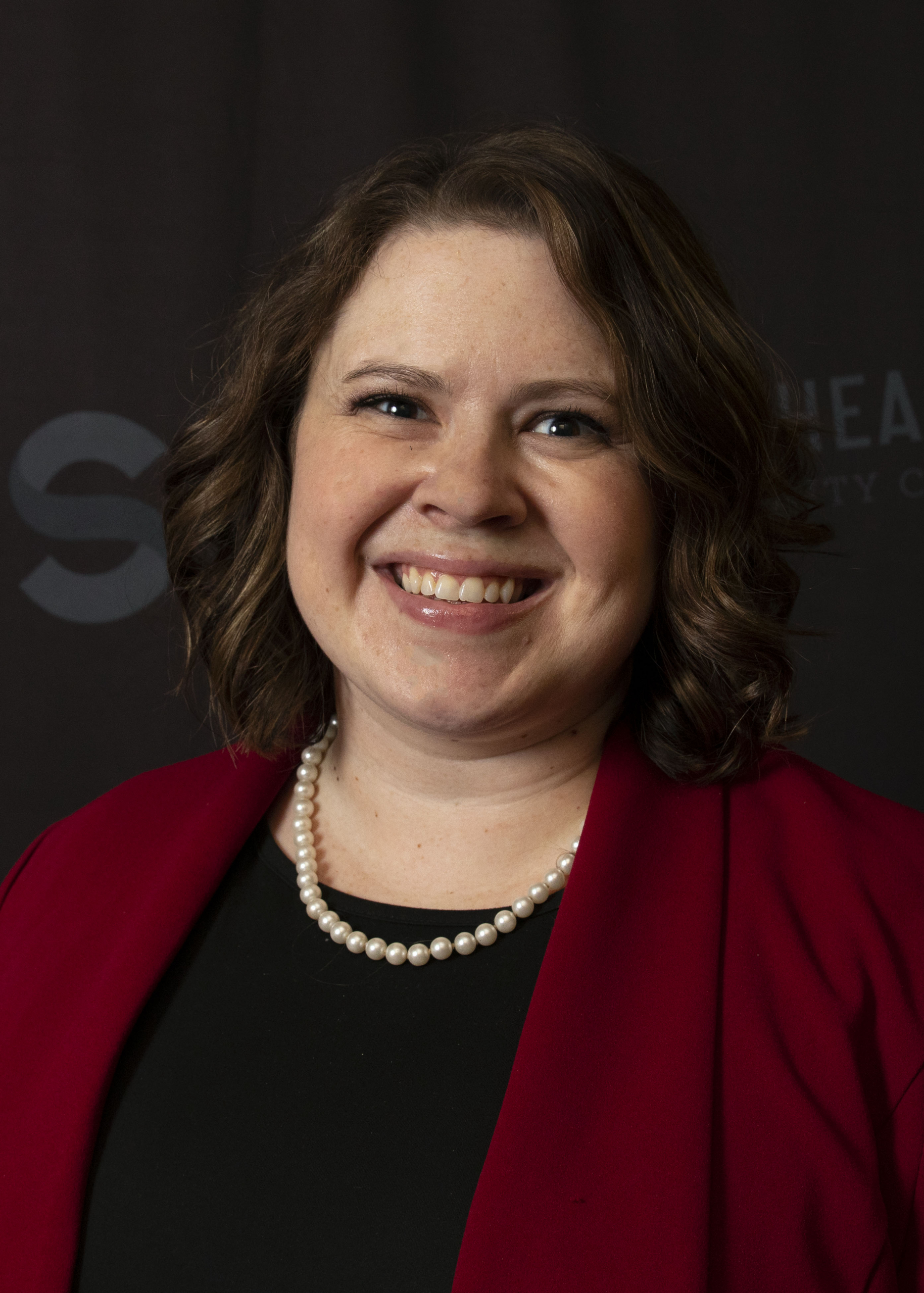
Meet Ashlee Spannagel, postsecondary CTE fellow

Meet Ashlee Spannagel, dean of career and technical education (CTE) and workforce development at Southeastern Community College. Her Techniques interview appears as part of a digital-exclusive spotlight series on fellows in the Postsecondary Leadership Success Program at ACTESponsored by ECMC Foundation.
What leadership skills do you hope to develop as part of the Postsecondary CTE Fellowship?

I am grateful for the opportunity to expand my professional network. The postsecondary CTE fellowship at ACTE has helped me connect with other like-minded individuals. We share a passion and desire to improve CTE and serve in a capacity of leadership where we can truly impact change. I look forward to further developing my communication skills and my abilities to plan and implement scalable, long-lasting change.

In what ways have you innovated to engage students >amp; inspire colleagues in CTE through the COVID-19 pandemic?

Perhaps the greatest need I saw among my team during the pandemic was the desire and true need to feel connected to something larger: serving students, being part of the institution, being part of a team, etc. I worked very hard to be intentional about connecting with those on my team. And I learned to look for small opportunities to reach out, provide recognition and reinforce positivity. This helped to maintain a certain level of engagement among the team.

Our education systems face many challenges in 2022. Please discuss the steps CTE can take to improve equitable access to high-quality CTE programs of study.

There is a tremendous opportunity and a great challenge ahead for those of us who are blessed to work in CTE. We will need to rise to the occasion to meet the ever-changing needs of the workforce, technology, students and their families. While this may be difficult, we will persist, innovate and excel as we always have.

Programs of study will need to be closely examined and modified to ensure continued viability and relevance in this new environment. We must continue to review programs to ensure they are as aligned to industry standards as possible. Finally, we must adapt and evolve to meet the needs of our students, providing stackable, nationally recognized credentials as well as access to online training and strong support systems in place.

Learn more about the Postsecondary CTE Fellowship.

Please also meet:

  • Tiffanie Rosier, STEM education coordinator at Northern Virginia Community College
  • Tachaka Hollins, assistant vice chancellor for academic affairs at the Tennessee Board of Regents
  • Tracey D. Cooper, executive director of nursing at Temple College
  • Bernie Phelps, director of Perkins, Perkins Rural Reserve and dual enrollment at Montana Technological University, Highlands College
  • Vickie Thomas, director of the Center for Workforce and Community Development at Eastern New Mexico University – Roswell
  • Moira Lafayette, dean of health sciences and public safety at Blackhawk Technical College
  • Brad Kinsinger, director of the Global Agriculture Learning Center at Hawkeye Community College
  • Eric Sewell, director of technical education at Southern Union State Community College
  • C.J. Wurster, district director at Maricopa County Community College District
  • Katie Vincent, director of workforce partnerships at Owensboro Community and Technical College
  • Dr. Xue Xing, assistant professor of teaching and learning at University of Nevada – Las Vegas
  • Aleksander Marthinussen, program manager with NOVA SySTEMic at Northern Virginia Community College
  • Dan Adams, former CTE administrator and current stay-at-home dad
  • Martha Payán-Hernández, director of CTE at Fullerton College
  • Darlene O’Rourke, Perkins grant director and officer at Queensborough Community College
  • Shelsi Barber-Carter, CTE coordinator at Baton Rouge Community College

Meet Dan Adams, postsecondary CTE fellow

Meet Dan Adams, former statewide director of career pathways at the Oregon Higher Education Coordinating Commission. He’s currently a stay-at-home dad. His Techniques interview appears as part of a digital-exclusive spotlight series on fellows in the Postsecondary Leadership Success Program at ACTESponsored by ECMC Foundation.
What leadership skills do you hope to develop as part of the Postsecondary CTE Fellowship?

My commitment to education in pursuit of equity, and equity in pursuit of social justice, began in my own classrooms. I know, from teaching in under-resourced schools — first as a classroom instructor in Birmingham, Alabama, and subsequently as a learning support specialist and postsecondary teaching fellow in Dublin, Ireland — how important education is to expanding opportunities for individuals, for families, and for communities. In my current role as statewide director of career pathways in Oregon, my work is different. But my focus on equitable outcomes remains.

I accepted a postsecondary CTE fellowship with ACTE to develop new tools and strategies that will aid in my work, as a state leader, to build more equitable education systems. The opportunity to collaborate with program participants and fellow CTE administrators is invaluable. I’m able to be vulnerable about my own successes and struggles and to learn from national leaders in postsecondary CTE.

In what ways have you innovated to engage students >amp; inspire colleagues in CTE through the COVID-19 pandemic?

My colleagues are spread out across Oregon at 17 independent community colleges. Each institution experienced and responded to COVID-19 in their own way. When my office closed, the critical first step I took was to tell career pathways grant recipients that I adjusted the timelines for grant deliverables and that I would be available to each of them should they need me. I also implemented weekly “office hours” where grant recipients could gather informally. We leveraged these spaces to share challenges and successes related to moving career pathway programs, most of which are grounded in hands-on training, to remote delivery.

The career pathways data pilot project was just getting underway in March of 2020. This involved gathering input and designing a data system to measure the completion rates of career pathways students for the first time. The pandemic-related delays allowed me to take a month to redesign our work. With the feedback I’d received in the first months of the program, I shifted directions. We moved away from a complicated, four-pronged measuring system to a more streamlined system that used identical criteria for all students. That time for reflection helped us co-design a better process. And we completed ahead of schedule.

Our education systems face many challenges in 2022. Please discuss the steps CTE can take to improve equitable access to high-quality CTE programs of study.

The United States is enduring its second major economic expansion of the past 20 years. According to a 2016 report from Georgetown’s Center on Education and the Workforce, “the economy … added 11.6 million jobs [after the Great Recession. Of those,] 11.5 million, or 99% percent, [went] to workers with at least some college education.” To provide more equitable access, education leaders in Oregon need to make the strongest possible case for fully funding career pathway programs using the best available data.

My work through the PLSP-ECMC Foundation program focuses on expanding access and equity by building a case to fully fund career pathway programs in Oregon. First, I intend to review the available evidence to support career pathways in Oregon and nationwide. Second, I’ll meet with Oregon stakeholders to familiarize myself with current legislative and agency priorities as well as current agency work related to career pathways in Oregon. Third, I will develop a slide deck and whitepaper incorporating the best available evidence and feedback received from stakeholders, Fourth, I will present the slide deck and whitepaper to Oregon stakeholders, revising based on their feedback. And, finally, I will present these resources to the Oregon Higher Education Coordinating Commission for their work with the Oregon legislature.

Learn more about the Postsecondary CTE Fellowship.

Please also meet:

  • Tiffanie Rosier, STEM education coordinator at Northern Virginia Community College
  • Tachaka Hollins, assistant vice chancellor for academic affairs at the Tennessee Board of Regents
  • Tracey D. Cooper, executive director of nursing at Temple College
  • Bernie Phelps, director of Perkins, Perkins Rural Reserve and dual enrollment at Montana Technological University, Highlands College
  • Vickie Thomas, director of the Center for Workforce and Community Development at Eastern New Mexico University – Roswell
  • Moira Lafayette, dean of health sciences and public safety at Blackhawk Technical College
  • Brad Kinsinger, director of the Global Agriculture Learning Center at Hawkeye Community College
  • Eric Sewell, director of technical education at Southern Union State Community College
  • C.J. Wurster, district director at Maricopa County Community College District
  • Katie Vincent, director of workforce partnerships at Owensboro Community and Technical College
  • Dr. Xue Xing, assistant professor of teaching and learning at University of Nevada – Las Vegas
  • Aleksander Marthinussen, program manager with NOVA SySTEMic at Northern Virginia Community College
  • Martha Payán-Hernández, director of CTE at Fullerton College
  • Ashlee Spannagel, dean of CTE and workforce development at Southeastern Community College
  • Darlene O’Rourke, Perkins grant director and officer at Queensborough Community College
  • Shelsi Barber-Carter, CTE coordinator at Baton Rouge Community College

Meet Aleksander Marthinussen, PLSP-ECMC Foundation fellow

Meet Aleksander Marthinussen, program manager with NOVA SySTEMic at Northern Virginia Community College. Marthinussen’s Techniques interview appears as part of a digital-exclusive spotlight series on fellows in the Postsecondary Leadership Success Program at ACTESponsored by ECMC Foundation.

What leadership skills do you hope to develop as part of the Postsecondary CTE Fellowship?

I would like to strengthen my skills in leadership, management and communication. And I would like to improve my abilities to present information in an effective and understandable way. Further, I would like to become a better manager for the employees that I supervise, providing better leadership to my team overall.

I would also like to leave a lasting impact on my students. The Postsecondary CTE Fellowship has helped me to think differently and to approach things in a more efficient manner. In my role at NOVA, I hope to provide input on organizational change when it comes to better serving underserved population groups in northern Virginia.

In what ways have you innovated to engage students >amp; inspire colleagues in CTE through the COVID-19 pandemic?

When the pandemic first hit, pretty much all hands-on activities and in-person gatherings were put on hold. We adjusted and came up with new ways of engaging students in CTE. Our team devised multiple “new” programs. For example, we launched a design challenge through our Fab Lab. The pandemic forced many people into lockdown and boredom set in quickly. Many popular activities sold out in local stores and online. So, people started to invent new methods of entertainment using recycled household items.

The design challenge: to invent and design an all-new toy or game that could be fabricated in NOVA’s Fab Lab (by 3D printing or laser cutting) using household items or materials.

Our education systems face many challenges in 2022. Please discuss the steps CTE can take to improve equitable access to high-quality CTE programs of study.

New and different challenges have emerged amid the pandemic. The transition to online learning — happening over the last two decades — accelerated dramatically in 2020. Today, nearly all students have taken at least one course online. In 2016, that number was just about half. And only 10% in 2000. Looking at the data, traditionally, white students experience stronger education, employment and earning outcomes than their Black and Latinx peers. This gap may grow even larger as more and more CTE programs move to online/hybrid delivery models.

As a faculty member at an institution that offers CTE courses, I think it is important to identify and examine barriers and develop strategies to increase access. Build equity consciousness into curriculum for students. And reinforce this message in professional development conducted among faculty and staff. You may consider how all stakeholder groups can collaborate to define common equity goals.

Further, in both remote and in-person learning, take time to assess students’ needs by seeking input from them. Do they have access to adequate housing, food and technology? To support students entering a global workforce, institutions should also identify new, more equitable methods for work-based learning. And, finally, as the pandemic continues to change the future of work, strive to align programs of study with labor market demands.

Learn more about the Postsecondary CTE Fellowship.

Please also meet:

  • Tiffanie Rosier, STEM education coordinator at Northern Virginia Community College
  • Tachaka Hollins, assistant vice chancellor for academic affairs at the Tennessee Board of Regents
  • Tracey D. Cooper, executive director of nursing at Temple College
  • Bernie Phelps, director of Perkins, Perkins Rural Reserve and dual enrollment at Montana Technological University, Highlands College
  • Vickie Thomas, director of the Center for Workforce and Community Development at Eastern New Mexico University – Roswell
  • Moira Lafayette, dean of health sciences and public safety at Blackhawk Technical College
  • Brad Kinsinger, director of the Global Agriculture Learning Center at Hawkeye Community College
  • Eric Sewell, director of technical education at Southern Union State Community College
  • C.J. Wurster, district director at Maricopa County Community College District
  • Katie Vincent, director of workforce partnerships at Owensboro Community and Technical College
  • Dr. Xue Xing, assistant professor of teaching and learning at University of Nevada – Las Vegas
  • Martha Payán-Hernández, director of CTE at Fullerton College
  • Dan Adams, former CTE administrator and current stay-at-home dad
  • Ashlee Spannagel, dean of CTE and workforce development at Southeastern Community College
  • Darlene O’Rourke, Perkins grant director and officer at Queensborough Community College
  • Shelsi Barber-Carter, CTE coordinator at Baton Rouge Community College

Meet Dr. Xue Xing, PLSP-ECMC Foundation fellow

Meet Dr. Xue Xing, assistant professor of teaching and learning at the University of Nevada, Las Vegas. Dr. Xing’s Techniques interview appears as part of a digital-exclusive spotlight series on fellows in the Postsecondary Leadership Success Program at ACTE – Sponsored by ECMC Foundation.

What leadership skills do you hope to develop as part of the Postsecondary Leadership Success Program at ACTE – Sponsored by ECMC Foundation?

I hope to strengthen skills in the areas of communication, organizational management and networking. As an ethnic minority and international female, I find my voice is heard less often than that of my peers. Although this might be a long journey, I believe greater communication skills can help me navigate some of the challenges in my professional life. Further, skills related to organizational management and networking will help advance my career. Knowledge about institutional dynamics and positive interpersonal relationships will create opportunities for collaboration and positive changes.

In what ways have you innovated to engage students >amp; inspire colleagues in CTE through the COVID-19 pandemic?

COVID-19 has imposed great challenges on our daily and professional lives. At the beginning of quarantine, I noticed right away that maintaining the mental health of our faculty and student communities would be a challenge. I initiated a 30-day COVID-19 Warrior Challenge in my department — with a very optimistic thought that we would get back to normal in one to three months. The goal of this challenge was to establish a new life and work structure that fit the new normal. I coordinated a group of faculty and students who met every day to cheer each other up and hold each other accountable to goals. Members who completed the challenge said they felt better and more productive when adjusting to the stay-at-home life. I feel very proud of them and myself.

Our education systems face many challenges in 2021. Please discuss the steps CTE can take to improve equitable access to high-quality CTE programs of study.

I believe in taking a proactive approach to improving equitable access to education. Solutions start with identifying program areas and populations that face equity concerns. Establish career pathways that expand diverse students’ participation in those fields with purposeful recruitment strategies and favorable admission policies. Then create a supportive community that engages all learners with targeted peer and faculty mentoring to ensure their retention and success in academics and careers. And follow through. Invest in your students and invite them to become the future of CTE.

Learn more about the Postsecondary Leadership Success Program at ACTE – Sponsored by ECMC Foundation.

Please also meet:

  • Tiffanie Rosier, STEM education coordinator at Northern Virginia Community College
  • Tachaka Hollins, assistant vice chancellor for academic affairs at the Tennessee Board of Regents
  • Tracey D. Cooper, executive director of nursing at Temple College
  • Bernie Phelps, director of Perkins, Perkins Rural Reserve and dual enrollment at Montana Technological University, Highlands College
  • Vickie Thomas, director of the Center for Workforce and Community Development at Eastern New Mexico University – Roswell
  • Moira Lafayette, dean of health sciences and public safety at Blackhawk Technical College
  • Brad Kinsinger, director of the Global Agriculture Learning Center at Hawkeye Community College
  • Eric Sewell, director of technical education at Southern Union State Community College
  • C.J. Wurster, district director at Maricopa County Community College District
  • Katie Vincent, director of workforce partnerships at Owensboro Community and Technical College
  • Aleksander Marthinussen, program manager with NOVA SySTEMic at Northern Virginia Community College
  • Martha Payan-Hernandez, director of CTE at Fullerton College
  • Dan Adams, former CTE administrator and current stay-at-home dad
  • Ashlee Spannagel, dean of CTE and workforce development at Southeastern Community College
  • Darlene O’Rourke, Perkins grant director and officer at Queensborough Community College
  • Shelsi Barber-Carter, CTE coordinator at Baton Rouge Community College

Meet Katie Vincent, PLSP-ECMC Foundation fellow

Meet Katie Vincent, director of workforce partnerships at Owensboro Community and Technical College. Vincent’s Techniques interview appears as part of a digital-exclusive spotlight series on fellows in the Postsecondary Leadership Success Program at ACTE – Sponsored by ECMC Foundation.

What leadership skills do you hope to develop as part of the Postsecondary Leadership Success Program at ACTE – Sponsored by ECMC Foundation?

Leadership skills and abilities I hope to develop through my fellowship with the Postsecondary Leadership Success Program at ACTE include:

  • Incorporating a shared, articulable vision and mission across a program/institution
  • Developing effective teams
  • Collaborating effectively with peers
  • Articulating messages clearly in written and verbal communications
  • Building a professional network to support one’s development as a postsecondary CTE leader
  • Understanding challenges in CTE staffing and strategies for recruiting and retaining CTE faculty.

In what ways have you innovated to engage students >amp; inspire colleagues in CTE through the COVID-19 pandemic?

Our college has a competency-based education program called TECH X.  The program focuses heavily on welding. During the early part of the pandemic, when all classes moved to remote learning, our TECH X team developed how-to videos featuring the instructors.  In conjunction with the videos, students engaged in interactive, computer-based training (CBT) modules. And, while CBT doesn’t take the place of hands-on learning, it did help to keep students on track and engaged.

We also hosted regular virtual check-in meetings with students.  This allowed students to log on and ask questions or meet with the success coach for guidance regarding personal or school-related issues.

Our education systems face many challenges in 2021. Please discuss the steps CTE can take to improve equitable access to high-quality CTE programs of study.

First, we can do a better job of meeting students where they are. A large population of students I meet may be drawn to CTE but experience barriers to entry.  Most often, these barriers involve transportation and child care.  Owensboro Community and Technical College provides free bus passes for students, but the bus does not run 24/7 and some programs run at night. They can get to class but they have a hard time getting home. We have gone as far as providing students with Uber rides, but that isn’t a permanent solution.

Further, tackling a different issue, we can improve high-quality CTE program of study by working to recruit and retain key faculty. Instructors who, both, care about student success and demonstrate expertise in their field can help set a program apart from the rest.

Learn more about the Postsecondary Leadership Success Program at ACTE – Sponsored by ECMC Foundation.

Please also meet:

  • Tiffanie Rosier, STEM education coordinator at Northern Virginia Community College
  • Tachaka Hollins, assistant vice chancellor for academic affairs at the Tennessee Board of Regents
  • Tracey D. Cooper, executive director of nursing at Temple College
  • Bernie Phelps, director of Perkins, Perkins Rural Reserve and dual enrollment at Montana Technological University, Highlands College
  • Vickie Thomas, director of the Center for Workforce and Community Development at Eastern New Mexico University – Roswell
  • Moira Lafayette, dean of health sciences and public safety at Blackhawk Technical College
  • Brad Kinsinger, director of the Global Agriculture Learning Center at Hawkeye Community College
  • Eric Sewell, director of technical education at Southern Union State Community College
  • C.J. Wurster, district director at Maricopa County Community College District
  • Xue Xing, assistant professor of teaching and learning at University of Nevada, Las Vegas
  • Aleksander Marthinussen, program manager with NOVA SySTEMic at Northern Virginia Community College
  • Martha Payan-Hernandez, director of CTE at Fullerton College
  • Dan Adams, former CTE administrator and current stay-at-home dad
  • Ashlee Spannagel, dean of CTE and workforce development at Southeastern Community College
  • Darlene O’Rourke, Perkins grant director and officer at Queensborough Community College
  • Shelsi Barber-Carter, CTE coordinator at Baton Rouge Community College

Meet Nathaniel Bryan, CTE Student & ACTE Award Winner

Meet Nathaniel Bryan, winner of ACTE’s Student Trophy Design Contest. He attends St. Martin High School in Ocean Springs, Mississippi, where he is a senior. Bryan’s interview appears as part of a spotlight series on our national award winners and finalists. This award challenges career and technical education (CTE) students to

Please tell me a little bit about yourself. What inspired your interest in CTE? And what are your plans for after graduation?

I was raised with my sister by my father. We moved to several states throughout the South before coming to Saint Martin, Mississippi, when I was 13. I was always interested in space and physics. And, for a time, I wanted to be an aerospace engineer, so the CTE engineering program at my school seemed like the way to go. After I graduate, I plan to go to college and pursue doctoral degrees in both physics and astronomy. I hope to become an astrophysicist.

Why did you decide to enter ACTE’s Student Trophy Design Contest?

Dr. Richard Humphreys, my CTE engineering instructor, assigned the contest prompt to his students. To receive full credit, we had to properly submit our designs into the competition.


“For me, ACTE’s Student Trophy Design Contest is about more than designing a trophy,” commented Humphreys. “It promotes 21st century skills and encourages students to use their imaginations. They must follow specific guidelines to create the trophy. They must write about themselves in their biography. In fact, I made the contest part of a cross-curriculum assignment. Students must have a current or former English teacher review their biography, and they must show me that review of their work. And they must do all of this on a specified timeline.”


Please describe the design process. Did you sketch your ideas on paper first, or draw them digitally? What software did you use?

I knew the design needed to reflect all of CTE as well as possible. So, I started out with a gem shape. After I sketched that out on paper, I added twisting spires to hold the gem, which adds interest to the design. I used Autodesk Inventor to model the 3D shape once I finished sketching the dimensions.

What guidance did your teacher provide?

It was my first time using Autodesk, so Doc showed me the basics of the software. And he helped me out when I had trouble accomplishing the more complex aspects of my design.

What do you hope your school and fellow students will gain from the lease of a 3D printer from Stratasys?

Our current 3D printer sometimes struggles to print more complex designs without sacrificing some quality, so a better printer would surely help that. I look forward to printing more designs of my own. And I feel the same can be said for Doc and his other students.

Learn more about ACTE’s Student Trophy Design Contest.

Meet Patrick Biggerstaff, Champion for CTE

Patrick Biggerstaff won ACTE's Champion for CTE AwardMeet Patrick Biggerstaff, winner of ACTE’s Champion for CTE Award. He works as director of career and technical education (CTE) at Area 31 Career Center in Indiana. Biggerstaff’s interview appears as part of a spotlight series on our national award winners and finalists. This award recognizes education leaders, business and industry executives, celebrities and thought leaders who support and champion CTE programs as a vital part of developing a prepared, adaptable and competitive workforce

Tell me a little about your role in CTE. What do you do?

My responsibilities include overseeing secondary CTE programs across 11 school districts and within a shared area district career center. As a career and technical education administrator, I am privileged to support programs that range from school-based preschool to local adult education programs. I enjoy learning alongside an amazing group of practitioners who strengthen CTE. We collaborate with external partners to expand programming in high-value pathways. And, further, we have prioritized work that aims to reduce barriers associated with certification costs and student transportation to work-based learning (WBL) placements.

What was your educational experience like? What did you study?

Prior to entering the field of education, I worked in banking and sales management. I received a Bachelor of Business Administration from Dallas Baptist University (2000) and a Master of Business Administration from Texas Christian University (2002). Through volunteering as a tutor at a juvenile detention facility, I found a passion for teaching, differentiation and exploring alternative models of education. After transitioning into education, I received a Master of Arts in teaching from the University of Indianapolis (2007) with endorsements in business education and mild intervention, a CTE endorsement from Indiana State University (2007), a K–12 Building Administrator License from Indiana University (2010), a Director of CTE license from Ball State University (2013), an education specialist degree from Ball State University (2017), and a doctorate in educational leadership from Ball State University (2020).

For the past two years, I have also been fortunate to participate in the Center on the Economics and Management of Education and Training Systems (CEMETS) Education Reform Lab. My work as a member of the Indiana Case Team seeks to expand high-quality WBL across our state.

What led you to your work at Area 31 Career Center?

My predecessor, Ron Hoke, is a terrific mentor and a cherished friend. He and I began discussing my future goals when I taught business classes at our local high school. And, over the course of several years, he helped me to develop my skills and understandings of high-quality CTE. Ron encouraged me to become involved in the Indiana Association for Career and Technical Education. He said I could learn more and expand my network of passionate colleagues. More than 10 years later, I remain grateful for the friendships and opportunities that have developed through these relationships.

I was interested in working at Area 31 Career Center, because it is a special place where thousands of learners are challenged to earn college credits, industry certifications and work-based learning placements. The team of counselors, instructors, office staff and support service personnel is second to none. And I remain inspired by the work they do each day to benefit students.

Do you have any advice for educators who seek to become champions for CTE? What can they do to increase awareness of and participation in career and technical education in their communities?

So much of an individual’s personal growth is tied to emotion. I encourage educators to champion CTE by celebrating testimonials and building relationships with those who share a similar passion. CTE success stories resonate across our country. Highlight the unique stories in every community. By sharing these celebrations with pride, we can capture attention and recruit fellow champions for CTE.

Our education systems face many challenges in 2021 and beyond. Please discuss the steps that need to be taken to improve equitable access to high-quality CTE programs of study.

The first step in improving equitable access is to provide evidence of need using accurate and timely data. After having identified gaps, It is necessary to unite key stakeholders to brainstorm ideas and pilot solutions. Often, this will mean working with external partners such as legislators or employers to garner necessary permissions and resources. To realize other meaningful change, consider modifying internal factors such as the process of teaching and evaluating curricula. Continuous improvement is always possible with the right people, ideas and resources at hand.

Is there anything else you’d like to share?

I am a champion for career and technical education, and I am also a champion of the Association for Career >amp; Technical Education (ACTE). I love this association because it has given me the opportunity to connect with passionate thought leaders and to discover useful resources that help me to grow as a professional. Whether through an ACTE fellowship program, in state leadership, or via another form of engagement, I strongly recommend that CTE educators interested in advocacy take their next step forward.

Learn more about ACTE’s Champion for CTE Award.

# # # # # #