Develop Skills for the Future in AME

Apprenticeships, particularly in fields like the arts, media, and entertainment (AME), offer a model of workforce education grounded in real-world experience and mentorship.

At the core of this model is a commitment to work-based learning. Apprentices gain invaluable insights into their chosen fields by working alongside seasoned professionals who guide them through real-world challenges. This experience extends beyond theoretical knowledge to develop technical and employability skills that can immediately translate into job performance.

Take, for example, apprenticeships in California’s booming AME sector. These apprentices learn the nuances of their craft while receiving mentorship from industry veterans. As they progress, they also earn industry-recognized credentials that validate their skills and enhance employability in a competitive job market.

This combination of experience, mentorship and credentialing makes apprenticeships a powerful tool for individuals seeking to build sustainable careers. It also addresses a significant gap in the labor market.

Apprenticeships as a tool for upskilling

Registered Apprenticeships offer more than just a way to enter the workforce; they are also an invaluable tool for upskilling. By providing employees with opportunities for growth and advancement, apprenticeships foster a more engaged and motivated workforce. This is particularly valuable in industries where employee retention is critical to success.

For example, employers can use apprenticeship programs to promote from within, offering employees a clear path to career advancement. This not only helps retain top talent but also reduces the need for external hiring. Furthermore, apprenticeships provide employees a structured way to learn new skills, adapt to industry changes, and improve their job performance — ultimately benefiting both the individual and the employer.


Employers leading the charge in California

California is home to many successful Registered Apprenticeship programs in AME.

  • Music Forward: Empowers youth by offering music apprenticeships in production and engineering, providing pathways to careers in the entertainment industry.
  • Key Code Education: Specializes in coding and digital media, offering apprenticeships in web development, game design and animation, helping young talent enter the tech side of entertainment.
  • Arts2Work: Bridges the gap between education and professional careers by offering apprenticeships in multimedia production and digital editing, supporting the development of skills for the arts industry.
  • BRIC Foundation: Provides apprenticeships in arts administration, programming and film production, contributing to the growth of the arts sector and training fu.ture industry leaders.
  • Handy Foundation: Focuses on arts education, offering apprenticeships in theatre arts and film production, helping aspiring professionals gain hands-on experience in these creative fields.
  • The EVEN Network: Offers apprenticeships in audio, lighting and staging, preparing the next generation of technicians to meet the needs of live performance and entertainment industries.


Partnerships and collaboration

Another key strategy for scaling apprenticeships is through collaboration between employers, local education agencies (LEAs), and workforce development agencies. By connecting with LEAs, employers can leverage their expertise and resources to create more effective apprenticeship programs. LEAs can help employers access talent pools, provide educational resources and ensure that programs align with academic standards.

Similarly, workforce development agencies and community colleges play an essential role in connecting apprentices with employers, particularly in underserved communities. By working with these institutions, employers can tap into a broader and more diverse talent pool. These collaborations help ensure that apprenticeship programs reach a wide range of individuals.

“Building strong industry-college partnerships and co-developing flexible, competency-based programs can address these challenges,” said Justin Susi. “Registered Apprenticeship programs must be dynamic in approach. An apprentice may not have the same position at the beginning or end of the apprenticeship.”

Conclusion

Through the strategic use of intermediaries, the empowerment of employees, and the involvement of both large and small employers, California is paving the way for the future of apprenticeships in the arts, media, and entertainment industries. California is building a stronger, more diverse and more resilient workforce for the future.

That’s a wrap.


Karen Lyn Saysay, Ph.D., stands as a recognized CTE ambassador. With over 32 years of experience in education, she dedicated 28 years to the Los Angeles Unified School District and four years with its community colleges. She is also a distinguished alum of the Leadership Development Institute (California Department of Education, 2019) and a 2024 ACTE NextLevel fellow.


Read Techniques to learn more.

ACTE: From 1925 to the Present Day…

From 1925 to the present day, career and technical educators and administrators have had a national organization to call home. The Association for Career and Technical Education (ACTE) — previously known as the American Vocational Association (AVA) — turns 100 next year.

It was 1969 when Gary Moore began his work as a high school agriculture teacher. That’s also the year he joined ACTE. Some years later, as Moore was pursuing his master’s, and then a doctorate, he invested in an ACTE lifetime membership.

He was looking forward to a long tenure as an agricultural education professor. And for 56 years now, he’s witnessed ACTE’s comings and goings from the perspective of member, Association president, Agricultural Education Division vice president, volunteer, and more. He remains committed to and hopeful about the work of high-quality career and technical education (CTE).

Opportunities for reflection

It’s hard to capture how the organization that Moore and thousands of others came to know has morphed over time. With each year, a new president; every few decades, a change in structure; new members every month; perpetually awash in societal, technological and political changes. Yet here we are, staring down a whole century.

As ACTE launches its centennial celebration, this article offers a forward-looking perspective at how ACTE will continue to serve not just its members but the CTE field as a whole — and how you fit into this monumental effort.

“We all have the same goal of working with students in CTE,” said Carrie Giles, ACTE president and Central Region chief administrator for Central Ohio Technical College. “It’s interesting to learn best practices from other people and think outside of what you’re doing in your own state or local area.”

Belonging

In 1983, Debbie Nelson walked into her first family and consumer sciences (FCS) classroom as the teacher. Nelson had known since eighth grade that she wanted to teach FCS; her mother was a home economics teacher. Yet there she was, feeling a little out of place, a new teacher with few resources. ACTE became a lifeline.

“I appreciated it when I was teaching, but now I can look back and see, even more, what a difference [ACTE] makes,” said Nelson, who retired from teaching to become the executive director for Colorado ACTE in 2017. “No matter what content area they teach in, oftentimes they’re the only person in their building teaching what they’re teaching. … It’s really easy to think that you’re the only person in the whole world that’s doing this.

“The first year that I taught, I was so grateful for this network of people that I knew. But it’s really more than just a network,” said Nelson. “I have stayed for 42 years, because it’s a family.”

Relevance

In 1926, many of the fields that comprise modern CTE were just dreams. Schools were segregated. Men did not traditionally work in nursing, and most women were not welding. ACTE has proven that changing with the times is one of its strengths.

ACTE’s CareerTech VISION 2025 conference kicks off the official 100th anniversary celebration in Nashville, Tennessee. Then save the date for the big centennial bash happening at VISION 2026, in New Orleans, Louisiana. ACTE’s events offer a great opportunity for CTE educators to understand and appreciate the Association’s history.

Nelson said, “I’m excited to provide some context for the newer members and have them be as proud of our history as I am.” At conferences like VISION and the upcoming National Policy Seminar (NPS), ACTE members can connect with fellow educators and industry representatives and stay current on what’s happening in CTE.

Advocacy

CTE makes a special case for strong education funding. After all, high-quality programs in fields like farming, health care and engineering often require specialized equipment and lab spaces. “And so, on the legislative front, ACTE has been very active in promoting career and technical education,” said Moore.

When the Smith-Hughes National Vocational Education Act was signed into law in 1917, authorizing the first federal funding for secondary CTE programs, CTE didn’t yet have a united national organization. In the decades that followed, a series of laws were passed to continue to provide consistent funding for CTE. Then, when the George-Deen Act was enacted in 1936, and Congress was tasked with reallocating funds, AVA got to work.

Today, ACTE’s major funding focal point is the Carl D. Perkins Career and Technical Education Act, as amended by the Strengthening Career and Technical Education for the 21st Century Act in 2018 (known as Perkins V).

“Perkins is one of ACTE’s strongest pieces of advocacy, in my opinion,” said Chaney Mosley, ACTE past president and associate professor of agricultural education at Middle Tennessee State University. He pointed out that ACTE has staff dedicated to policy, but the Association also equips its members to advocate for themselves, their students and programs, and the CTE field as a whole — even bringing educators to Washington, D.C., to have their voices heard.

Of course, ACTE’s advocacy work extends beyond funding. “One of the big things now is the teacher pipeline and teacher recruitment,” said Giles. Education leaders want to attract young people to teach CTE while also recruiting instructors from business and industry roles to share their experience with learners.

Conclusion

ACTE acts as a loud, clear voice for the field. And they will continue to uplift the stories of their communities. Because the members make the organization.

The Association’s longevity is due in part to its leadership’s willingness to be nimble, respond to changing environments, and take a stand. It’s the passionate, educated and motivated membership that’s made all of this possible over the past century. And that same membership will continue to guide CTE into the future.


Lisa Munniksma is a freelance writer, communications project manager and farmer based in Kentucky. She’s a product of CTE, as she uses what she learned in high school agriculture classes, and as a member of FFA.

Read Techniques to learn more.

Save Durable Skills in the Age of AI

“Our students are being hired for their technical skills and they’re being fired for their lack of soft skills.”

Over a decade ago, these words introduced me to the world of career and technical education (CTE). They were spoken by my future dean during an interview for the teaching position I still hold today. When hired, I would be teaching general education courses in written and oral communication, two areas that industry partners had stressed needed attention. It would be crucial that coursework cultivate transferable knowledge and broadly integrative skills, not just because those are central to the mission of general education, but because graduates’ professional success so depended on it.


“Soft skills” have been rebranded several times since that interview, and rightfully so. We now refer to them more as what they are. ACTE calls them employability skills because they hold market value across industries. Others may call them career readiness skills, 21st century skills, transferable skills or simply human skills. In my state at the moment, we’re favoring the term “durable skills.”

The name changes, but the list stays the same:

    • Communication

    • Collaboration

    • Critical thinking and problem solving

    • Creativity

    • Adaptability

    • Fortitude

    • Leadership

    • Strong ethics


Writing is a durable skill.

As a writing teacher, I spend a lot of time thinking and talking about writing. It’s much more than an output-oriented task. Writing is thinking. It’s a process that forces us to expand on our thoughts, to distill our ideas, to challenge their validity, to identify how they fit in patterns, to analyze how they are informed by context. Writing provides endless opportunity to sharpen our judgment, cultivate creativity, and deepen our understanding of ourselves and the world around us. It’s an active, iterative process. It is trying work too.

Writing is not unique in this way among creative tasks, either. Drawing, as a tool for the draftsperson or the designer, is a way of thinking as much as it is the evidence of thinking (Carr, 2014). And the song of the decade is written a chord at a time. Technical coursework requires and bolsters these skills as well. But in the expressive disciplines, the ability to iterate without costly consequence fosters creative and critical habits that are central to durable skills.

Honoring my mission to service durable skills, then, has meant focusing less on creative products and more on creative processes. But the processes we have historically employed to lead us to creative outputs were upset in November of 2022, with OpenAI’s release of ChatGPT. Seemingly overnight, generative artificial intelligence (AI) technologies were mainstream, with the promise to reshape how humans create.

Artificial intelligence changes everything.

Understandably, there is enthusiasm for generative AI across economic sectors because it promises to reduce or eliminate the friction typically associated with creative tasks and in turn boost productivity (Noy & Zhang, 2023). But as educators, our concern must be much broader than our students’ productivity. We must think about the impact on the student as a whole person, and to the extent that we care about durable skills, we should question what is happening when our students use generative AI.

First, we should dispense with the notion that generative AI is just another tool. It is a tool, indeed, but the emphasis on “just” seems to dismiss any critique of how the tool is used — or how the tool uses us. My Bissell vacuum cleaner is just a tool that helps me clean my carpet. My Roomba is a robot that does it for me. The difference is not irrelevant.

“What role should generative AI play in my classroom?”

The answer has to account for the risk of skill erosion. It has to be informed by the reality that platforms like ChatGPT and Midjourney do not have a pedagogical underpinning. They are designed to identify and complete patterns in a manner that creates the most desirable product for the user with the least amount of friction.

That is not to say that AI can’t be leveraged with care. In fact, there is a growing body of evidence that AI holds tremendous promise. Generative AI can be trained to act as a virtual discussion moderator, a Socratic tutor or a learning companion (Ruiz-Rojas et al., 2024). That is, it can be prompted in such a way as to be imbued with a pedagogical purpose.

So, there are certainly benefits. Some ways of interacting with generative AI may erode durable skills, and other ways can solicit cognitive work and develop durable skills. Thus, it becomes necessary to guide the nature of our students’ AI use to safeguard their development.

Brilliant minds are working to train AI platforms with a strong pedagogical stance, with guardrails that protect students, not merely from inappropriate content or harmful bias, but from automation-induced complacency. That, I suspect, is the future. Until those platforms are sufficiently refined, we as teachers must act as the guiding force.

Final thoughts

Our graduates will create precision-engineered parts for advanced manufacturing, sustainable construction projects, efficient electrical systems, and custom welding solutions. They will develop life-enhancing treatment plans and digital designs that solve real-world problems. And they’ll likely have generative AI at their disposal. We can ensure that CTE trains them to engage with it in a way that preserves and amplifies their uniquely human qualities — so that they will be hired for their technical skills and promoted for their human skills.

Matt Wilson is a clinical associate professor in the College of Technology at Idaho State University.

Read Techniques to learn more.

Think Big! Craft a Creative Future

As we navigate this transformative era, the impact on future careers is profound. Traditional job roles are evolving, and new professions are emerging at an unprecedented pace. The Fourth Industrial Revolution (4IR) demands a workforce equipped with adaptability, advanced technical skills and a strong foundation in continuous learning. The accelerated integration of technology into all aspects of life and work requires individuals to be proficient in digital literacy, data analysis and complex problem-solving.

Supporting occupational identity development involves creating environments that encourage self-exploration, ideational behavior and goal setting. Educators must cultivate ideational behavior, which involves creative thinking, innovation and the ability to generate unique ideas. By encouraging growth in these areas early in the educational journey, we can better prepare students for the dynamic and competitive landscape of future careers.

What is occupational identity?

Occupational identity refers to internalizing career goals, values, and beliefs, enabling students to define their professional pathways with clarity and confidence. Faulk (2023) hypothesized that because of the rate of technological growth and change, workers in the 4IR may have to redefine their occupational identities multiple times.

In this context, having a well-developed occupational identity can give students a sense of direction and purpose. It empowers them to make informed career choices, aligning their strengths and interests with emerging opportunities. Moreover, students with a clear sense of their professional identity are more likely to engage in dedicated career planning and development activities, such as internships, networking and skill-building.

The significance of ideational behavior

Ideational behavior, characterized by generating ideas and creative thinking, is crucial in students’ personal and professional development. This cognitive process involves exploring new concepts, imagining possibilities and solving problems. Emerging adults who actively participate in ideational behaviors, such as brainstorming, problem solving and creative projects, tend to have clearer and more defined career aspirations (Faulk)

Moreover, ideational behavior is associated with increased adaptability and resilience, traits particularly valuable in today’s dynamic workforce. These findings underscore the importance of integrating ideational activities into educational curricula. Lubart et al. (2013) noted that creativity can be taught. Thus, occupational identity achievement could be incorporated within career and technical education curricula (Faulk). By fostering environments that encourage creativity and innovation, educators can support the development of robust occupational identities in students.

Cultivate ideational behavior.

    • Integrate project-based learning. PBL encourages collaboration, critical thinking and the innovative application of knowledge.

    • Promote interdisciplinary learning. Design activities and projects that integrate multiple subjects, helping students make connections between different areas of study.

    • Provide opportunities for creative expression. Incorporate arts, music and other creative outlets into CTE curricula.

    • Use technology and digital tools. Leverage technology to create interactive and engaging learning experiences.

    • Create a safe space for experimentation. Inspire a classroom culture wherein students feel secure to take risks and learn from failure.

    • Encourage collaboration and teamwork. Facilitate group work and collaborative projects that require students to brainstorm, share ideas and work together toward common goals.

Support occupational identity development.

Strong occupational identity development is necessary for postsecondary students to thrive at work. Educators can play a pivotal role in helping students shape and solidify their professional identities.

    • Integrate career exploration into CTE curricula. Embed career exploration activities within academic courses to help them connect academic knowledge and the real world.

    • Promote experiential learning opportunities. Encourage participation in internships, cooperative learning programs and service-learning projects.

    • Facilitate mentorship programs. Mentors can provide guidance, share experiences and offer valuable insights into various career pathways, aiding students in forming their occupational identities.

    • Design research projects and innovation challenges. These activities encourage creative problem-solving and the generation of new ideas, helping students identify their strengths and career aspirations.

    • Offer career development workshops. Topics may include resume building, job search strategies, networking and interview preparation.

    • Encourage reflection. Reflective practices enable students to evaluate their experiences, identify career values and set meaningful goals.

    • Cultivate interdisciplinary collaboration. Exposure to diverse perspectives and collaborative environments can help students broaden their professional outlook and discover unique career pathways.

By implementing these strategies, educators can effectively support occupational identity develop­ment, empowering students to make knowledgeable career decisions and adapt to the challenges of the 4IR work­force. A holistic approach ensures that students are academically prepared and possess a strong sense of their profession­al identities and goals.

Carrington Faulk, Ph.D., is a researcher who focuses on topics related to creativity, occupational identity, emerging adulthood and the Fourth Industrial Revolution. He has conducted an extensive study on ideational behavior and its impact on the occupational identity.

Read Techniques to learn more.

Support a Culture of Joy

The most impactful professional development (PD) days are the days when teachers lead sessions for each other. They advocate for their own personal and professional needs, and they choose how to spend their time. These days leave us feeling renewed and inspired.

The morning is dedicated to teachers hosting sessions on topics they are passionate about, mirroring the impact of student choice in creating meaningful learning experiences. The options are vast as teachers take charge of their learning. Then, in the afternoon, teachers will work on what suits their needs best at that time. This may include collaborating on a cross-curricular project, writing lesson plans for the next unit or grading.

Giving teachers control over their professional development can restore motivation, passion and joy. Consider how this model can translate into the classroom. How can students showcase their work to others? How can we hold students accountable for their time and allow them to advocate for what they want?

Present to an audience.

Create space for students to showcase their work, to someone not their teacher. This could include other teachers, professionals in the industry, other students, community members or their families. When students engage in authentic learning experiences and present to a wider audience, they learn that their work is relevant and worthy. This is similar to the effect of teachers presenting for each other. Students gain confidence, and they develop a stronger sense of community.


Questions to consider about community engagement:

  • Who would benefit from learning more about the project?
  • What do you want students to learn or practice (demonstration of technical skills, presentation, public speaking)?
  • What audience could provide meaningful feedback to students?


Presenting to a broader audience helps students build confidence and pas- sion in their work. They become actively involved in the learning process and take pride in their achievements, which creates joy for the teacher.

Advocate with and for students.

Teach students how to share their passions with an audience and how to make a difference. This will lead to greater responsibility and improved leadership skills.

When teachers were given the opportunity to discuss hot topics on professional development days and to demonstrate how meaningful independent learning could be, it decreased burnout, negative energy and feelings of isolation. Recreating this in the classroom could be transformational.

When students are given the autonomy to work together for a common goal, they want to help others. Brainstorming sessions allow students to identify issues they are passionate about and create projects to solve those issues. The teacher’s role is to guide students as they con- duct research, create action plans and design projects.

Together, the students participate in large- and small-group discussions, collaborate on project goals, examine sides of issues, and develop their own opinions. All of this work is intended to help students design better projects. Teachers can also partner with local organizations related to their field to inspire projects and advocacy work.

Incorporate student choice.

Teens crave autonomy. They want a say in what they do and how they do it. Why deny them choice? It costs us little, increases buy-in, and re- sults in much more exciting student work to grade!

“Years ago, I taught a student who wanted to incorporate wrestling into almost every writing piece assigned. At first, I resisted. I wasn’t interested in wrestling, and I thought he had to learn to follow my guidelines,” said Samantha Shane, a CTE teacher in New Jersey. “But then I thought about Stephen King, who writes again and again about good versus evil. And Malcolm Gladwell about sociologic phenomena.”


Questions to consider about student choice:

  • What are your students passionate about?
  • What audience and format are best for the project?
  • Who are the relevant community members you could ask for support?


“When I allowed him to start using his chosen area of expertise, his writing skills took off,” Shane continued, on the topic of student choice. “He turned in a nail-biting narrative account of an underdog succeeding at a wrestling match, a detailed informational article on perfecting moves that help smaller wrestlers over- take larger ones, and an argumentative essay explaining why arm wrestling should be an Olympic sport.”

Conclusion

When students can choose, they become more engaged. They feel empowered to choose topics they care about, and many students have emerged as experts. They have applied new skills to areas they felt confident in, allowing new stars to shine.

While we can’t (and don’t need to) make every task a choice, the benefits of adding at least one alternative can be remarkable. Think about when you are offered a choice of which PD to attend, what to wear at your job or how to format lesson plans. Don’t you feel just a bit more respected and willing to participate? Students are no different. Give students agency and treat them as knowledgeable writers with ideas worthy of sharing.


Berit Gordon supports teachers and teacher leaders in districts across the U.S. and Canada, conducting school-embedded professional development and presenting keynote talks and workshops at education conferences.

Samantha Shane is a career and technical education teacher in New Jersey, helping high school students explore the field of education through authentic learning.

Read Techniques to learn more.

Even the Best Laid Lesson Plans…

Imagine walking into a classroom as a new career and technical education (CTE) teacher. You have a lesson plan that you’ve worked on meticulously for weeks, chock-full of the insider knowledge and hard-won experiences that you know will open doors for your students.

You are ready to set your charges on the path to success. To make a difference! This is why you’ve changed gears and become a CTE teacher.

And then, before long, class gets derailed. It could be related to anything, really: a fight in the cafeteria, today’s track meet, teenage romantic angst or plain old hormones. What you need — in addition to that amazing lesson plan — is a classroom and behavioral management strategy.

Implement clear expectations and collective norms.

Behavior management in the classroom involves establishing clear expectations and developing norms. This is crucial both for the smooth operation of your class and for the academic, personal, and professional development of your students. But you’ll notice I used the word “norm” and not “rules.” Rules are top-down expectations that usually come from a teacher or administrator(s) and that imply your students may face punishment for non-compliance.

Norms, on the other hand, are commitments that your students make in order to create a positive experience in the classroom or lab environment. Work with your students collaboratively to create your community norms and set standards. This work can lead your students to “buy in” and give them a reason to invest in their learning. It’s an important aspect of building relationships with students.

Develop skills that go beyond the classroom.

Effective classroom management extends beyond the classroom walls. Because in addition to industry-specific knowledge, CTE educators also model, teach and reinforce employability skills. Your students will use these vital skills in all aspects of their professional and personal lives.

As a result, when setting standards and norms for your learning environment, it’s important to consider what is appropriate or not in a variety of settings. What behavior management means in the classroom might be different than in the lab, and certainly will be different in a work-based learning environment.

  • Time management
  • Empathy
  • Communication
  • Collaboration
  • Decision-making

Build relationships with families.

It is important for teachers and school administrators to build relationships with students’ families. They can give you insights into students’ interests and needs, and they behavior and drives and can be your partners in behavior management.

  • Be proactive in communicating with family members. Don’t wait until there’s an issue to reach out. When families are involved from the very start, receiving consistent and informative communications, they are better prepared to offer suggestions and support.

  • Make sure they understand that you are their partner in this effort. Education is a team sport, and it takes a lot of people working together to ensure that our students get the education they need and deserve.

Identify signs of distress.

All teachers, including CTE instructors, need to be equipped in identifying signs of distress in students. So, they may provide appropriate assistance during times of crisis.

Signs of distress can manifest in various ways, including sudden changes in behavior, declining academic performance, withdrawal from social interactions, and physical symptoms such as fatigue or frequent illness. Teachers must remain vigilant and be empathetic, creating a classroom environment wherein students feel safe to express their struggles.

Helping during times of crisis requires a thorough understanding of legal and ethical obligations. Teachers must navigate mandatory reporting laws, which might require them to report any suspected abuse or neglect to the appropriate authorities. This process involves understanding district protocols and maintaining clear communication with school administrators and families. Additionally, teachers should be aware of resources available within the school, such as counselors or social workers, who can offer specialized support to students in distress.

Create an inclusive environment for all.

Creating an inclusive learning environment is essential for fostering student engagement and success. To achieve this, establish a classroom culture that values diversity and promotes mutual respect. One effective technique goes back to the norms we discussed earlier and establishing routines that promote positive interactions and discourage any form of discrimination or bullying.

Seek to actively engage all students in the learning process, making sure that each student’s voice is heard and respected. This can be achieved through collaborative activities that encourage teamwork and peer support. Teachers may also create an inclusive atmosphere simply by showing genuine interest in their students’ lives, both inside and outside the classroom.

Ultimately, effective teaching is about communication and relationship-building. For society to flourish, teachers, their students, and family and broader community members all must serve each other. This means being responsive to their needs, providing clear communication and adapting to changing circumstances.

Kristina Guy is a campus counselor for Western Maricopa Education Center’s (West-MEC) Northwest Campus. She started her educational career as an English teacher in 2003 and her counseling career in 2012. She has a master’s degree in school counseling and a second master’s degree in educational leadership. Guy believes that in order to truly advocate for students we must engage and build relationships with all parties. She is the 2024 ACTE Counseling and Career Development Professional of the Year.

Learn more from the author at ACTE’s CareerTech VISION 2024, Dec. 4–7, in San Antonio, Texas.

How Can AI Transform CTE Curricula?

It was inevitable that reality would catch up with science fiction. In the wake of the COVID-19 pandemic, during which educators (and everyone) experienced disruption and had to alter their goals and expectations, some are skeptical about embracing new technologies. However, artificial intelligence (AI) can offer tremendous benefits for career and technical education (CTE). Let’s dig into it.

First, how do we know that the AI we’re using is trustworthy? We evaluate it. Dependable AI systems are “valid and reliable, safe, secure and resilient, accountable and transparent, explainable and interpretable, privacy-enhanced, and fair with harmful bias managed” (National Institute of Standards and Technology, 2023).

Enter the modern age of artificial intelligence.

There are three different types of AI currently recognized:

    1. Artificial Narrow Intelligence (ANI): Focuses on completing tasks and helping when asked. Examples include image or pattern recognition tools, spell check, remote assistants like Siri, and even ChatGPT. ANI cannot apply reason or solve problems.

    1. Artificial General Intelligence (AGI): Extends machine learning into the realm of machine intelligence — wherein machines “truly understand human emotions, beliefs, and thought processes rather than just imitating them” (Klingler, 2024).

    1. Sentient Intelligence: Still the work of fiction. Sentience indicates awareness of the physiological self and an ability to experience sensations, not merely compute them (Li & Etchemendy, 2024).

AI can help educators develop high-quality curricula. I have been traveling around Texas for the past few years training CTE teachers to use artificial intelligence to help formulate written curricula. At first glance, this might seem dangerous. However, we must look at our current situation and circumstances. As CTE programs face significant staffing challenges, more educators are entering the classroom without traditional teacher training. And it is this that makes AI ideal for use in a CTE classroom.

Non-CTE educators are more likely to have participated in a teacher preparation program in college or before entering the classroom. On the other hand, CTE teachers are typically industry professionals that come into the classroom to teach. CTE teachers are experts in their fields, but they often need coaching related to classroom management, student engagement, pedagogy, and curriculum development. This is where AI comes in.


TIP: Consider using AI tools to suggest new strategies, conversation starters, or project ideas. This is brilliant because it creates starting points for further exploration and professional development. The instructor can vet the instructional quality of the suggestions provided while easily incorporating relevance and practical application for students.


Individualize instruction.

The most successful teachers are ones that establish a strong foundational culture of respect and knowledge-sharing in their classrooms. Instruction that is engaging and effective must be tailored to each subject and course and to each group of learners.

AI tools can help new and experienced CTE educators organize curricular materials in a format that can be adapted to meet student needs. It uses the vast supply of information available on the internet to offer suggestions and provide support for educators who want to explore complex topics with their students, differentiate instruction, and develop high-quality, project-based learning assignments.


TIP: Develop exercises and assessments meant to gauge students’ critical thinking and problem-solving skills (Cengage, 2023). This might include asking engineering students to ideate a construction project or asking culinary arts students to propose a solution for food insecurity in their communities.


Conclusion

AI can assist with all the elements of a strong curriculum. But creating meaning in knowledge is an inherently social act. It falls on the CTE teacher to vet the resources, as they are the subject matter expert, and to inspire students to learn the skills and knowledge to be successful.

J.J. Ayers, Ed.D., has more than 25 years of experience in education using technology to develop experiences. He is currently the CTE coordinator at Little Elm Independent School District in Texas. Ayers holds a Doctor of Education in curriculum and instruction, a Master of Education in secondary education, and a Bachelor of Arts in technical theater. He has presented at many industry conferences and will appear at ACTE’s CareerTech VISION 2024.

Learn more from the author at ACTE’s CareerTech VISION 2024, Dec. 4–7, in San Antonio, Texas.

Summer CTE Reads: Techniques Year in Review

Let’s linger in the summer sun a little longer. Techniques: Connecting Education and Careers has prepared the perfect poolside reading list. Our 2023–24 Year in Review features some of the most engaging content we’ve published in print and online since the fall of 2023. Each year, in Techniques, we celebrate the strength and successes of high-quality CTE, and we’ll continue to discuss the common challenges educators face.

Read Techniques: Year in Review, 2023–24

Build trust and relationships.

The core needs of students — physiological requirements, safety, love/belonging, and esteem — must be met before they can learn to their fullest potential. Teachers must also have their own core needs met before they can properly educate their students. Family members must have their needs met before they can support their children’s educational endeavors. And community members must have their needs met to fully support a school system. But what does it take to put it into practice in the context of our schools?

Building trusting and equitable relationships between administrators, teachers, staff, students, families, and the community is the first step in any successful plan to enact real change, bringing everyone together around common goals. READ MORE


Focus on human skills.

Automation in a global economy is creating thousands of new jobs that require an entirely different type of worker. No longer is it enough to memorize facts, solve equations, and operate tools and equipment. Machines can do that far faster and with more accuracy than any mere mortal. Instead, employers need employees who can “use their knowledge and skills — by thinking critically, applying knowledge to new situations, analyzing information, comprehending new ideas, communicating, collaborating, solving problems, and making decisions.”

We commonly refer to these as employability skills: work habits, attitudes, character traits, and competencies that are broadly applicable and transferable. These skills shape how employees work both on their own and with others. READ MORE


Get outside.

Families, including youth, have rediscovered the outdoors as a place to enjoy leisure activities. And as a result of this boon to the outdoor recreation economy, there are more career opportunities. When most people think of the outdoor recreation economy, they think of frontline workers in familiar places: a ranger at a national park or a retail associate at their favorite gear store. But many might be surprised to learn that the outdoor recreation economy encompasses everything from private industry (manufacturing, retail, services) to the public sector (government agencies, tribal nations, community development) and nonprofit, advocacy, and trade groups.

The future of the outdoor recreation economy is dependent on making clear educational pathways available for students. Educators are starting to address this growing opportunity. READ MORE


Reach new heights.

Brightly decorated balsa wood gliders soared through the air. Video cameras documented launches, flight paths and time aloft. Working in collaborative teams, student aeronautical engineers designed, constructed, tested and redesigned their vehicles to stay in the air the longest. Laura Doyle’s high school engineering students learned how gliders work. They discussed the forces of flight, and they used the prototype glider templates as a rough guide. Students must change the design in some way, so that the entire class isn’t making the same prototype. And they must justify their iterated designs through research.

These are the kinds of challenges that CTE educators seek out: real-world, standards-based, and engaging to spark learners’ creativity and innovation. Educators like Doyla search for constructivist experiences framed in problem-based scenarios. READ MORE


Define excellence in CTE.

The modern workforce requires proficiency in technical skills as well as in empathy, resilience, communication and active listening. And the intentional integration of employability skills development within career and technical education programs is starting to bridge achievement gaps. Research has shown that emotional intelligence (EI), defined as “the ability to perceive, manage and regulate emotions,” can have a profound impact on a learner’s academic achievement. Thus, integrating emotional intelligence within CTE promises to cultivate meaningful relationships and a more dynamic, responsive and empathetic learning environment.

At ACTE’s CareerTech VISION 2023, IMAGO asked, “What innovative strategies is your district implementing?” The ensuing dialogue was promising, shedding light on how emotional intelligence is transforming the student experience. READ MORE


Embrace research to effect change.

Instructional leadership must be transformational. Leaders are tasked with creating solutions based on problems, questions, and needs and developing processes that work for their schools, districts, and regions. Their role is multifaceted and complex. One end of a CTE leader’s work is anchored in developing the knowledge and skills of their teachers. And on the other end, the need to ensure students are prepared to enter the workforce.

Just as CTE teachers bring a wealth of experience into the classroom, students have varying backgrounds, understandings and motivations for taking CTE courses. Thus, in order have a positive effect on student learning experience, researchers have proposed that we must focus on three critical elements: changing views of learning, sharpening teachers’ instructional knowledge, and enhancing students’ knowledge and abilities related to academic and industry standards. READ MORE


Tell stories that matter.

“When I started high school, I was a solid academic student; however, I lost my way. I began to struggle academically because I was too busy chasing girls, success in sports or popularity. Over time this approach left me feeling disconnected. I didn’t feel like I fit in anywhere. I became a loner,” wrote Donald “Diamond Don” Walker, of CAST. “Suddenly, I was going nowhere fast. Then I learned about a radio station course offered through my high school’s CTE program. I had always been interested in radio, so I signed up.

“Nothing was more exciting than going to my fifth hour CTE course every day. Creating elements for different radio programs. Creating assets and drops and stingers. Then, senior year, my friend and I got our first radio show! On Monday nights, 8:00–10:00 p.m., we played house music and mixes. We took live calls and gave shoutouts, and it was fantastic!” READ MORE


Center community needs.

Educators in southwest Colorado go directly to Native American learners rather than requiring students to come to the community college campus, where they often face cultural and logistical barriers to access. Education leaders have cultivated strong relationships with the Ute Mountain Ute and Southern Ute tribes of the Ute Nation. And recognizing the flaws in the traditional educational model, they continue to emphasize that the challenges lie in the structures themselves.

Increasing opportunities for Ute students benefits not only them, but the surrounding communities as well. And the same can be true for rural communities across the nation. Innovative, community-centered education starts with asking questions and seeking to understand the unique needs of the people. READ MORE


Lia Milgram is senior managing editor for ACTE.

Innovative & Community-Centered: CTE for All

At Pueblo Community College Southwest (PCCSW), educators bring career and technical education (CTE) directly to Native American learners rather than requiring students to come to the campus, where they often face cultural and logistical barriers to access, The Ute Learner Success program offers learning opportunities within the tribal communities of southwest Colorado.

Perry Pepper, PCCSW’s director of academic services, has cultivated strong relationships with the Ute Mountain Ute and Southern Ute tribes of the Ute Nation. And recognizing the flaws in the traditional educational model, Pepper continues to emphasize that the challenges lie in the structures themselves. Education leaders at PCCSW seek to shift the paradigm by embedding opportunities into learners’ communities.

Aligning with local needs to promote CTE for all

Increasing opportunities for Ute students benefits not only them, but the surrounding communities as well. And the same can be true for rural communities across the nation. Innovative, community-centered education starts with asking questions and seeking to understand the unique needs of the people.

For example, a substantial portion of the homes in the community of Towaoc, on the land of the Ute Mountain Ute Tribe, were constructed by the U.S. Department of Housing and Urban Development (HUD) in the 1960s and 1970s. Unfortunately, the federal government did not maintain the houses as intended, and many structures have begun to deteriorate.

The newest home was built in 1973. And while the tribe has been granted control over the HUD-built houses, construction skills are sorely needed in the community. Developing a construction trades program not only improves the job opportunities for the tribal members but develops a skilled community of neighbors to support each other.

Achieving community support

With the community needs at the forefront, PCCSW moved on to secure financial support to develop innovative programs. And they received funding via the Racial Equity in Adult Credentials in Higher Education (REACH) grant, from the Lumina Foundation. The REACH grant — which can fund entire programs, including textbooks and supplies — intends to increase credential attainment of African American, Hispanic, and Indigenous learners aged 25 and older.

PCCSW used the REACH grant funding to develop programs in construction, information technology and drone aviation. The drone class, taught by a local tribal educator, met its enrollment capacity within two hours! This made it clear that PCCSW tailored the right programs to the right locations.

Improving access to CTE for all

Key to their success are the ongoing partnerships between the college and the community. The college has expertise in program development and delivery. And the tribal members contribute cultural knowledge, community connections and the commitment to making education accessible. In particular, hiring tribal educators helped make many underrepresented learners to feel welcome.

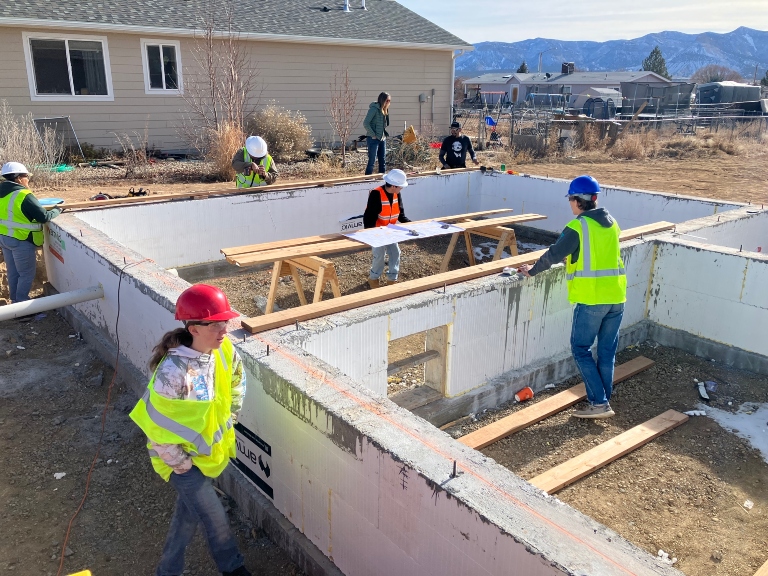
PCCSW’s construction trades students framed an entire house in partnership with Habitat for Humanity. Educators and community members expressed a desire for learners to participate alongside a diverse population, hence they included youth and adults, tribal members and other community members as well. The group worked side by side to frame each piece of the house in sections that were then transported to the home site, where the learners supported the assembly. Next, students in the electrical trades will work on wiring the home.

Empowering learners to challenge stereotypes

Fawnda Cotonuts, a Ute Mountain Ute tribal elder, embodies what empowerment through education can bring. She isn’t letting aging be a barrier to her continued learning. She said she “doesn’t have time to get old.” Instead, she’s learning how to operate power tools in the construction class. Not only does she want to be able to fix her own home in Towaoc, but she wants to leave a legacy of skills to inspire her children and grandchildren. She’s taking the drone class so she can check on the fences and her cows. And because she believes these classes can teach her community to become self-sustaining.

She shares that being on the ladder with her nail gun, she feels on top of the world and “If you could measure happiness, those days out there on the house would’ve been through the roof.” She has developed a sense of ownership over her education, and she is an advocate for herself and others.

Preserving cultural identity

Most importantly, for Cotonuts, these educational opportunities create role models for younger generations, demonstrating that higher education and career success are attainable goals, even in rural areas. They “let people see that there is life and money out there.” The celebration of education taking place in the community fosters a sense of pride, which then strengthens community bonds and motivates others to participate.

PCCSW and Habitat for Humanity have plans to continue their collaboration, connecting the building trades program with local needs. The construction of a new house makes a tangible impact on the community. And it emphasizes the importance of high-quality CTE for all. Upon its completion, a single mother will move in, and her children will hopefully find inspiration in the community energy vibrating in the walls of their home. PCCSW’s commitment to breaking barriers and fostering inclusivity serves as a beacon for all educators, inspiring each of us to transcend theoretical concepts, to address historical disparities, and to truly set the stage for economic empowerment.


Janae Hunderman works at the intersection of education and workforce development. She believes that each individual deserves to find work they enjoy: CTE for all! She is the workforce resilience program director for the Colorado Community College System and was a 2023 fellow in ACTE’s National Leadership Fellowship Program.

O.H. Perry Pepper IV studied American history as a nontraditional student, and he is deeply committed to not repeating history. He serves as the director of academic services for Pueblo Community College’s Southwest campus.

Read more in Techniques: Workforce Development in Underserved Communities.

Up the mountain: A practical guide

This article itself is a journey in some ways; ergo, it provides a practical guide for CTE educators to use in their classrooms and with students.

At the beginning of each semester, I ask my students to imagine they are standing at the bottom of a mountain. There is a waterfall. They are surrounded by wildflowers and dragonflies, and bees are buzzing about. The students learn that I am their guide. I will lead them up the mountain to discover a wonderful treasure.

As they stand on the ground, the first week of the term is their time to become accustomed to things. Because we will start climbing the mountain soon. But it’s not at the summit where we’ll find the treasure. The instructor and their students will develop stamina, courage and confidence on the path. The point is this: We have a long journey, and we have much to learn from each other along the way. Then, as the sun’s light shines down and quiet streams snake through the valley, they will begin to see all the possibilities that lie ahead.

The CTE student

CTE does not speak to one set or type of individual. However, these students have a similar goal: They all want an education and skills that will better prepare them for careers. Another common trait among many CTE students is that they want to know the value of what they are learning (Knowles et al., 2005). They understand the basic need for technical skills and knowledge, but instructors should seek to connect all coursework to its real-world impact.

The CTE instructor

Prior to my role as a clinical instructor in the College of Technology at Idaho State University, I was a student. This statement seems obvious, but it’s a fact that students can easily forget. My background is in English, but I began my educational journey at 25. I was a nontraditional student. I was, and am, a writer. But I had no interest in teaching or helping people become better at writing.

Then something changed. I had an opportunity to teach a course, and the moment I was standing in the class, with all eyes on me, I knew. Being able to help students achieve their dreams and be successful was the bug that bit me. Over the years I’ve been teaching, I’ve learned five ways to improve and become more effective. Now I want to share this practical guide with other educators.

1. Establish a rapport.

Building a rapport with your students is about establishing a relationship; it is about trust. Rapport does take time, but in the condensed atmosphere of the semester, it may happen quicker than you think. Engage in informal conversations prior to and after class, during office hours, through email, or on Zoom calls. I work to establish those connections with my students from day one. I tell them stories of my journey as a student, which I pepper throughout the term. These stories humanize me and help the content make more sense.

2. Make the coursework relevant.

Students want to know how the coursework relates to their studies or to life outside the classroom. There are no signposts on the mountain path, so, as guides, we must show students where they’re going and how to get there. I tackle this challenge with writing and communications content by relating it to functional literacy. For example, one semester, the elevator was broken. My class was on the third floor, so to connect the point of living in a literate world, I asked students how they arrived at the class. That is, how did they know the elevator was broken?

3. Show students that you care.

To care for your students is to be engaged and interested, not only in their goals, but in their success. When I first started teaching, I treated teaching like a side hustle. I already had a full-time job, so adjuncting was a way to earn extra income. Then I met an educator who was also my mentor, and he taught me the principle of caring. Students can tell when an instructor is sincere or not. So, now, I try to always be sincere. I share my experiences as a student. I apologize to students when I make a mistake, and I hold students accountable for their mistakes.

4. Plan. And then plan some more.

Personally, my secret to teaching is overplanning. With extensive planning, you build your regular coursework for the semester, then develop extra assignments or lessons that can be used to extend a lesson or in case of an emergency. And the beauty of overplanning is students won’t know it was extra unless you tell them. Overplanning can also help when students grasp a concept faster than expected.

5. Trust your process.

Finally, we must trust our process. The semester is a mountain, but it is a mountain we have climbed before. If you are just starting teaching, lean into the more experienced instructors in your department. I would also recommend reading Peter Filene’s The Joy of Teaching. This book offered a really great practical guide when I first started teaching. Creating a process, like walking up that mountain, takes time, but you will get there, little by little, as you gain experience and engage with students and the curriculum.

What I have learned

What I have learned from CTE and teaching CTE students is to never give up. CTE students are determined and focused. And they have grit. They are eager and willing to learn; they are engaged in their learning process. So, as I guide them up the winding path and through obstacles, I never give up. Because I want to see them succeed.


Timothy O. Davis, AOS, MS, MFA, is a clinical instructor in the College of Technology at Idaho State University.

Read more in Techniques: Tell Me a Story of CTE.

# # # # # #