More than two million manufacturing positions may go unfilled by 2028. In order to close this gap, we must ensure that all students have the opportunity to learn about career pathways. One important session at ACTE’s CareerTech VISION 2023 — Neurodiversity and CTE: Meet Your Future Workforce — will feature a panel discussion on how to include autistic students in your career and technical education (CTE) programs.
The Mitsubishi Electric America Foundation (MEAF) has worked toward disability inclusion since 1991 with a mission to help young people with disabilities maximize their potential and participation in society with a focus on empowerment through increased employment. MEAF works toward this mission by investing its grant dollars in youth preparation and employer education. The foundation connects the talent of neurodivergent youth with opportunities that lead to successful careers in fields like manufacturing and technology.
Meet the Neurodiversity and CTE session panel.
Aspiritech is a Chicagoland nonproft that was founded in 2008. They work to empower neurodivergent individuals to fulfill their potential through meaningful employment combined with social opportunity. Aspiritech provides training and employment in quality assurance (QA) and software testing pathways.
Blue Star Recyclers is an award-winning social enterprise based in Colorado. Since 2009, they have created permanent and competitive jobs, directly and indirectly, for more than 100 adults with disabilities. And they’ve recycled more than 30 million pounds of electronics.
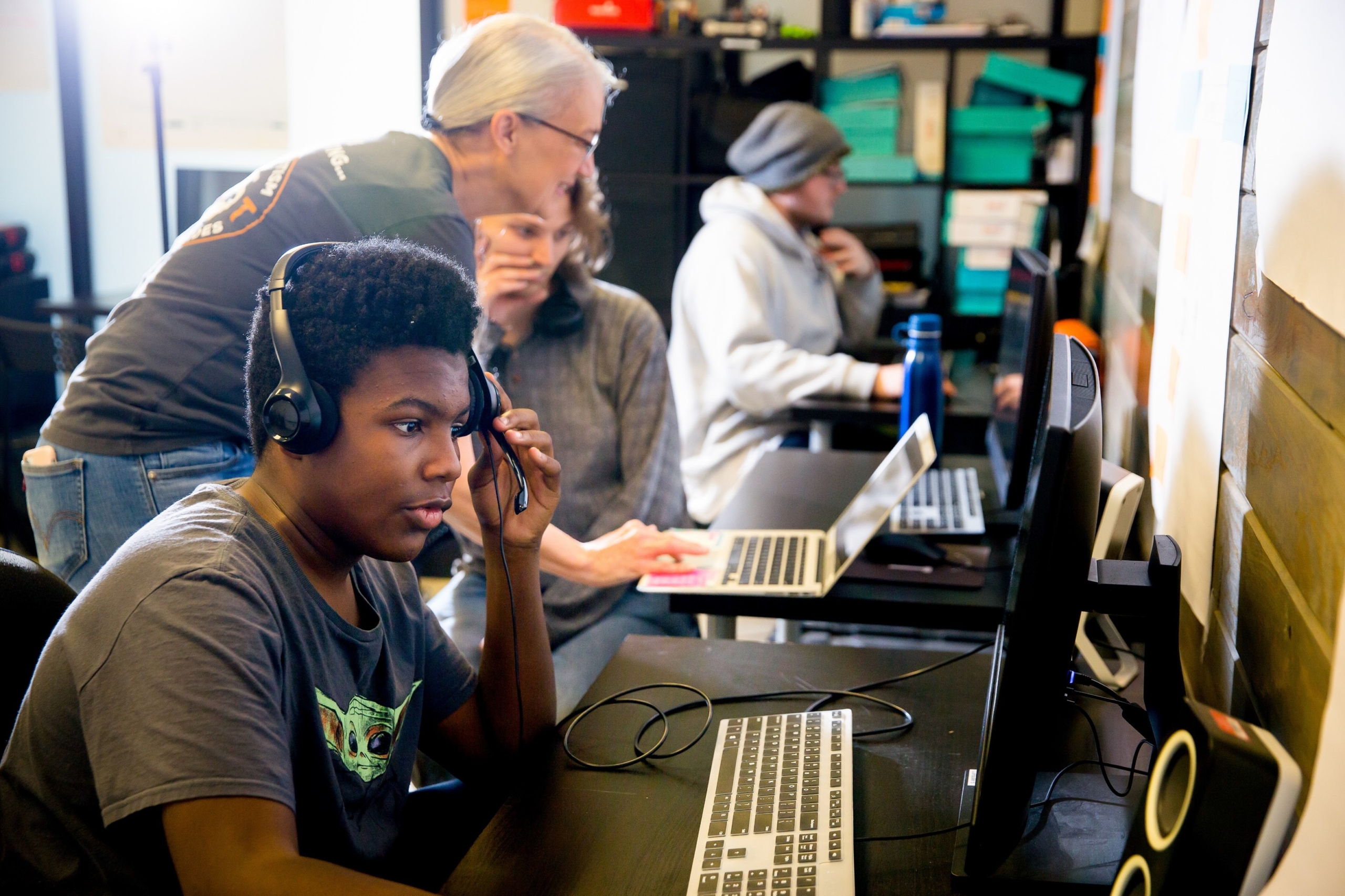
Teaching the Autism Community Trades (TACT) was founded in 2016 by parents who wanted to create more opportunities for their son and other children like him. The mission of TACT is to encourage and empower a full spectrum of individuals through education and employment in the skilled trades.
The Uniquely Abled Project (UAP) began its efforts in 2013 and has since launched the Uniquely Abled Academy. The UAP trains, places and supports employees and their employers in the manufacturing industry.
Meet the moderator.
Tara MP Havlicek serves as program manager for the Mitsubishi Electric America Foundation. With over 15 years of experience in corporate philanthropy, her focus lies on national grantmaking and corporate employees volunteer programs. She also serves as an advisor with the National Disability Mentoring Coalition.
Educators build high-quality career and technical education (CTE) programs of study for the benefit of society and the economy. But most importantly, we do it for the benefit of our students. They are the leaders we prepare to innovate and change the world. Their voices matter.
Jermaine Johnson and Jasmine Montalvo studied with Kirstin Bullington in Next Energy Engineering at R2i2 in Columbia, South Carolina.
Johnson and Montalvo and their classmates in CTE at Richland Two Institute of Innovation (R2i2) participated as national finalists in the 2021 Samsung Solve for Tomorrow competition. R2i2 was chosen based on a creative proposal developed by educators in collaboration with students to address contact tracing in schools during the COVID-19 pandemic, applying STEM skills learned in their classrooms.
“Thank you so much for highlighting student voices. Jasmine and Jermaine are truly fantastic young people, the type that remind you why you stay in teaching,” said Bullington, who was named South Carolina’s STEM Educator of the Year in 2022. “And thank you for focusing on global themes in Techniques. I know my classes are better since I incorporated global competencies. I look forward to learning more.”
Meet Jermaine Johnson
Hello, my name is Jermaine Johnson. I’m 18 years old, and I live in Stuttgart, Germany, for tertiary education studies. For as long as I can remember, I’ve been a military brat. My family and I have moved every four years on average. I attended grade school in six states. Some might see this experience as bad or unfortunate. It was rough to start over the first few times, but I got used to it and expanded on my given opportunities. Since I moved countless times, it made me more social and able to adapt to situations quickly.
COVID-19 also impacted my high school experience. Online education has pros and cons, but I accomplished a lot during this time. And I surprised myself with my capabilities. It helped to prepare me for adulthood, because I learned how to plan my days and identify what I wanted to accomplish. The downsides were that I missed out on the 10th and 11th year experience parts of high school.
What inspired your interest in CTE? And what are you studying now?
As a kid, I loved technology; my parents always said I was their little IT guy. So, I would say it came naturally! Now I’m studying computer science and want to become a software developer. I love it! And to this day, I help my friends and family with their technology problems. But nothing is set in stone for me, and I might change paths later.
In what ways have you been challenged — by educators, employers and/or your peers — to investigate the world and take meaningful action?
Each year, Samsung hosts a national competition for public school students in grades six through 12, and a team of R2i2 students were chosen to participate in 2021. The contest asks students to solve a community problem using science, technology, engineering and/or mathematics.
COVID-19 presented a significant issue for everyone during this time, and we decided to create something that would help nurses track positive cases. We aimed to reduce the number of students needing quarantine and the nurses’ workload. We interviewed nurses to find out what they needed, and several said they needed to catch up on two weeks’ worth of work. Ultimately, our team developed the COVID-19 Contact Tracer (CCT).
What advice can you provide to educators who wish to develop stronger connections with their students?
My advice is to make your class an interactive and fun learning environment. The teachers who did this made the school environment feel more relaxed, but they remained informative.
Is there anything else you’d like to share?
One thing I would like to share is to know your worth. Don’t undervalue yourself, and don’t assume you aren’t good enough. Always test the water. It’s better to fail than to never try at all. After all, fail means “first attempt in learning.” Thank you for this opportunity.
Meet Jasmine Montalvo
I am Jasmine Montalvo, a first-year undergraduate computer science student at Clemson University. I really enjoy coding and creating computer software to find efficient ways to solve problems. My educational experience has been interesting and impactful. I was honored to take STEM-specific and hands-on classes in high school, which helped me develop an understanding of science, engineering and computer science.
What inspired your interest in CTE? And what are you studying now?
I believe that my interest in CTE started in intermediate school, at the young age of 12. I was inspired by my father, who studied civil engineering, and I wanted to pursue that career as well. Ignited by that spark, as I entered high school, I searched for and selected classes that would help me explore the fields of engineering and computer science.
Being able to take a wide variety of classes helped me choose which field I liked the best. And I enjoyed the process of coding and programming the most. I would find myself doing it for fun and learning tips and tricks on my own. So, I decided to major in computer science.
In what ways have you been challenged to investigate the world and take meaningful action?
I have been challenged in many ways by my educators and my peers, but what stands out most was being selected to participate in Samsung’s Solve for Tomorrow contest. Seventy-five student-led teams from across the country were asked to make an impact.
Our project team created the CCT, which would track students’ locations and social distancing during a rough time period. Although we didn’t receive the overall prize, we were recognized as a top 10 national finalist. And I was part of the group who presented our work to a panel of judges. This project tested my limits in the STEM field and pushed the line of what I thought was possible for high school students to achieve.
I created code for the Bluetooth connections, explained our project to faculty and staff from around the district, and presented on a Zoom call in front of hundreds of people. This type of project showed me that I could impact the world in a way that I couldn’t believe. It helped me with my confidence and to be proud of the work that I do. I know now that I can take a step forward and make an impact all on my own.
What advice can you provide to educators who wish to develop stronger connections with their students?
To connect with a group of students, you have to be patient. I believe that patience will provide a good foundation for connecting with students. Because it gives you the time to get to know students and what they need in order to help them properly.
Is there anything else you’d like to share?
I think it’s important to take part in new challenges. Be open to taking risks and trying new things because they can lead to the best moments of your life. And there is nothing more special than being a part of something that is so much bigger than you.
With an aging population of tradespeople and a shrinking number of new entrants to replace them, nearly every skilled trade is facing a gap between the volume of work to be done and enough workers to meet that need. And the COVID-19 pandemic only exacerbated this problem. In fact, a recent report from Angi (formerly Angie’s List) found that most believe the labor shortage is getting worse.
The truth is, while as many as 85% of young people know that the trades can be good career options, many fewer have considered such careers for themselves. Career and technical education (CTE) programs offer the training necessary for entry into these jobs, but what else can they do? How can educators propel students toward careers in the skilled trades?
Account for the reasons why.
Lack of access is a significant barrier for many young people. They may not be able to afford to delay their careers for several years while they get their education. Solutions-oriented educators (and employers) must meet people where they are and help them forge pathways to fulfilling careers.
Consider, for example, tuition assistance programs. Employers providing some form of tuition assistance is nothing new. But often, these arrangements involve paying for employees’ graduate degrees. Tradespeople have often been left out of this narrative, either learning on the job or completing apprenticeship programs. And while this hands-on education is absolutely valuable, additional classroom learning can infuse the “why” behind the “how.” Creating partnerships to support prospective CTE students with tuition assistance can help meet the unique needs of all.
Offer flexible learning opportunities in culinary arts.
Auguste Escoffier School of Culinary Arts was an early innovator in online education, pioneering one of the first 100% online culinary programs paired with in-person industry externships. Students can complete their programs from their home kitchens to establish the fundamentals. Then they carry these new skills into a professional
kitchen environment.
Culinary industry stakeholders must attract interested candidates and provide a path for them to get the skills and work experience they need to grow and be competitive. This is the goal of Escoffier’s Work >amp; Learn apprenticeship program. The school partners with restaurants, bakeries and other foodservice businesses to create growth opportunities for students and their employers in several related pathways:
Culinary arts
Baking and pastry
Plant-based culinary arts
Hospitality and restaurant operations management
Denise Sullivan, vice president of enterprise solutions at Escoffier, explained the approach further. “Career seekers want to start more lucrative careers or advance their current careers,” she said. “They need employer support to help them identify and prepare for those opportunities. Programs like Work >amp; Learn help employees develop knowledge, skills and behaviors that bring full competence to their roles.”
Meet employers where they are.
Part of the program’s success comes from providing flexibility to employers. While Escoffier offers a variety of curricula, employer partners can choose which programs they want to support. A vegan restaurant, for example, may only participate in Work >amp; Learn for the plant-based culinary arts program. Also, they can choose to allow students to work toward a degree or diploma, at their discretion. Some employers aim for a zero-debt program, providing their own tuition assistance and helping students to source scholarships — in addition to a scholarship provided by Escoffier. And, in some instances, this may eliminate a student’s need for loans.
“Hospitality, restaurant and service companies are all vying for the same culinary talent,” said Sullivan. “Companies who embrace continuing education are seeing positive results.”
Tim Condon, chef and owner at the Angry Cactus in San Angelo, Texas, is so invested in this partnership! In fact, he is planning to add a dedicated educational kitchen to his restaurant where up to 12 students can work on their culinary arts program. Online education is uniquely positioned to foster partnerships with business owners like Condon.
Of course, we know that not all schools offer online education. And many pathways in CTE are difficult to teach in an online format. That was the common belief in the culinary industry, until Escoffier led the way.
Work closely with employer partners; maybe even ask if the employer can provide some of the necessary training. Educators must be flexible to meet the unique needs of their industry to attract employers and students. By shifting focus out of the classroom and into the workforce, educators can help people improve their skills and help to fill the shortages facing the trades.
Auguste Escoffier School of Culinary Arts offers both online and on-campus programs in culinary arts, baking and pastry, hospitality and restaurant operations management, and more.
Why do generations matter? In part, because our perspectives, perceptions, language and culture are influenced by when we were born — although generational qualities are not fixed in stone. Educators can see the generational span most clearly in their own schools. Kindergarten through twelfth grade (K–12) educational institutions are among the most diversified, with staff and students from five or more distinct generations.
The generations we all may encounter in the workplace include:
The Traditionalists (born 1928–1945)
Baby Boomers (born 1946–1964)
Generation X (born 1965–1980)
Millennials (born 1981–1996)
Generation Z (born 1997–2010)
Generation Alpha (born since 2010)
In other words, there may be students, instructors, and staff at any school who were born as early as the 1940s or as recently as 2018. And while intergenerational interaction can be a source of richness, generational differences are also responsible for misunderstandings and disputes in schools, the workforce and life. But we live in a world that is always connected. So it’s important to foster and promote connection. CTE educators are in a prime position to help members of all generations in CTE engage in workforce learning through the eyes and experiences of others.
Generational challenges
Crist Fellman, public health and safety instructor at the Huntingdon County Career and Technology Center, said that students often struggle to understand what happens, and what will be expected of them, in the real world. Other educators mirrored Fellman’s remarks, observing that students struggle with self-efficacy and resilience. But it’s not all for no reason.
Nelleke Beats, health instructor at McCaskey East High School, summarized a contributory reason for the disconnect by stating, “COVID-19 limited student interactions in cross-generational opportunities such as working with instructors and employers. This exposure is fundamental in promoting the students’ development” of employability skills.
Encourage productive interactions across generations in CTE
According to Phyllis Haserot, author of You Can’t Google It!: The Compelling Case for Cross-generational Conversation at Work, the success of any organization is heavily dependent on how each generation interacts with and learns from the others. Haserot said, “When organizations promote intergenerational dialogue, they generate higher-quality work.” In the context of CTE programs, this means that students who engage in cross-generational relationships with their instructors or during internships are more likely to develop self-efficacy and thrive.
To help students develop vital employability skills, foster collaboration across generations in CTE.
All generations can learn from one another. Encourage students, faculty, staff and stakeholders to come together. And invite them to get to know each other on a personal level. But how do you do begin? Organize a student-led event that brings people together! Facilitate candid conversations between individuals from different generations but the same specific career pathway. And through this activity, students will develop higher levels of self-efficacy. Meanwhile, educators and employers in older generations learn more about students’ needs and value systems. Start the conversation!
Maria Border and Jeffrey Matu are instructors in the College of Education at The Pennsylvania State University.
Meet Kris Elliott (he/him), Ph.D., associate director of the Oregon State University (OSU) Extension Service and a valued member of ACTE’s inclusion, access, equity and diversity (IAED) advisory group. We’re so glad he took time out of his busy schedule to chat with Techniques. Because, in conjunction with a new IAED webinar series that launched this fall, we’re planning a big book club event in April 2023. He hopes you’ll be there!
Read more to find out what Elliott had to say about his experience in career and technical education (CTE), and how he believes courageous conversations are necessary for personal and professional growth.
Please share a little bit about yourself. What inspired your interest in CTE?
I didn’t grow up loving school. It was often hard for me to connect with what we were learning; I didn’t always get the “why” behind what we were doing. But that all changed in high school. As a rural kid with a farm background, I enrolled in the agriculture program.
The combination of hands-on learning in the CTE classroom and the opportunity to further develop my skills in FFA ignited a passion for learning I hadn’t experienced before. Eventually, this passion led me to a career in CTE! I have worked as a high school ag teacher, a school district administrator, and now I work in extension and engagement at Oregon State University. My passion for CTE continues in my current role because I’ve seen the positive difference it can make in the lives of students.
What was your education experience like? What did you study?
I’ve always loved the intersection of agriculture and science. We experience challenges in producing enough food and fiber for our growing population while continuing to care for our natural world. I believe science and technology can help us overcome this challenge and being a part of this work is exciting.
Further, FFA helped me learn to communicate about agricultural issues. I started out as a shy ninth grader, but through participation in events and projects, I quickly learned how to advocate for agriculture and education issues. As a high school teacher, I found it rewarding to give back. Hopefully I inspired my students in the same way my agriculture teachers did.
What barriers did you face in pursuit of postsecondary education? How did you overcome those obstacles?
I was the first person in my family to go to college. And I experienced quite a few access issues, just because we didn’t know. I remember learning about requirements for financial aid, from a friend, after the FAFSA deadline. I remember struggling to complete college applications on my own, from home, on a 14k dial-up modem. And I also remember the financial struggle, without student aid, to make it through my first year of college.
Once I got there, my university offered many great resources for student aid and part-time jobs to assist with tuition and housing. And I did graduate with student loans but was able to pay them back over time; I also earned a few state grants to help pay back my loans. The good news is, I think the awareness and support for first-generation college students has come a long way since 1996 when I graduated high school. But there is still a lot of work to do in higher education affordability.
Please briefly discuss your role with ACTE’s IAED advisory group.
My passion for equity has grown and continued to grow during 20+ yearslong career in education. I want to work toward a world where students can truly thrive in high-quality CTE programs, regardless of their background, identity or ability. In particular, I work with ACTE’s IAED advisory group because there is important work to do in CTE. We need to break down stereotypes and ensure that our programs eliminate any bias or barriers to success. The IAED group, with the support of ACTE’s board of directors and staff, is helping to do just that. This is challenging work, and I appreciate the CTE educators and professionals who are leaning in to create more equitable opportunities for all of our students (and ACTE members).
In your opinion, what are the greatest challenges facing education in 2022–23? And how can CTE leaders act courageously to develop stronger, more inclusive learning environments for all?
Just as we started to see some positive change, some educators face policies and procedures that prohibit them from discussing race and sexual or gender identity. And this erases the identity of many of our students — and educators for that matter. These should not be political issues. Educators should be empowered to acknowledge students’ identities and their own. In order to learn, students need to feel safe, seen, cared for and loved.
This fall, ACTE launched a new webinar series exploring IAED in CTE. And there’s another project we’re really excited about: book club! What can Techniques readers expect to gain from that experience?
We know discussing issues of equity, particularly around race, can be challenging and even scary. What if we say the wrong thing? What if something I hear triggers me? How can we engage in a brave way? We can’t shy away from these difficult conversations anymore. This book club will provide us an opportunity to talk, share experiences, and encourage each other — in hopes we can all engage in a collaborative process to create more equitable CTE programs of study for all students.
Is there anything else you’d like to share?
As a queer man, I have experienced being othered, teased and bullied. I am passionate about this work because I want to ensure we create positive learning environments for all of our students. No student should ever feel less than. No student should feel they need to change who they are to fit in. We want every student to belong in our programs, and this requires that we, the adults, work toward creating inclusive spaces. Our students are counting on us.
Learn more and join the book club
Book club will occur as the culminating event of ACTE’s 2022–23 IAED in CTE webinar series — in April 2023. Those who wish to participate are encouraged to read one or both books listed below. Then consider how the work of Glenn E. Singleton, Ijeoma Oluo, Kris Elliott, the IAED advisory group and even you, yourself, can change people and hearts and entire organizations.
Courageous Conversations About Race: A Field Guide for Achieving Equity in Schools
Schools, like all organizations, face a nearly insurmountable hurdle when addressing racial inequities — the inability to talk candidly about race. In this timely text, author Glenn E. Singleton enables you to break the silence and open an authentic dialogue that forges a path to progress for racial equity.
So You Want to Talk About Race
The stakes could not be higher, and the task ahead seems daunting. Ijeoma Oluo guides readers of all races through subjects ranging from police brutality and cultural appropriation to the model minority myth in an attempt to make the seemingly impossible possible: honest conversations about how racism infects every aspect of American life.
Career and technical education (CTE) prepares learners for a wide range of industries and occupations. A pressing need for students with intellectual disabilities (ID) is access to career preparation. Until recently, it was often difficult for students with intellectual disabilities to access postsecondary education. The Higher Education Opportunity Act (HEOA, 2008) established comprehensive transition and postsecondary programs to support their participation in inclusive postsecondary education (IPSE). IPSE programs offer students with ID a variety of experiences and opportunities to gain the skills and career-specific credentials needed for positive employment outcomes.
Inclusive postsecondary education may include:
Regular enrollment in credit-bearing courses with nondisabled peers
Auditing or participating in courses for which students do not receive regular credit
Enrollment in noncredit-bearing, non-degree courses
Participation in internships or work-based training
Currently, 11 technical and state col.leges have established programs that offer CTE credentials in Florida. The majority of these are programs established through the Florida Postsecondary Comprehensive Transition Program (FPCTP) Act (FS 1004-6495), signed into law on Jan. 21, 2016. This legislation was the first in Florida to provide a structure and financial support for expanding the HEOA’s inclusion of IPSE programs. It also helped establish a center to support statewide coordination and includes career centers as eligible institutions. Further, the FPCTP Act established coherent pathways to help students with ID achieve career goals:
Funding scholarships for students to attend approved programs
Funding initial and continuing grants to approved programs
The application to become an FPCTP requires programs to outline the program length; inclusive practices related to curriculum, assessment, and advising structure; internships and employment opportunities, which must support students with intellectual disabilities who seek to continue their education; and independent living instruction, including how to find opportunities to earn industry certifications. Program requirements include the student exit with a meaningful credential that leads to employment. These credentials may include an industry certification, a micro-credential and/or a badge.
CTE stakeholders collaborate to support learners with ID.
Creating pathways to IPSE depends upon collaborative efforts of local, state, and national agencies. Raynor et al., for the Journal of Disability Policy Studies, pointed out that “the intractable problem of low employment for… [students with ID] cannot be solved by one agency alone…” (p. 307). Local and state agencies must work together to streamline a path to employment for youth with disabilities. For example, collaborative workgroups have been used to great effect in improving employment outcomes for students with disabilities (Laszlo, Henry, Goldsberry, >amp; Lapine, 2012).
The Think College Inclusive Higher Education Network is a national technical assistance and dissemination center focused on expanding IPSE for students with ID through developing state and regional infrastructure. They raise awareness about IPSE, develop training and technical assistance and support work to address existing gaps in services. Of note, they partnered with the Florida Center for Students with Unique Abilities to develop a collaborative workgroup focused on expanding access to CTE for students with ID.
Expanding access to CTE for students with intellectual disabilities
The CTE Collaborative Workgroup brings together experts in their fields to assess current practices, gather existing resources, and develop new resources to support enhanced employment outcomes for students with intellectual disabilities. Further, the workgroup will conduct outreach to existing stakeholders, engaging them to build upon existing practices and develop new ones. They offer targeted dissemination avenues for currently under-resourced areas of need and critical partners for IPSE programs and students. This work is key as they share resources, highlight promising practices and seek to replicate successful activities. Regular communication and support can make educators feel more involved and invested. And this work has the potential to engage CTE more effectively in helping students with ID earn meaningful credentials and attain competitive, integrated employment.
W. Drew Andrews, Ed.D., is the assistant director and technical assistance coordinator at the Florida Center for Students with Unique Abilities. He supports the development of inclusive postsecondary education programs and coordinates continuous quality improvement efforts for established programs.
L. Danielle Roberts-Dahm, Ph.D., is the project coordinator of the Think College Inclusive Higher Education Network. She leads project implementation, including regional partnership development, training and technical assistance, and dissemination.
As I tested the audio and prepared for my presentation — tucked away in the back of a large lecture hall — I didn’t realize that attendees had packed the room. By 10:00 a.m. central time, educators and their industry partners filled the round tables and lined themselves politely along the walls. The scene: ACTE’s CareerTech VISION 2021 in New Orleans, Louisiana. And my session topic? Professional learning communities (PLC) in career and technical education (CTE).
We discussed how to create thriving cultures of achievement within CTE.
And we had so much fun! For 25 minutes, I described the research and results of PLC implementation from my own experiences and then engaged with the dozens of other CTE experts in the room in a riveting session of question-and-answer. The questions were challenging and thought provoking. Often, I saw nods of agreement cross the room. Because we all face similar persistent problems, and we can easily identify with one another. This is symbolic of what makes VISION so extraordinary.
CTE stakeholders attend ACTE’s CareerTech VISION because they know that they will engage in meaningful conversation. I know because it is why I personally attend VISION whenever the opportunity arises.
Connect and collaborate
Collaboration and talking with others about best practices and new strategies fuels everyone forward. As a result, I am driven by opportunities to contribute and learn from the contributions of others. One such opportunity to contribute presented itself in fall 2020. ACTE sent out a call for CTE professionals interested in joining a pilot group of mentors for the Inclusion, Access, Equity and Diversity (IAED) Mentorship Program. I applied and was accepted. Then, a few months later, I found myself matched with a mentee from Wisconsin: Jim Michlig.
Jim and I had our first chat conversation, and we marveled over how our school and community demographics were different in nearly all respects. Nevertheless, Jim and I committed to meet monthly to discuss equity and the various challenges involved with improving access to high-quality CTE for all students. We wrestled with how to develop understanding about the opportunities. And we both wanted to provide more support for students with disabilities to succeed in our programs. And we both wanted to bring more female students into traditionally male-dominated CTE fields of study — like welding — and more male students into pathways like nursing. Over the course of the year, Jim and I shared our best practices and bounced ideas off of one other. Before long, you never could have guessed who the mentee or mentor among us was.
The epiphany
Back on site in New Orleans, I’d only just begun my session when I realized that Jim Michlig sat in the audience. A big smile crept across my face. Then, later, as the session closed, Jim and I met. We were so excited, finally, to talk in person that we felt that the moment had to be captured with a photo. So, randomly, I tapped the shoulder of a gentleman to ask if he would take our photo. As he turned, graciously accepting the offer, I realized it was Kevin J. Fleming, an educator, CEO and previous VISION keynote speaker. He was ecstatic that we recognized him! And we all had a big laugh about the coincidence of the chance meeting.
Realizing that we all had places to go, we exchanged business cards and parted ways. Within minutes, I ran into Mark Perna on the escalator, and I remarked that I had been inspired to make changes after hearing him speak at VISION a few years before. I described how his work improved our work. And then we said goodbye. I reflected on the conversations that I had just had — conversations made possible by my attendance at several ACTE events over the years.
Stand on the shoulders of giants.
CTE instructors and administrators strive to be leaders who cast a legacy marked by these descriptors. We know our why. We’re in the business of shaping the next generation of workforce leaders. And we support each other to better support our students. The question we wrestle with is rather how. How do I find out what is propelling student achievement in other CTE programs? How can I learn about innovative practices that increase access to high-quality CTE for diverse student groups?
When you cannot cast your own vision, you stand on the shoulders of giants. In a famed letter from mathematician, astronomer and physicist, Sir Isaac Newton credited the work of his predecessors for furthering his own discoveries. He knew that without their research, and seeing where they had succeeded and failed, his work would have faltered. I couldn’t imagine the breadth of valuable resources I would collect at VISION and through ACTE. In the few short months since I left New Orleans, already, I have made connections between my colleagues and presenters and their data they so willingly shared.
Overall, the lesson in this is simple: When you look beyond your own world view and take in different perspectives, you can see farther. And you begin to see possibilities that were previously hidden from view.
Conclusion
Career and technical educators have the power to help students see new possibilities for themselves by creating workforce opportunities. Every year that we attend an event like VISION or join an ACTE program, we provide opportunities for our students. Students need us to learn from others. Students need us to improve our practices to provide the educational experience they deserve.
They need us to acknowledge — and work to disrupt — the very real challenges they face to success in high-wage, high-demand CTE fields of study. The more we can identify these truths, and check in, and create opportunities for high-quality, work-based learning opportunities, the better we will succeed in plant.ing the seeds of possibility thinking.
Sandra Adams, Ph.D., challenges fellow educators to reimagine the future of CTE teaching and learning. Her decades-long career in education includes work as a teacher, administrator and instructional coach. Adams currently works as an administrator with the FWCS Career Academy and continues to consult with CTE schools across the country. Email her.
When I first joined the staff of Trenton Central High School in Trenton, New Jersey, I had no idea what career and technical education (CTE) was, let alone that theatre could be taught under that title. I came from an occupational background that was mixed — teaching various subjects at a small private school and working in the entertainment field. Over the last few years, building our CTE theatre program has proven that theatre classes are more than fun and games. Together with our partners and advisory committee, we are developing a program that will be a pipeline to careers in the entertainment industry.
CTE theatre programs give students confidence, self-awareness and empathy.
The Trenton Central High School CTE general theatre program runs for students in grades 10–12. Most of our students come into the program with no formal theatre education, but the goal of a CTE general theatre program is simple. Equip the students to go into any aspect of theatre that they would like — acting, technical theatre, management and business. We have a short amount of time to teach a plethora of information to these students.
Facing the pandemic
After years of class in a rundown building with broken equipment, the students moved into a new building in fall of 2019. There was a sense of excitement as we saw the equipment that could be used to train our students. And we began piecing together a list of items that were still needed. The students moved from a cafetorium with a stage floor that did not feel safe for jumping to a building with three performing spaces.
The theatre classroom is a black box theatre complete with a lighting grid. A theatrical auditorium seats 1,000 seats. An amphitheater can be found outside the media library. We were in rehearsals for a musical production — the first in decades — when the pandemic shut down the school building.
We adapted.
Try something new.
Though the school was not able to produce a musical, CTE theatre developed an online production by June of 2020. They did another in October of 2020 and an audio-only radio play in December 2020. We produced more theatrical works within the pandemic than we had before it. Our minds are already planning hybrid shows, voice work with our broadcasting students, and online dramatic readings of student work.
Engage your partners.
We have an amazing team of partners. One of our partners, Princeton University’s Trenton Arts at Princeton, launched an online Saturday program to help bridge and close gaps for Trenton students. Ninth graders who don’t yet have access to CTE theatre programming receive training from college students, alumni and professors. The program director, Lou Chen stated his reason for joining the advisory committee this way, “Because this a team where ideas become reality! Our strength lies in our diversity — professors, teachers, students, administrators, performers, practitioners, all united in pursuit of a common cause. We’re able to pool our resources, examine every challenge from different angles, and celebrate each other when things go right.”
McCarter Theatre made it possible for us to see a whole theatre festival dedicated to the works of Adrienne Kennedy during the pandemic.
Passage Theatre offered opportunities for our students to work on their productions as cast or crew.
Arts Impact Initiative, a new partner, started monthly conversations with professionals. The first session included an actor from Hamilton and the touring company manager for The Lion King.
>nbsp;
Ask for help.
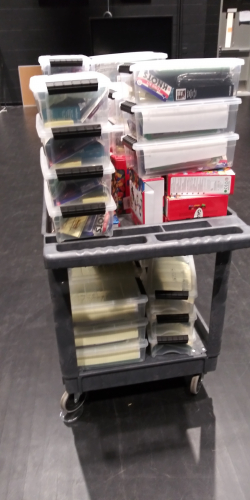
Even if we were not a Title I school, distance learning would have been difficult. The district provided laptops and hotspots, but theatre students require specialized equipment for their training. That is how Theatre-in-a-Box came into being. In less than two weeks, donors on DonorsChoose made it possible for students to receive their own Theatre-in-a-Box. These portable kits contained:
A green tablecloth to make a green screen for online productions
Stage makeup
A small sewing kit
Knot tying kit
A box of building bricks to build miniature sets
>nbsp;
Incubate, don’t hibernate.
As I have told my students and many others, the challenges we face give us a chance to incubate, not hibernate. We do this with the program at Trenton Central High School by incorporating the eight competencies for culturally responsive teaching, through decolonization of the canon (Muniz, 2020). Our students are all BIPOC, so representation definitely matters for them; they need to see a place for themselves in the industry.
We kept Sophocles’ Oedipus Rex as a part of the curriculum and paired it with Lee Breuer’s The Gospel at Colonus. Doing so allowed the students to understand the Greek chorus. Because they saw it in the context of an old-fashioned black Southern church complete with Morgan Freeman as a minister and the Five Blind Boys of Alabama playing a unified Oedipus.
>nbsp;
Keep going.
As theatre educators and students across this country observe Theatre In Our Schools March, we recognize that it has been two years since many of us cancelled school spring productions. But as the adage says, “The show must go on.”
That saying is true to life. It does not stop because something goes wrong. We wish it would, but it keeps moving. As we all continue to adjust, we need to remember that we can keep going on. It does not have to stop because it is different. Look at the new opportunities. Be innovative.
Felicia Latoya Brown holds a master of arts in theatre studies and another master of arts in arts administration. She is a regional programming director and board member for the American Alliance for Theatre and Education. Brown also serves as board member for the Ritz Theatre Company and board member for the Speech Theatre Association of New Jersey. She is an IAED mentor in ACTE’s IAED Mentorship Program. Additionally, she was recently awarded the 2022 New Jersey CTE New Teacher of the Year by the Career and Technical Education Association of New Jersey. Email her.
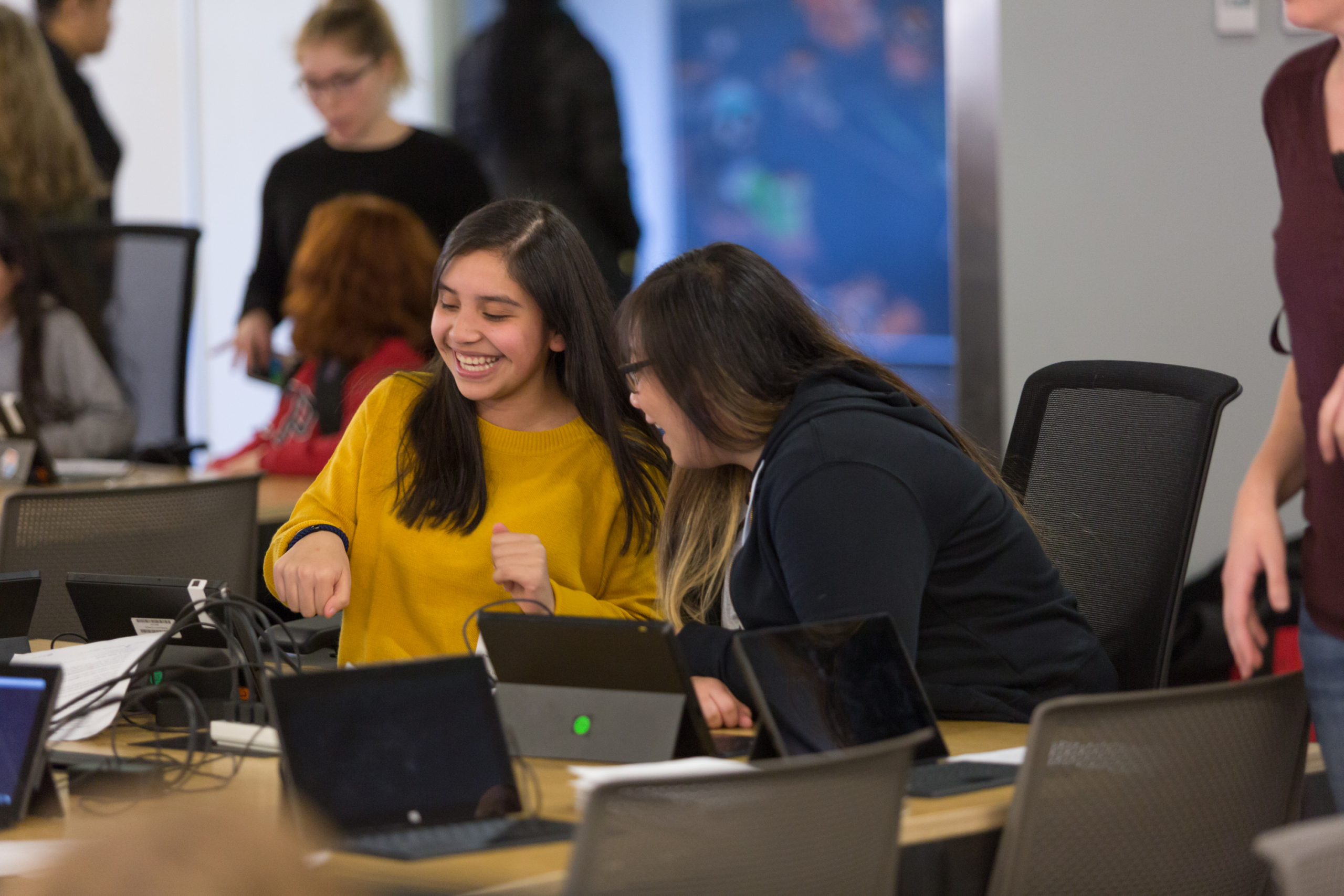
Career and technical education (CTE) makes a difference by inspiring young women to explore careers in science, technology, engineering, and mathematics (STEM).
Women are drastically underrepresented, representing only 27% of the STEM workforce in 2019. But how can we make real, permanent change? Enter IGNITE Worldwide. This nonprofit works with educators to promote STEM education and career advancement for students from historically marginalized communities. IGNITE Worldwide welcomes any student who identifies as female, nonbinary, transgender or agender. Their mission: to achieve greater gender and racial diversity in STEM classes, clubs, opportunities and careers.
Since the first event took place in 2000, more than 100,000 students have participated in the IGNITE program. The events — grounded in best practices that reflect years of feedback from educators, students and volunteers — attract students to explore careers in fields like cybersecurity, coding and informatics. And, after attending IGNITE events, the students not only know more about what STEM is but also feel encouraged
to participate in STEM classes and clubs that they previously viewed as intimidating or male-dominated.
In the Seattle Public Schools, where IGNITE began, young women and nonbinary students once filled only one or two seats (if any at all) in high school technology classes. After six years of IGNITE in Seattle, Washington, they then claimed an average of 40%–50% of the seats in information technology programs (National Alliance for Partnerships in Equity, 2007).
IGNITE events have the power to change perspectives and increase access to educational opportunities.
Educators receive dedicated training and reliable resources they can use to recruit and retain students in STEM. “Together, we’re making space for permanent change within the education system,” said Cathi Rodgveller, founder and CEO of IGNITE Worldwide.
The offerings provided by IGNITE are simple and flexible, requiring minimal effort from teachers. With events occurring during the school day, teachers can incorporate IGNITE into their yearly planning. Further, these innovative learning experiences facilitate unique opportunities to connect with students.
Powerful women leaders bring the magic of CTE to diverse groups of secondary students.
Serving various roles within STEM companies, IGNITE volunteers share inspirational stories, engage in hands-on work- shop activities, and participate in candid panel presentations that engage and inspire students toward careers in STEM. Liz Bander works as a senior program manager at Microsoft. She also serves as a dedicated IGNITE volunteer, advocate and advisory board member. And, while the IGNITE program changes students’ perceptions of STEM and career trajectories, some might argue that the volunteers get just as much out of IGNITE events as the students.
Bander offers an incredible example of how the IGNITE Worldwide program and its participants are interconnected. IGNITE recruits diverse volunteers from its partnering and sponsoring companies. They strive to create a network of STEM professionals who are passionate about encouraging girls and other underrepresented students to strive for more. This is key. Diversity in the IGNITE volunteer network encourages better connections with participating students. After all, you can’t be what you can’t see.
“When diverse, powerful leaders in CTE come together, the magic begins,” commented Rodgveller. “Not the magic of fairy tales and wishful fantasies, but the power that comes from knowing someone came before you. And now they’re here to guide, support and provide encouragement as you forge ahead toward graduation, higher education and a meaningful career.”
Increase access to career opportunities in STEM.
Our world is facing many challenges, and we must collaborate to address climate change, systemic racism and poverty. Getting to gender parity is one part of the equation. But we must also reach students from low-income areas who have been historically excluded from STEM. For this reason, IGNITE Worldwide prioritizes removing barriers and facilitating access to high-wage, high-demand careers in STEM.
Career and technical education (CTE) professionals recently screened Pioneers in Skirts, an award-winning impact film, as part of ACTE’s inclusion, access, equity and diversity (IAED) webinar series. In the film, director Ashley Maria sets a course to achieve something greater, more equitable for women maneuvering a work world built for men.
A movie about ambition: Pioneers in Skirts
The webinar, which took place on July 21, presented an opportunity for CTE educators to meet and discuss the topic with Ashley Maria and producer Lea-Ann Woodward Berst. Snehal Bhakta, CTE administrator in Clark County School District, moderated.
Women in career pathways as diverse as filmmaking, robotics and academia face barriers to ambition. In the work world, early career women make up nearly half of the workforce. But as the corporate ladder climbs higher, women’s representation drops dramatically.
“After four years of following pioneering women and gathering the fact, I am excited for the impact this film will have,” said Ashley Maria. “Not just for women or the film industry, but for cultures wanting to play a role in changing the outcome for women today and the next generation.
“My hope is to help create a world where ambitious women and girls can pursue their careers without having to combat bias in their lives — and where companies will achieve diverse and inclusive work cultures.”
How do we identify the challenges robbing women of their ambition? And how do we solve those challenges?
First, “I think it’s important to understand that there is bias in the culture.” said Lucy Sanders, CEO of National Center for Women >amp; Information Technology. “It’s not you. And it’s not just in the corporate space or in the startup space. It’s in classrooms. It’s in any organizational structure where one group is significantly underrepresented.”
Recognize bias in yourself and others.
Discussions of bias are “not about attacking [anyone],” said Asha Dahya, author, filmmaker, TEDx speaker and founder of GirlTalkHQ. “It’s just about being aware that is exists.”
With ACTE in July, Ashley Maria shared an example of unconscious bias in the classroom. “The chair example,” she said, “It’s a good one to show how biases come out of our mouths without even realizing it.” At the end of an activity, a teacher might say, “Boys, put up the chairs.”
The webinar participants grew silent. Many had never considered the implications in that simple request. ACTE’s IAED initiatives call on CTE professionals to reflect. Look inward to discover what small changes you can make to enrich the learning experience for all students.
RESOURCES
Project Implicit offers several Implicit Association Tests that help educate the public on unconscious bias. Additionally, ACTE maintains a library of IAED resources available for career and technical educators.
Allies must lend their support and their voices.
Filmmakers Ashley Maria and Lea-Ann Woodward Berst recommended that young, ambitious women need sponsors in the workplace. After all, it’s about who you know. You! We know you, and we need you. We need leaders in CTE to create opportunities for women to rise and be heard. But we must also hear your voices in the chorus.
In the webinar, Snehal Bhakta reflected on his own role in empowering young women toward high-wage, high-demand careers in STEM. “We need to provide opportunities to young women. But it’s also on me to continue being an ally. And to be vocal.
“I wasn’t always as vocal as I should have been. Now, being part of ACTE’s IAED Advisory Group, I want to be more vocal. Because I want to be more vocal. Because I want other men — other men of color, other people of color — to understand that we can solve some these issues by working together.”
Career and technical educators work with dedication to prepare the workforce. And our classrooms are filled with diverse young people ready to take on the world’s challenges. Create the space and call them out loud. They are pioneers!











 Meet Kris Elliott (he/him), Ph.D., associate director of the Oregon State University (OSU) Extension Service and a valued member of ACTE’s inclusion, access, equity and diversity (IAED) advisory group. We’re so glad he took time out of his busy schedule to chat with Techniques. Because, in conjunction with a new IAED webinar series that launched this fall, we’re planning a big book club event in April 2023. He hopes you’ll be there!




 When I first joined the staff of Trenton Central High School in Trenton, New Jersey, I had no idea what career and technical education (CTE) was, let alone that theatre could be taught under that title. I came from an occupational background that was mixed — teaching various subjects at a small private school and working in the entertainment field. Over the last few years, building our CTE theatre program has proven that theatre classes are more than fun and games. Together with our partners and advisory committee, we are developing a program that will be a pipeline to careers in the entertainment industry.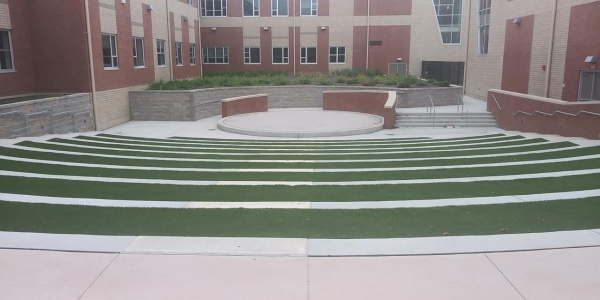
 Even if we were not a Title I school, distance learning would have been difficult. The district provided laptops and hotspots, but theatre students require specialized equipment for their training. That is how Theatre-in-a-Box came into being. In less than two weeks, donors on DonorsChoose made it possible for students to receive their own Theatre-in-a-Box. These portable kits contained: