
Mental health & school safety

It is essential to address the trauma experienced by students, faculty and staff in the wake of school shootings. The negative consequences of these events becoming more frequent include post-traumatic stress disorder, depression, anxiety and other mood disorders. Schools must implement trauma-informed programming to care for their community members’ safety and well-being.

Educators, students >amp; their families are sounding the alarm. School should be a safe environment in which to learn, grow and develop. “When violence or disaster affects a community, teachers and school administrators can play a major role in the immediate recovery process by providing specific structured and semi-structured activities.” As such, school leaders may deem it necessary to integrate school safety measures into the curriculum, whereby such protocols and practices are taught explicitly. Just as educators expect students to perform well on assessments, learners should be able to demonstrate proficiency in school safety.

Background

Reports of active shootings can be traced back to the 1700s. The first recorded mass shooting occurred on July 26, 1764, when the schoolmaster and 10 students were killed. In the 1800s, 12 school shootings were reported. And the 1970s later became known as the second most violent period in U.S. school history. By the mid to late 1980s, gun violence was steadily increasing. From 1986 to 1990, 71 people (65 students and six school employees) were killed with guns on school campuses throughout the United States. And mass shootings continue to paralyze communities worldwide. Fifty-one school shootings in 2022 resulted in 40 deaths and 100 injuries. In 2023 (as of May 24, according to Education Week), 12 people have died and more were injured as a result of gun violence in schools.

Not all school shootings receive mass media coverage. But the damage caused within these communities will have lasting effects.

Legislators and school leaders are exploring ways to make schools safer. Related programs and initiatives must address safety protocols as well as the school culture and community. An effective school leader makes decisions that affect the school in a positive manner. Thus, leaders must act to prioritize school safety. But what steps are required to increase school safety?

Effective communication >amp; transparency

All potential threats are serious and worthy of investigation. If individuals see something, they must say something. Information must be delivered to the appropriate authorities in a timely fashion. Safety and security practices begin by creating a secure, trusting environment through communication, vigilance and being proactive. Studies have shown that communication is vital for school safety (Burton, 2020).

The dialogue around school violence is increasing in intensity. When will it happen next? When will it stop? Tragedy occurs in the blink of an eye. Media coverage has heightened awareness of horrific tragedies associated with mass shootings. Active shooter drills have become ubiquitous for educators and students these days, with more than two-thirds of schools conducting them throughout the year (Burton, 2020). Proponents of the drills argue that they can lay the groundwork required to save lives, by emphasizing the behavior students and faculty should display. They believe demonstrating how to lock doors, turn off lights, and move out of sight improves feelings of preparedness. However, others believe such practices are traumatizing. Discussions about lockdown drills will continue, and viewpoints are mixed, but we share a collective goal to ensure students and educators remain safe on campus.

Conclusion

Teachers and school leaders must work together to promote school safety. This requires adequate tools and training programs and an individualized approach to community building. There is no one-size-fits-all approach to combating the problem. But one shooting is too many. School shootings disrupt the learning process and have profoundly adverse psychological effects on students. In addition, the local community can be scarred from such horrendous acts of violence. The offenders’ family and friends experience trauma as well. Collectively, we all must seek ways to reduce violence, especially on school campuses. The loss of a sense of safety affects everyone. After all, Maslow told us that safety is a basic human need.

Tamara Coley is a business education teacher and an FBLA advisor at Sumter County High School in Americus, Georgia. She credits former teachers for making a difference in her life, and that is why she became a teacher. Coley’s goal is to ensure she is a guiding light for all students, which starts with a safe environment and an inviting classroom. Currently, she is pursuing a specialist degree in secondary education at the University of West Georgia.

Read more in Techniques: Global Education.

Tech education teaching robotics

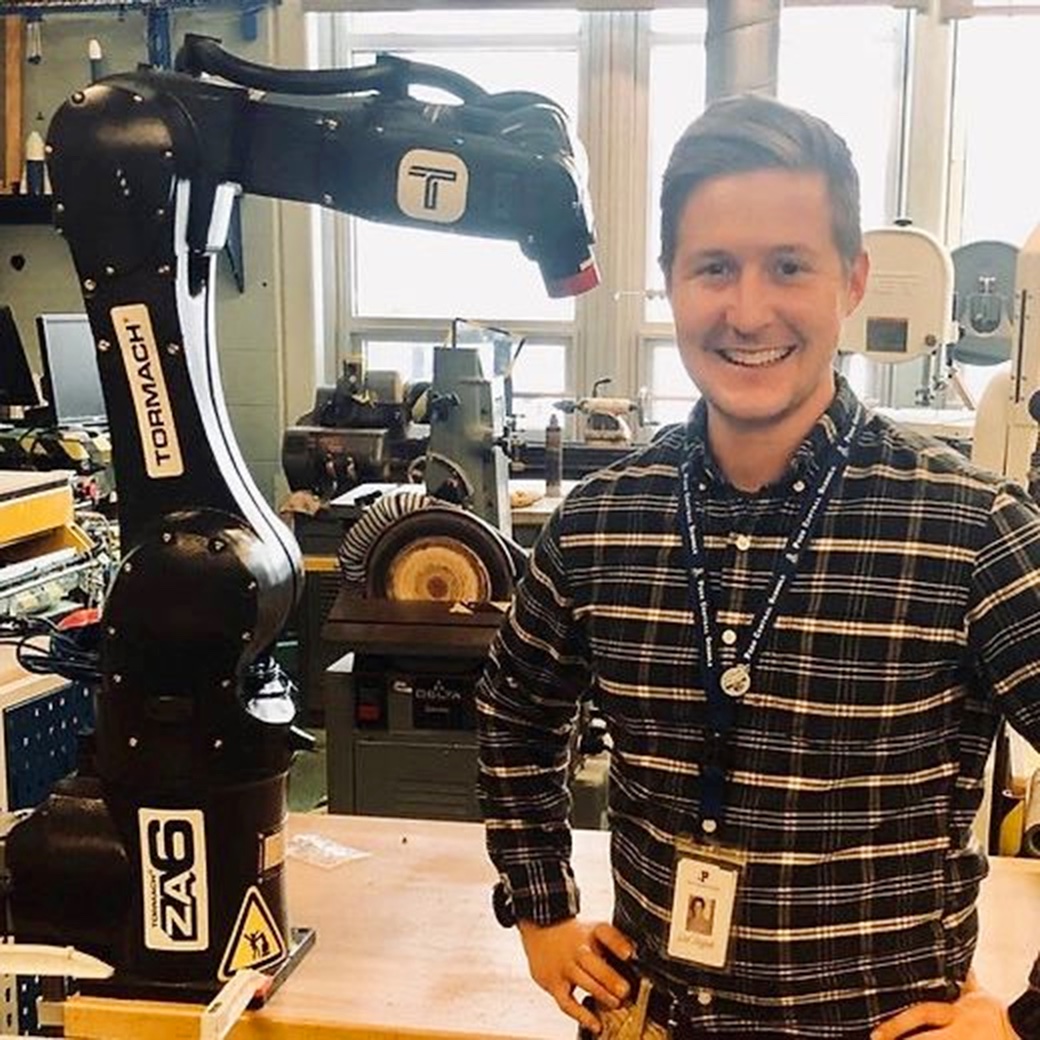
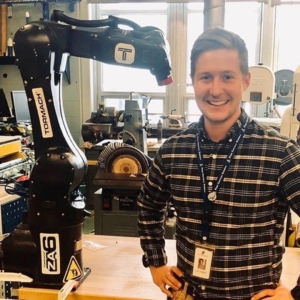
Tormach, headquartered in Madison, Wisconsin, supplies affordable and compact computer numerical control (CNC) machines. Their team wrote the following.

When launching our first robotic arm, the ZA6, we knew it was important to consider cost and ease of use. The ZA6 can handle a six-kilogram (13-pound) payload, yet programming is easy enough to learn in a matter of hours. Not weeks, or even months.

Changing tasks flexibly isn’t a thing most robots do well. Tormach’s engineers saw that as an opportunity and a challenge. How can a robot be made that’s so easy to manipulate, it can be used as a functional training tool in career and technical education (CTE)?

The power of programming language

The ZA6 uses Python as its programming language. Python is popular, easy to learn and powerful. And it’s easy to integrate ZA6 with other Python-driven systems. Tormach builds the ZA6 robot to industrial standards, utilizing EtherCAT servo motors, harmonic gear drives and aluminum castings. It can carry a payload through a reach of 975 millimeters with impressive speed and repeatability. Requiring only 20 amps of single-phase 220V, it can be installed almost anywhere.

PathPilot control software powers the ZA6. That features an intuitive user interface and powerful programming capabilities. No expertise in industrial robotics is required to program the ZA6 in most applications — on Tormach mills, lathes, routers and plasma tables. Tormach provides resources like a YouTube tutorial series, user forums and technical support.

Real-world industrial applications

A Wisconsin-based concrete company was an early adopter of the ZA6. And they attest to starting up quickly with PathPilot and its use of Python. The production supervisor wanted to reduce the number of hours involved in welding copies of the same concrete form. He described this task as “monotonous.”



After setting up the ZA6 for welding, they used their existing metal inert gas (MIG) welder to create a welding cell. The ZA6 can make tens of thousands of copies of that single component. And this frees up staff to be productive elsewhere on more challenging welding applications. This kind of problem-solving demonstrates the kind of thinking CTE educators want to impart to students.

“The new ZA6 robot is a natural addition to Tormach’s product line,” said Andrew Grevstad, Tormach’s business development director. “Like our CNC mills, lathes, plasma tables and routers, it is designed for ease of use. It is perfect for educators and is available at an attractive price point.”

Classroom benefits

In real classroom environments, the possibility of programming a robot quickly and easily means students can focus more on robotics concepts and capabilities. Teachers have seen success with students setting up a program in as little as 25 minutes. STEM education can benefit in many ways. Because the ZA6 uses Python as its programming language, the integrations available throughout the Internet of Things are vast.


Read more in Techniques: Global Education.

Engaging students through global competence

All learners make assumptions. But we can challenge them to investigate their perceptions. And this work presents an opportunity to acknowledge the perspectives of others. Educators who understand the international connections within their career fields can help students begin to develop global competence.

Engage in globally significant conversations, and watch as students’ interests in the world around them grow.

Integrating global competence throughout career and technical education (CTE) programs of study can have a widespread cultural impact. It fosters a culture of learning and respect, wherein all stakeholders learn to think critically about the world, challenge their perspectives, communicate with diverse others, and take action when necessary. Becoming globally competent first means understanding what global competence means.

What does it mean to be globally competent?

Possession of the knowledge, skills, and dispositions to understand and act creatively on issues of global significance (Boix Mansilla, V. >amp; Jackson, A. (2011). Educating for global competence: Preparing our youth to engage the world. Asia Society >amp; Council of Chief State School Officers.)

Investigate the world.

Globally competent CTE students are engaged and curious. And they want to learn about how things work in the world and within their career fields. They ask and explore critical questions and research solutions for complex problems. Their questions are globally significant. In other words, they consider important phenomena and events happening in their own communities and in communities across the globe. Students work on identifying, collecting and analyzing credible information from a variety of local, national and international sources, including those in multiple languages.

Recognize others’ perspectives.

Globally competent students recognize that they have a particular perspective that others may or may not share. They articulate a diverse set of viewpoints and discuss how differential access to knowledge, technology and resources can shape people’s views. Further, they should be able to weigh all sides of an argument. And from that skill, they learn to incorporate different perspectives within their own points of view.

Communicate ideas.

Globally competent students understand that audiences differ on the basis of culture, geography, faith, ideology, wealth, and other factors and that they may perceive different meanings from the same information. Effective communication — verbal and nonverbal, and across a range of media — with diverse audiences is key. Because the process of communicating ideas occurs in culturally diverse settings, and especially within collaborative teams.

Take action.

Globally competent students see themselves as team players, not bystanders. They tune in to the world, and they recognize opportunities for growth and change. These students are ethical and creative, and they weigh options to act based on evidence and insight. They can assess the potential impact of choices they make, taking into account varied perspectives and potential consequences. And they show courage to act and reflect on their actions.

Get to know your students.

Getting to know students is an important classroom management strategy. Your students backgrounds, cultural experiences, hopes and values can provide strong context for learning about the world. Further, investing time in your students as individuals will help them to feel like valued members of the learning community.

Educators work hard to determine where students need to be at the end of a course or program, and to design curricula to get them to that point. Time spent discovering where the students are now and what they bring to the educational experience is equally important. Thus, when students are helped to achieve program goals as well as personal goals, they feel heard and become more invested in the learning experience.

Emphasize employability skills.

Students are preparing to work in a globally connected world, which means they will be called on frequently to communicate across cultural boundaries. So educators must consider how career readiness and global competence fit together. Can your CTE students communicate clearly, effectively and with reason?

It’s important to remember that you don’t need to know everything about the world to teach through a global lens. But rather you should be open-minded to learning new things. Start small with one or two ideas. Then simply talk to your students. Ask them what they think and how they feel about the world. No matter how large or small your steps are, this work will foster more meaningful relationships with students, more equitable learning environments, and ultimately, a stronger workforce.

by Michelle Conrad and Larae Watkins


Read more in Techniques: Global Education.

Food security, climate change & innovation: Context for learning

Learning about food, fiber and natural resources can help students build global connections. Agriculture is a worldwide industry that is deeply personal. Even those who are generations removed from farming are still connected to the agriculture system. And that makes it an effective context for teaching global skills.

Education in agriculture provides opportunities for students to learn about diverse perspectives and practices from across the world. Agriculture is a critical sector for addressing global sustainability challenges. According to the United Nations Food and Agriculture Organization, 5 billion hectares — approximately 38% of land in the world — is dedicated to agriculture. And while agriculture can be viewed as a contributor to environmental degradation, it can be part of the solution as well. Engaging students in sustainable agriculture is an avenue to building global perspective.

Agriculture is constantly evolving, using new technologies that improve efficiency, productivity and sustainability. And while learning about agricultural innovation, students can develop creativity and problem-solving skills. So, who should teach about agriculture? Perhaps everyone.

Not just for agricultural educators

Teaching about global agriculture issues calls for truly a collaborative effort. There is strength in cross-disciplinary collaboration to make learning come to life for students. For example, the World Food Prize Foundation Global Guides Program brings together educators from many different pathways. They work to increase their capacity to teach on global agriculture and food security. The first four cohorts have included more than 100 educators, representing more than 25 disciplines, from 29 U.S. states and nine countries.

Together they learn to become catalysts of change in improving our world. But this interdisciplinary sharing does not need to be limited to structured programs like Global Guides. When we place passionate people in proximity of each other to focus on a shared cause, then we can advance the way that we engage learners in global issues.

Context for success

A shared language to organize global concepts is vital to accelerating the sharing of praxis and advancing collaboration between educators. The United Nations (UN) Sustainable Development Goals (SDGs) provide a framework for educators to use when teaching on a broad range of topics, from poverty eradication to environmental sustainability to social justice. They are a valuable tool for promoting interdisciplinary learning and critical thinking.

By incorporating SDGs, we can help students understand how the world is interconnected. And why collaborative action is essential to achieve a sustainable future. Moreover, by aligning our teaching with the SDGs, we can empower students to become active global citizens who contribute to positive change in their communities. The UN SDGs can be our shared language.

Zero Hunger (UN SDG No. 2)

Food security is an issue that is closely associated with agriculture. Food security, as defined at the World Food Summit in 1996, “exists when all people, at all times, have physical and economic access to sufficient, safe and nutritious food that meets their dietary needs and food preferences for an active and healthy life.” Hunger is a global issue and a local one. Many students feel passionately about the injustice of not having access to sufficient and nutritious food, which they recognize as a basic need for all humans on the planet.

Industry, Innovation and Infrastructure (UN SDG No. 9)

Sustainability in agriculture can contribute to the development of infrastructure and industries, which can lead to economic growth. Jon Davis, a biotechnology instructor at the North Carolina School of Science and Mathematics in Durham, North Carolina, engages his students with developing prototype smart devices that include sensors and pumps to automate plant growth. And students use these tools to collect data. Additionally, they are working to minimize costs of the smart devices so that a more diverse group of agriculturalists may gain access to cutting-edge technologies.

Climate Action (UN SDG No. 13)

Agriculture contributes to climate change. And the issue of food waste often captivates students. According to the Food and Agriculture Organization (FAO) of the United Nations (2019), about 14% of the world’s food is lost after it is harvested and before it reaches retail outlets. And the United Nations Environment Programme (2021) reported that an additional 17% is wasted in retail and by consumers. Food loss and waste accounts for 8%–10% of global greenhouse gas emissions, which contribute directly to climate change. In turn, an unstable climate and extreme weather events have a negative impact on food production.

As the city of Houston, Texas, continues to grow, water and land space will become increasingly limited. So, led by Surendra Surujdeo-Maharaj, Ph.D., students are learning to implement recommendations from the UN and the city’s climate action plan. Students learn how to produce, package, market and distribute nutrient and calorie dense foods (e.g., microgreens, vegetables, mushrooms and wheat) in lab spaces that have become controlled environment agriculture classrooms.

Together, we can do more!

This approach to agriculture in K–12 schools can inspire learners to seek out solutions for global sustainability challenges. Students in Houston built a 300-square-foot butterfly garden to provide a habitat for endangered monarch butterflies, and they installed a rain garden to slow the rate of runoff during heavy rainfalls that flood their streets so often. Further, their peers carried out cafeteria audits. And they found that 40% of cafeteria food was being wasted! Students then used their data to compile graphs and write a book about how food waste drives climate change.

Agriculture provides context for students to connect with the issues that they care about. In sum, teaching through the lens of agriculture can help learners develop skills such as cultural competence, sustainability, literacy and innovation. These all are increasingly essential to thrive in a globalized world.

Daniel D. Foster, Ph.D., is an associate professor, agriculture teacher educator and co-founder of the Global Teach Ag Network at Penn State.

Melanie Miller Foster, Ph.D., is an associate teaching professor and co-founder of the Global Teach Ag Network at Penn State.


Read more in Techniques: Global Education.

Build global skills with students & partners

“Skills have become a global currency,” said Jason Scales, director of global education at Lincoln Electric. “As a global manufacturer, we have to support our industrial customers and engage with educators to provide insight on market trends and technology advancements. It is critical for education and industry to collaborate on many levels.”

Across the United States, economic and education organizations are sounding the alarm! Employers need employees with the skills of global competence: defined as the ability to investigate the world, recognize perspectives, communicate ideas and take action. A recent report from Google for Education (2022) highlighted the need for a global worldview that enables us to connect and collaborate with our neighbors at home and abroad. We must seek to solve complex problems with global implications.

Cultural awareness is an employability skill people need.

This article offers support for educators who want to build stronger, globally connected partnerships. And who seek to integrate global skills in their curricula. Industry partners can help educators identify the most relevant global employability skills and provide examples of how those skills are being applied locally.

With the support of community partners, educators can emphasize and reinforce the skills that learners need most, like teamwork, leadership and communication. For example, at Tulsa Community College in Oklahoma, students involved with Phi Beta Lambda gain international perspectives. Local business representatives are invited on campus to present and answer questions. Then students visit the businesses to connect with the world of work. Accounting students even got to participate in a virtual meeting with a client in Denmark!

Start small.

Provide opportunities that are not too costly or time-intensive for businesses. Activities such as mock interviews or attending an event may be more manageable when starting to develop a relationship with an employer. Bring in virtual guest speakers. In fact, hybrid work environments have made it easier than ever to host guest speakers. Other ideas include asking students to review annual business reports for international components or attend cultural events in the community, which may be supported by local businesses.

Get involved.

Join relevant local, state and international associations. Then attend meetings or volunteer. In some instances, like at events hosted by ACTE, you may be able to bring students and their families along.

Look for global competence in action.

Find out how employers advertise their job openings. Then ask your students to analyze job descriptions for relevant global skills. These might include speaking another language, creativity, critical thinking and teamwork. Students also might research local companies implementing inclusion, access, equity and diversity to benefit society and the workforce.

“Global awareness and teamwork skills are huge,” said Mike Smith, director of education and global community development at the Ford Motor Company. “You have to be open to learning new things. And you have to value diverse people and diverse ideas. That’s becoming more and more important.”

Reinforce skills development.

Business and community partners can help students connect global competence to employability. For example, working on a Habitat for Humanity project can help students in the skilled trades explore global issues such as sustainable building materials and international supply chains while also engaging in community service.

Employers can advertise global competence as a skill they are hiring for. But to be successful in getting those jobs, students must be able to communicate their global career readiness. Partners can also assist in conducting mock interviews and in helping students recognize and articulate their strengths and abilities to future employers.

Conclusion

Collaborating with business and community partners to help students gain the skills of global competence will lead all stakeholders toward success. These graduates — students today, industry leaders soon — will build a toolbox of skills. They will adapt to changing workforce needs, support society and the economy, and solve problems of global significance. Ultimately, global education and CTE programs seek to meet the same objective: to prepare students for success in the global workforce.

Heather Singmaster is director of CTE at Digital Promise Global.


Read more in Techniques: Global Education.

Students in focus

Educators build high-quality career and technical education (CTE) programs of study for the benefit of society and the economy. But most importantly, we do it for the benefit of our students. They are the leaders we prepare to innovate and change the world. Their voices matter.

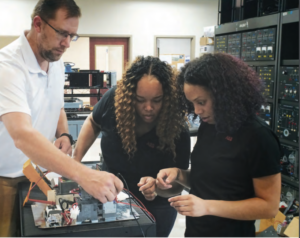
Jermaine Johnson and Jasmine Montalvo studied with Kirstin Bullington in Next Energy Engineering at R2i2 in Columbia, South Carolina.

Johnson and Montalvo and their classmates in CTE at Richland Two Institute of Innovation (R2i2) participated as national finalists in the 2021 Samsung Solve for Tomorrow competition. R2i2 was chosen based on a creative proposal developed by educators in collaboration with students to address contact tracing in schools during the COVID-19 pandemic, applying STEM skills learned in their classrooms.

“Thank you so much for highlighting student voices. Jasmine and Jermaine are truly fantastic young people, the type that remind you why you stay in teaching,” said Bullington, who was named South Carolina’s STEM Educator of the Year in 2022. “And thank you for focusing on global themes in Techniques. I know my classes are better since I incorporated global competencies. I look forward to learning more.”


Meet Jermaine Johnson

Hello, my name is Jermaine Johnson. I’m 18 years old, and I live in Stuttgart, Germany, for tertiary education studies. For as long as I can remember, I’ve been a military brat. My family and I have moved every four years on average. I attended grade school in six states. Some might see this experience as bad or unfortunate. It was rough to start over the first few times, but I got used to it and expanded on my given opportunities. Since I moved countless times, it made me more social and able to adapt to situations quickly.

COVID-19 also impacted my high school experience. Online education has pros and cons, but I accomplished a lot during this time. And I surprised myself with my capabilities. It helped to prepare me for adulthood, because I learned how to plan my days and identify what I wanted to accomplish. The downsides were that I missed out on the 10th and 11th year experience parts of high school.

What inspired your interest in CTE? And what are you studying now?

As a kid, I loved technology; my parents always said I was their little IT guy. So, I would say it came naturally! Now I’m studying computer science and want to become a software developer. I love it! And to this day, I help my friends and family with their technology problems. But nothing is set in stone for me, and I might change paths later.

In what ways have you been challenged — by educators, employers and/or your peers — to investigate the world and take meaningful action?

Each year, Samsung hosts a national competition for public school students in grades six through 12, and a team of R2i2 students were chosen to participate in 2021. The contest asks students to solve a community problem using science, technology, engineering and/or mathematics.

COVID-19 presented a significant issue for everyone during this time, and we decided to create something that would help nurses track positive cases. We aimed to reduce the number of students needing quarantine and the nurses’ workload. We interviewed nurses to find out what they needed, and several said they needed to catch up on two weeks’ worth of work. Ultimately, our team developed the COVID-19 Contact Tracer (CCT).

What advice can you provide to educators who wish to develop stronger connections with their students?

My advice is to make your class an interactive and fun learning environment. The teachers who did this made the school environment feel more relaxed, but they remained informative.

Is there anything else you’d like to share?

One thing I would like to share is to know your worth. Don’t undervalue yourself, and don’t assume you aren’t good enough. Always test the water. It’s better to fail than to never try at all. After all, fail means “first attempt in learning.” Thank you for this opportunity.

Meet Jasmine Montalvo

I am Jasmine Montalvo, a first-year undergraduate computer science student at Clemson University. I really enjoy coding and creating computer software to find efficient ways to solve problems. My educational experience has been interesting and impactful. I was honored to take STEM-specific and hands-on classes in high school, which helped me develop an understanding of science, engineering and computer science.

What inspired your interest in CTE? And what are you studying now?

I believe that my interest in CTE started in intermediate school, at the young age of 12. I was inspired by my father, who studied civil engineering, and I wanted to pursue that career as well. Ignited by that spark, as I entered high school, I searched for and selected classes that would help me explore the fields of engineering and computer science.

Being able to take a wide variety of classes helped me choose which field I liked the best. And I enjoyed the process of coding and programming the most. I would find myself doing it for fun and learning tips and tricks on my own. So, I decided to major in computer science.

In what ways have you been challenged to investigate the world and take meaningful action?

I have been challenged in many ways by my educators and my peers, but what stands out most was being selected to participate in Samsung’s Solve for Tomorrow contest. Seventy-five student-led teams from across the country were asked to make an impact.

Our project team created the CCT, which would track students’ locations and social distancing during a rough time period. Although we didn’t receive the overall prize, we were recognized as a top 10 national finalist. And I was part of the group who presented our work to a panel of judges. This project tested my limits in the STEM field and pushed the line of what I thought was possible for high school students to achieve.

I created code for the Bluetooth connections, explained our project to faculty and staff from around the district, and presented on a Zoom call in front of hundreds of people. This type of project showed me that I could impact the world in a way that I couldn’t believe. It helped me with my confidence and to be proud of the work that I do. I know now that I can take a step forward and make an impact all on my own.

What advice can you provide to educators who wish to develop stronger connections with their students?

To connect with a group of students, you have to be patient. I believe that patience will provide a good foundation for connecting with students. Because it gives you the time to get to know students and what they need in order to help them properly.

Is there anything else you’d like to share?

I think it’s important to take part in new challenges. Be open to taking risks and trying new things because they can lead to the best moments of your life. And there is nothing more special than being a part of something that is so much bigger than you.


Read more in Techniques: Global Education.

Cultivate strong postsecondary partnerships

Dedicated educators work to improve the quality of postsecondary career and technical education (CTE) in many ways. At Mississippi State University (MSU), in 2020, President Mark Keenum felt called to act. You see, Keenum is a community college graduate. And he felt MSU could do more for its stakeholders.

Develop partnerships to meet the needs of educators and the workforce.

For learners interested in the applied sciences, an associate in applied science (AAS) was once considered the terminal degree. But in 2023 and looking forward, many related industries need higher-level skills in the workforce. Thus, Keenum proposed creating a new degree program: the bachelor of applied science (BAS) at MSU.

Education leaders responded by soliciting feedback from community college and industry partners to gauge the most critical workforce needs and consider labor market projections. MSU then developed areas of emphasis for BAS degree programming that included advanced manufacturing, trades supervision, public management and cybersecurity.

New degree programs like MSU’s BAS can expand the CTE pathway ecosystem in a manner that is responsive to industry needs for more management-ready graduates in all career clusters (Goger, 2019). Further, opportunities to develop and validate new skills will benefit postsecondary CTE faculty as well as community college students in high-quality CTE programs. In fact, as the MSU’s BAS program has matured, university administration has begun offering tuition discounts for postsecondary CTE instructors to incentivize their enrollment. Mississippi State recognized that postsecondary CTE faculty are vital in the development of tomorrow’s workforce. With a reduced financial barrier, more CTE educators will seek to obtain advanced degrees (Giancola >amp; Davidson, 2015).

Postsecondary partnerships promote success.

Community and technical college faculty who engage in MSU’s BAS degree programs gain new and relevant skills as their fields evolve. These efforts toward continuing education also provide validation of the merit of career and technical education pathways. This sentiment is echoed by CTE leaders at Mississippi State’s partner schools, including Dwayne Casey, associate vice president of workforce solutions and CTE, and Katie Broadway, director of CTE and program advancement, at Northwest Mississippi Community College (NWCC). Faculty enhance their own technical skill development, and they also may learn new instructional methodologies to use in their courses.

Postsecondary partnerships support access >amp; equity goals

Educational entities should strive to work cooperatively to build a dynamic educational ecosystem that can adapt. Also, they should create learning environments that promote equity and inclusion for all. Casey and Broadway view their partnerships with MSU as a way to reduce the stigma of CTE. They also agreed that the BAS degree has expanded education options for their CTE faculty and students in a way that was not available in the past. Another unintentional, positive effect of this partnership work: It has helped bolster community colleges’ CTE recruitment efforts by demonstrating that a postsecondary CTE degree is and always has been on par with other academic degrees.

Takeaways

Creating purposeful partnerships with community colleges and universities is one strategy CTE leaders can use to meet the demands of a dynamic landscape in 2023 and beyond. Educators at all levels must have the humility to be introspective. Evaluate current offerings to ensure that programs provide value to everyone involved.

After engaging in such reflection, Mississippi State University created the BAS degree to strengthen its postsecondary partnerships — fully embracing its mission to provide opportunity to all citizens. MSU seeks to provide value in creating a resilient workforce, meeting students’ needs so they might be prepared to meet the industry’s needs. Further, granting this access to educators will convey to their students the value of continued education.


Sean Owen, Ph.D., is director of career and technical partnerships at Mississippi State University overseeing the BAS degree program. Previously, he led Mississippi’s statewide CTE assessment initiatives. And he also served as president of the Consortium for Research on Educational Assessment and Teaching Effectiveness.


Read more in Techniques.

Design engaging PD with instructional rounds

In an effort to deliver more engaging professional development, Northwest Education Services Career Tech began using the practice of instructional rounds (City et al., 2009). We gave teachers the opportunity to watch one another teach and engage in intentional reflection. And they have become the voice of their own professional learning.

Design engaging professional development.

We began our journey in instructional rounds by speaking with administrators who were also using rounds in their buildings and districts. They were able to give us insight into the benefits and challenges of using rounds at the building level instead of at the district level. While instructional rounds began as a way for a group of instructional leaders to observe classrooms across multiple buildings, we have shifted our gaze to allow for 36 teachers to visit three classrooms each month; we then use the evidence collected by the teachers to debrief and determine the scope of future professional development offerings.

Note: Central to the success of instructional rounds is the idea that they are non-evaluative.

Observers enter classrooms to note what they see and hear, not what is missing. We like to tell our visitors that they are the learners, not the experts. This mindset shift allows participants to look down, not up. We want classroom visitors to watch what the students are doing and being asked to do rather than what the teacher is or is not doing. This guidance reinforces the non-evaluative nature of rounds and makes it possible for administrators to gain a clearer, more holistic view of areas for improvement — which is what the researchers and creators of rounds call our “problem of practice.”

Consider the logistics of instructional rounds.

Teachers improve when they watch others teach. We knew the theory was great. But the logistics were the first real challenge. We needed to get 36 teachers into three classrooms each without causing substantial disruptions to students’ learning. We knew that we had one major advantage that would help us implement rounds: Nearly all of our courses are led by a teacher er and a paraprofessional who is also certified as a substitute teacher. This meant that most teachers could leave their classrooms for three 20-minute peer observations while the paraprofessional continued to support instruction. This allowed us to schedule all classroom visits on the same day, scheduled in two one-hour blocks.

Round, debrief, then round again.

We focus our efforts on teachers using competency-based grading to inform their instruction. Thus, we drafted our first problem of practice based on the associated challenges.

  • How do students know the quality of their work?
  • How do students know how to improve their work?
  • And how do teachers use competency-based grading to guide their instruction?

Teachers focused on collecting evidence related to our problem of practice. Then, during morning PD sessions, administrators led teachers through a debriefing protocol that used aspects from City et al.’s work as well as modifications to fit the unique needs of our work in a CTE setting. Specifically, debriefing peer observations could take hours. But we had 60 minutes. So, we asked each teacher to spotlight six pieces of evidence from their classroom visits and use that evidence in small groups.

Teachers took note of patterns, made predictions about professional learning that would impact instruction positively, and then determined what they needed from instructional leadership to achieve their next level of work. They needed specific examples of how to group students using data. And about how to develop processes that students could use to revise their knowledge. From this came the topic for our next session of professional learning.

Here, we see that the practice of instructional rounds never ends. Instead, one enactment of rounds leads to new work, which leads to a new problem of practice.

What are the processes that students use to collect feedback?

What do students do to improve their work after receiving feedback?

Data needs to be collected and used to group students based on their needs.

The first two questions in our original problem of practice didn’t quite hit the underlying idea of competency-based grading. Students need to collect various forms of feedback in order to understand where they are, where they are going and how to get there. In the multiple PD sessions that followed, teachers engaged in rich practice and discussion.

How’s it working? What’s next?

The organization of instructional rounds is, of course, unique to each building. We took the original research from City et al., kept what worked for our building and eliminated things that didn’t fit our culture. We don’t claim to be the paragon of instructional rounds, nor do we think we have perfected it even for ourselves. Constantly, we are tweaking our processes and making deliberate changes to meet the changing needs of our teachers.

No matter what it may look like in your school, the point remains. When teachers gain opportunities to watch other teachers, ideas will be shared. We have seen three positive effects of instructional rounds at our school.

  1. Increased collaboration
  2. Increased peer support
  3. Higher levels of engagement

But this is only the start of our work. Today, we have completed four iterations of building-wide rounds. And our current problem of practice asks, What processes are in place that allow students to revise their knowledge? What kind of data is collected, and how is it used to group and regroup students? What does it look like when a student is engaged and challenged on a daily basis? As we plan, we reflect and ask ourselves challenging questions that foster growth.


Matt Griesinger is an assistant principal at Northwest Education Services Career Tech in Traverse City, Michigan. He holds a bachelor’s degree in integrated language arts education, a master’s degree in curriculum and instruction, and an Ed.S. in educational leadership. Prior to his current role, he was a high school English teacher and a middle school assistant principal.

Read more in Techniques in April 2023: CTE for English Learners.

Support ELs in CTE programs

For English learners (ELs), their access to career and technical education (CTE) can be limited due to a variety of factors. These include language proficiency restrictions, limited translation services and lack of family outreach. Educators must act with urgency to support representation and engagement. Because when ELs are intentionally included, they may succeed in whichever path they choose.

Review data on EL enrollment to assess representation and identify any barriers that exist. For example, there may be limited outreach conducted in EL families’ home languages about the CTE programs available to students. To address this challenge, set up outreach structures. This outreach can come in many different forms such as field trips, flyers, and application support services. Then the focus can shift to effective instructional practices.

In this article I will outline how scaffolding instruction can support ELs in CTE programs. And how educators can implement five strategies to support ELs in CTE.

  1. Incorporate explicit vocabulary development into instruction.
  2. Provide writing support based on strengths and needs.
  3. Embed peer learning opportunities into instruction.
  4. Include mini lessons on academic language as appropriate.
  5. Prepare for certification exams using multiple modalities.

How can scaffolding support ELs in CTE programs?

CTE takes a hands-on approach to learning. Instruction tends to be concrete and provides immediate relevance for all students. CTE programs provide regular opportunities for productive talk in which students work together to solve a problem or create something, making it an ideal place to learn and practice language. CTE can have a positive impact on ELs’ language acquisition. By adding scaffolds to instruction, teachers can help ELs in CTE programs reach their full potential. Scaffolds can help make CTE accessible to ELs at all stages of English language proficiency. And they should be provided based on individual students’ strengths and needs.

Incorporate explicit vocabulary development into instruction.

CTE classrooms are full of technical terms. And we know that vocabulary development is an important part of effective education for ELs in all content areas. Begin by introducing new terminology.

There are many ways to introduce new words, and it is best to use multiple strategies to ensure strong understanding. Use visuals to bring words to life. For example, in a culinary class, the teacher can use items available in the kitchen to model the term mise en place (to have all your ingredients and equipment prepared before you start cooking).

Provide writing support based on strengths and needs.

To support ELs in becoming successful writers, CTE teachers can incorporate explicit writing lessons with appropriate scaffolds that align with individual students’ strengths and needs. For instance, students at the beginning level of English language proficiency may benefit from the use of a model essay or a word bank when writing.

Embed peer learning opportunities into instruction.

Consider how ELs may lack experience in using the English language as a function: to make requests, provide explanations, and discuss problems. Role plays and simulation activities can be valuable tools for language practice. They help students prepare for the situations they will find at work.

Include mini lessons on academic language as appropriate.

Language mini lessons provide an opportunity to teach new language structures as needed throughout a unit. These brief lessons can take place with the whole class or as a small group and connect the language taught to the course content. In other words, the students should use the language in context.

Prepare for certification exams using multiple modalities.

Certification requirements vary by industry and state. No matter, it is important to support ELs in preparing for these exams. Provide students the time to practice and engage with the language and exam structures they will experience. Review exam materials to analyze the language demands of the test. What terms do they need to know? Also, how will the questions be written? Then conduct practice exercises. For instance, multiple-choice exam questions with negative construction (e.g., “All of the following statements are true except one.”) can be challenging to understand without explicit instruction.

Final thoughts

As you consider how best to support ELs in CTE programs, think about the types of supports that individual students need.  Secondary CTE programs offer pathways for diverse students across the country. And it is exciting to see educators advocating for ELs’ engagement within these programs.


Meghan Gregoire-Smith, M.A., is a multilingual learner coach for SupportEd.


Learn more about SupportEd

SupportEd is a woman-owned small business with a vision to reimagine the landscape of education for English learners. They provide support to empower students and their educators. Over the past few years, SupportEd has collaborated with educators at Southern Westchester BOCES Center for Career Services, a secondary CTE school in Valhalla, New York, to embed supports for ELs into CTE curricula and instructional practices. This article emerged from lessons we learned through this ongoing collaborative partnership.

Read more in Techniques in April 2023: CTE for English Learners.

Celebrate intersectional identities in CTE

As an immigrant from the Dominican Republic and a person of color, Luis Pérez learned to navigate the United States educational system as a young multilingual learner. Then, when he was diagnosed with a visual impairment at the age of 29, after a series of car accidents, Pérez began to experience life as a person with a disability. His story may be unique, but his situation is not uncommon. Multilingual learners, like Pérez, carry many identities.

There are an estimated 4.9 million children in public schools in the U.S. learning the English language. But like Pérez, being multilingual is not all that defines these students. “We are not check boxes, said Pérez, who is the diversity and inclusion lead at CAST. “We’re more like Venn diagrams.” He also said that an individual’s sense of identity can change. “What’s important to us at one point in our lives may not be as important at another.”

Celebrate intersectional identities.

Race, class, sexual orientation, disability, trauma and other life experiences influence a student’s sense of themselves in the classroom. Our intersectional identities are critical pieces of who we are and how we learn. And they are assets to learning that should be celebrated. “How much richer would education be if we recognized that every learner is unique and has a complex identity that we should celebrate and incorporate into learning?” he asked.

Consider how variable and flexible learning environments are inclusive of all identities. Using Universal Design for Learning (UDL), educators can create solutions that acknowledge and celebrate learners’ differences.

Center the students in their learning.

UDL does not accept curriculum as a given. “There is no one checking that you’ve taught every student each competency in this way,” said Amanda Bastoni, an educational research scientist with CAST. “You might think curriculum is the most important thing in the room, but I would suggest that the learner is the most important thing in the room.”

Rely on three principles to design flexible and intersectional learning environments that empower learners to grow.

  1. Representation: Creating variability in how concepts are shared with students
  2. Action and expression: Including multiple options for students to express knowledge
  3. Engagement: Offering choice to spark interests and autonomy

Create a sense of belonging.

Students can often feel isolated by their unique differences, thinking, “I’m the only one like this.” And this can cause students to withdraw in the classroom. “It’s very challenging to be the only one,” Bastoni said. “I think the most important thing teachers can do is make sure all students feel a sense of belonging.

“Create environments where people can feel like all of them — the whole human being — belongs there and is important.” Further, she said that the National Science Foundation is engaged in studies that examine belonging as a factor influencing whether people choose a certain career, thus indicating its importance in the learning environment.

Design authentic learning experiences.

“If you’re engaged, you’re going to find ways around barriers,” Pérez said. One way to engage students is by designing assignments that allow them to share parts of themselves. Ask photography students to take pictures of trees around their homes. Or ask woodworking students to study their trees.

Model resiliency and representation.

Diverse students must be represented in career development activities. Show them examples of successful and diverse professionals. Pérez recommended inviting guest speakers that represent different identities. Or find a video about intersectional theory on YouTube. Then frame the viewing with discussion prompts.

Ask students to observe elements of the presentation that connect with their own lived experiences, and discuss. Bastoni encouraged educators not to overthink this practice. Even something as simple as putting up representative visuals can be a good start.

Make good use of accessible resources.

Students possess powerful resources at their fingertips and in their pockets. Pérez recommended that educators help students learn how to access assistive technology applications and devices. Text-to-speech apps, customizable visual displays, timers to help with focus and many other accessibility tools can help meet students’ individual learning needs. Pérez also recommended thinking creatively and flexibly about how students create and submit information, which can attend to both accessibility and engagement.

Reach out to students and their families.

Many families face barriers to engagement. Some work two jobs. Others may not speak the language. But family members are critical partners in learning. Seek to remove barriers. (Can you host an event online or post information online? Can you host events at different times?)

Addressing some barriers for students and their families will require support and involvement from others. So don’t be afraid to reach out to others. Counselors can help arrange career exploration opportunities. A student suffering from a trauma or experiencing homelessness may need assistance from a social worker.

While the initial goal of these strategies may be to address the intersectional needs of multilingual learners, they can help educators address the needs of all of their students and make them better educators. “When you have to consider there are different ways that people take in information, and different ways people show understanding, I think you’re going to be a more creative teacher, and that’s going to benefit everybody.”


Laura Bengs is a former educator and freelance writer in the Midwest. She covers education, the arts, parenting, food and beverage, and culture.

Read more in Techniques in April 2023: CTE for English Learners.

# # # # # #