
Focus on Human Skills

Automation in a global economy is creating thousands of new jobs that require an entirely different type of worker. No longer is it enough to memorize facts, solve equations, and operate tools and equipment. Machines can do that far faster and with more accuracy than any mere mortal. Instead, employers need employees who can “use their knowledge and skills — by thinking critically, applying knowledge to new situations, analyzing information, comprehending new ideas, communicating, collaborating, solving problems, and making decisions” (Partnership for 21st Century Skills, 2002).

We commonly refer to these as employability skills, and references to these skills litter both academic and professional literature. Technical skills are the knowledge and skills needed to perform a particular task or activity; technical skills are unique to a specific occupation and often require specialized training and practice for proficiency. And employability skills are everything technical skills are not. They are a cluster of essential non-technical skills and attributes that include work habits, attitudes, character traits, and competencies that are broadly applicable and transferable to any workplace environment at any level of experience (Lamoreaux, 2022). These skills shape how employees work both on their own and with others.

Employability skills are critical to success in today’s world.

The renowned scholar John Dewey believed “the purpose of education [is] to provide the skills and competencies necessary for the integration of work, family, and community life” (Stone, 2014). This means if we want our students to thrive, we should align our curricula to the skills needed for success today. Teaching human skills, therefore, becomes the shared responsibility of many, including educators. The resources that follow focus on using both direct and indirect instruction to integrate the teaching of human skills into any subject matter. Direct instruction involves understanding human skills, recognizing why they are important, and determining when they can or should be used. Indirect instruction embeds human skills into the teaching of other skills and knowledge.

Employability skills are uniquely human.

The resources that follow focus on using both direct and indirect instruction to integrate the teaching of human skills into any subject matter. Direct instruction involves understanding human skills, recognizing why they are important, and determining when they can or should be used. Indirect instruction embeds human skills into the teaching of other skills and knowledge.

Provide feedback.

Providing positive feedback when students complete a task, communicate an idea or solve a problem will enhance their awareness of how and when they are using human skills. Similarly, identify when human skills could have been used more effectively. Consider the following examples of valuable feedback.

  • “The successful completion of this project demonstrated your ability to work together as a team and use critical thinking skills.”
  • “Your approach to step two demonstrated creativity and attention to detail.”
  • “Great work solving this equation; your persistence paid off.”
  • “While your solution was creative, it did not meet the desired outcome. Continue to use critical thinking to explore other solutions.”

Reflect.

The use of reflection can be traced back to Dewey (1910), who described it as “the active, persistent and careful consideration of any belief or supposed form of knowledge in the light of the grounds that support it.” Reflection occurs when students participate in peer reviews, assignment revisions and course portfolios. We can also support reflection through short writing assignments added to any learning activity.

  • Identify the skills that were most helpful in creating and delivering your presentation (e.g., empathy, verbal communication, time management, preparedness, self-awareness, professionalism).
  • Identify the skills you struggled with most in your group project (e.g., leadership, effective communication, decision making, time management, showing flexibility, resource management).
  • What skills did you use to analyze the case study (e.g., technology use, critical thinking, showing flexibility, empathy, information use)?

Assess skill development.

While rubrics provide another method for giving feedback and prompting self-reflection, they are also used for assessing learning. A good rubric articulates the expectations for an assignment by listing criteria and describing levels of quality (Dickinson >amp; Adams, 2017). Similar to other teaching tools, rubrics can focus on developing or improving human skills. Or they can interweave the use of human skills with technical skills and knowledge.

Conclusion

When we weave the language of human skills throughout our curricula at all levels and across all assignments, students begin to understand the importance of these skills and become more self-aware. However, teaching employability skills doesn’t have to be all-or-nothing. As our understanding increases, we can find organic ways to incorporate them into our existing curricula. Additionally, we must remember that skill development is a learning process that takes time. Thus, it is critical that all faculty embrace the need to teach, assess and reflect on human skills, so students have an opportunity to develop these skills across their academic pathways.

Kari Lamoreaux, Ph.D., is a full-time professor at Utah State University.

Cory Ortiz, Ph.D., is the dean of the School of Career Education at the University of Alaska Southeast.

Read more in Techniques in October.

Achieve 100! Receive an award

Blue and white and yellow graphic for ACTE's Achieve 100 AwardAchieve 100! Showcase your institution’s dedication and commitment to career and technical education!


Achieve 100! Receive an award

Schools and institutions that have achieved 100% ACTE membership across their CTE staff and faculty will receive this distinguished award. All faculty members must be active ACTE members as of Dec. 31.

Eligible honorees are encouraged to fill out the online application on the ACTE Awards Portal. Listing all names and member numbers of your institution’s CTE faculty members. The deadline to complete an application is Feb. 1. For additional information, please contact Kelli Diemer, membership director.

Neurodiversity and CTE

More than two million manufacturing positions may go unfilled by 2028. In order to close this gap, we must ensure that all students have the opportunity to learn about career pathways. One important session at ACTE’s CareerTech VISION 2023 — Neurodiversity and CTE: Meet Your Future Workforce — will feature a panel discussion on how to include autistic students in your career and technical education (CTE) programs.

The Mitsubishi Electric America Foundation (MEAF) has worked toward disability inclusion since 1991 with a mission to help young people with disabilities maximize their potential and participation in society with a focus on empowerment through increased employment. MEAF works toward this mission by investing its grant dollars in youth preparation and employer education. The foundation connects the talent of neurodivergent youth with opportunities that lead to successful careers in fields like manufacturing and technology.

Meet the Neurodiversity and CTE session panel.

  • Aspiritech is a Chicagoland nonproft that was founded in 2008. They work to empower neurodivergent individuals to fulfill their potential through meaningful employment combined with social opportunity. Aspiritech provides training and employment in quality assurance (QA) and software testing pathways.
  • Blue Star Recyclers is an award-winning social enterprise based in Colorado. Since 2009, they have created permanent and competitive jobs, directly and indirectly, for more than 100 adults with disabilities. And they’ve recycled more than 30 million pounds of electronics.
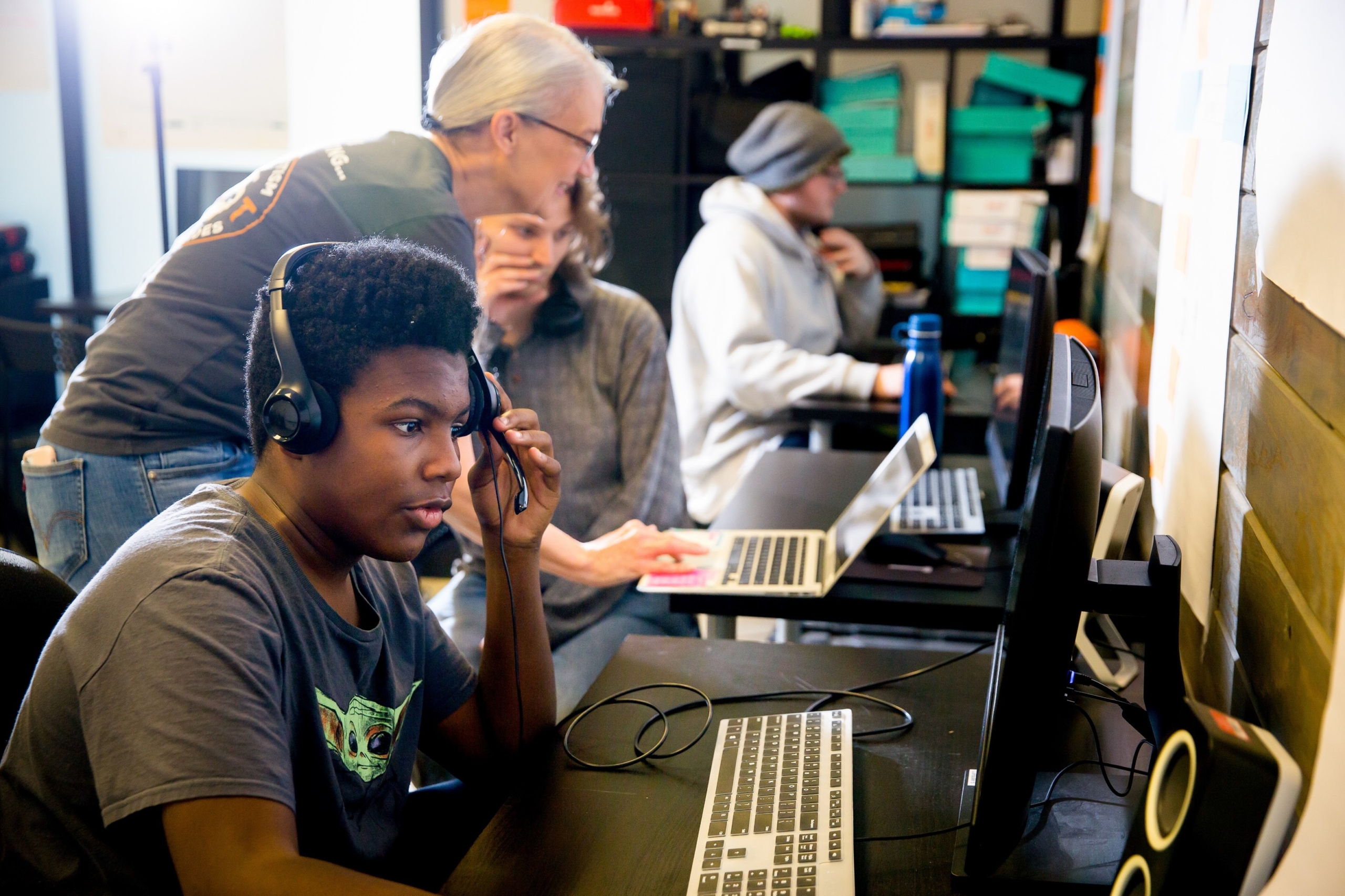
  • Teaching the Autism Community Trades (TACT) was founded in 2016 by parents who wanted to create more opportunities for their son and other children like him. The mission of TACT is to encourage and empower a full spectrum of individuals through education and employment in the skilled trades.
  • The Uniquely Abled Project (UAP) began its efforts in 2013 and has since launched the Uniquely Abled Academy. The UAP trains, places and supports employees and their employers in the manufacturing industry.

Meet the moderator.

Tara MP Havlicek serves as program manager for the Mitsubishi Electric America Foundation. With over 15 years of experience in corporate philanthropy, her focus lies on national grantmaking and corporate employees volunteer programs. She also serves as an advisor with the National Disability Mentoring Coalition.


Read more in Techniques: VISION in the Spotlight.

Inspire radical hope in your school

Maslow before Bloom, we’ve all heard this phrase. To me, it’s always meant that the core needs of students — physiological requirements, safety, love/belonging, and esteem — must be met before they can learn to their fullest potential. It also means that teachers must have their own core needs met before they can properly educate their students. Family members must have their needs met before they can support their children’s educational endeavors. And stakeholders must have their needs met to fully support a school system.

In theory, this makes sense. But what does it take to put it into practice in the context of our schools? After careful analysis, studying multiple frameworks of change, I believe the answer is this: We must create a holistic, equitable approach to education in our schools that implements the essence of Maslow before Bloom and inspires radical hope for all stakeholders.

“Trust is the foundation of everything of value,” wrote David Horsager in The Trust Edge.

Radical hope is a term used to describe the act of imagining and implementing an alternative reality for schooling — cultivating authentic relationships and believing in students’ and teachers’ capacity for excellence (Rivera-McCutcheon). All stakeholders, regardless of race, culture, language and lived experiences, should receive equitable chances to share their expertise. Bring everyone to the table to help shape the educational agenda.

Build trust and relationships to inspire radical hope.

Building trusting and equitable relationships between administrators, teachers, staff, students, families, and the community is the first step in any successful plan to enact real change, bringing everyone together around common goals. But in order to build trust, we must establish certain restorative practices between administrators, teachers and staff.

Restorative practices involve activities that build community and promote relationships. And in order to reach our students and families with these practices, we must first practice them ourselves. Set a good example.


Restorative practices among faculty and staff

  • Protected time for professional learning community, grade-level and/or department meetings
  • Access to continuous, relevant professional development
  • Community-building exercises at staff meetings
  • Opportunities for peer observations and mentoring
  • Inclusive discussions about the needs of the school
  • Emphasis on antiracism in the school and community

Restorative practices for students, families and the community

  • Community-building exercises in the classroom
  • Inclusive discussions about the needs of the school
  • Faculty and staff engagement in the neighborhood
  • Programming to meet community needs

Leaders who cultivate authentic relationships and practice radical care model the kinds of connections teachers should develop with their students. They help teachers and staff feel trusted and supported enough to innovate and refine practices. And they create an environment among students and families that evenly distributes power and allows students to learn and grow from mistakes or perceived failures (Rivera-McCutcheon).Only with authentic trust, and a continuous effort at building and maintaining that trust, will we be able to make meaningful change.

Ask community members what they need.

How do we know what the perceived needs of the community are? Ask them! Surveys and needs assessments allow us to gauge how a school is viewed by its stakeholders and what changes need to be made.

The more data that is gathered, the bigger the picture! So it is important to reach out to everyone (e.g., teachers/staff, board members, families, students, community leaders) and ask them to respond to the needs assessments. Encouraging participation is much easier to do once authentic trust is established, especially in terms of family involvement. Because we, as school personnel, must demonstrate to families that we are working hard to provide a quality education for their children (Young et al.), which demonstrates the long-standing idea that you must earn respect. It is not simply given.

Recognize that change isn’t easy.

Change is especially difficult when it means confronting long-held beliefs. A lack of buy-in from stakeholders who are averse to change can be a significant barrier. It’s also true that, sometimes, we as educators only think to look at students’ academic potential instead of seeing the whole student and their inherent knowledge and promise (Rivera-McCutcheon). But this can be overcome through open and honest communication to create a shared vision for the future of the school (Méndez-Morse). And patience. Take the changes one step at a time and trust the process.

Ashley Thompson is a graduate research assistant and a student in agriculture and consumer resources at Tarleton State University in Stephenville, Texas. She graduated with a Bachelor of Science in agricultural education from Oklahoma State University and a Master of Education in education administration, curriculum and supervision from the University of Oklahoma. After six years of teaching secondary agricultural education, she is working to pursue a doctoral degree and a career at the university level. She is active in ACTE and NAAE and was a 2022 ACTE fellow in the New Professionals cohort.


Read more in Techniques: VISION in the Spotlight.

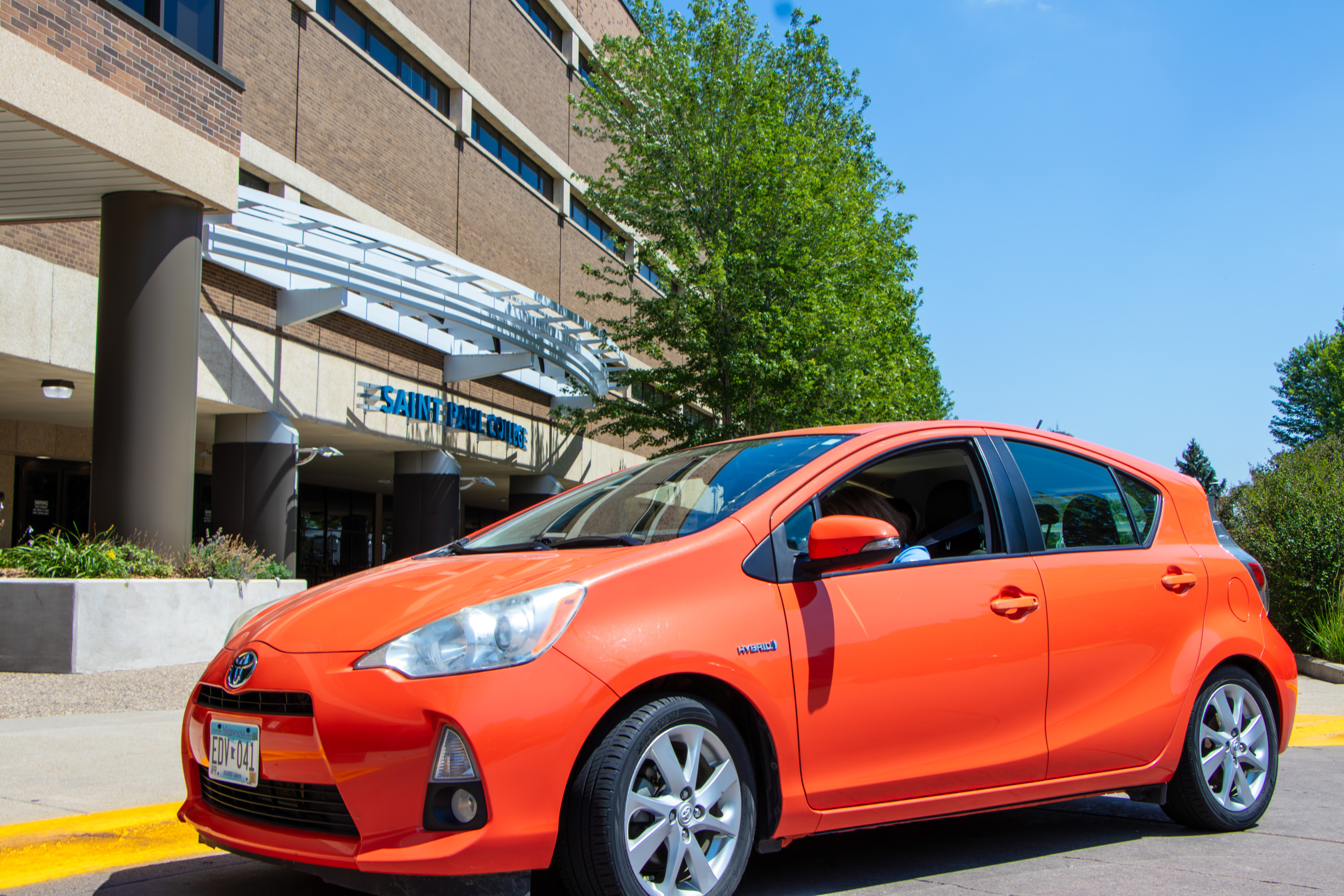
Driving sustainability at an urban community college

Sustainability, electric vehicles, solar, wind, charging stations, renewable energy, technology, innovation, and investment: All of these words represent a shifting landscape. The way of the world is changing, with a new emphasis on cleaner, more efficient living. Since President Biden’s Inflation Reduction Act, and as we witness a rapid push toward sustainable trades and equipment, an exciting new industrial revolution is upon us.

Saint Paul College is kick-starting a hybrid and electric vehicle (EV) program, which will launch in 2025.

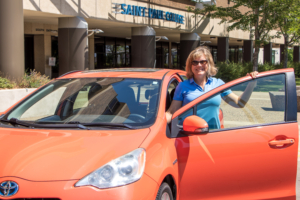
I started as the dean in July 2022 and was welcomed with open arms by a very excited and passionate automotive faculty team. Two faculty in particular were well on their way to starting this program! My love for sustainability combined with their passion for and knowledge of the auto industry made the complex work to start a program fun and rewarding. As of 2023, our college is planning the remodel of a current lab space and will begin teaching an introductory course with a newly purchased Toyota Prius and a Chevy Volt.

The Saint Paul College auto team is thoughtful and creative in their approach to partnership development, creating surveys and taking advantage of Perkins dollars for training. There were times we talked about the challenges of hybrids/EVs and shared articles and research, and we haven’t always agreed. But each and every stakeholder has remained engaged and thoughtful, and we have learned many new things about how these cars are perceived and how they perform in different climates.

Find a spark.

The momentum around hybrids and EVs started long before I arrived at Saint Paul College. They had already made a financial investment in the program. And senior leadership felt strongly this was the right direction for new programming (credit and non-credit based). EV and hybrid technology has been growing, with EV sales climbing more than 40% since 2016 (McKinsey >amp; Company, 2022). Further, this growth in sales is closely tied to population density and prevalence of a large metro area, which makes Saint Paul College the perfect fit!

My tasks were to figure out what funds were available and how we could best spend the money to ensure a safe environment, training, and teaching resources for students and faculty. The college had already added $30,000 to the current Perkins plan. And we put that money to work, getting two used hybrid vehicles and advanced training for faculty. The auto team met with companies like Caliber Collision and Xcel Energy to learn about industry needs. And these meetings magnified the need and the rapid pace of job growth to expect.

Leverage partnerships and committees.

Collaboration was critical in helping us determine local needs and concerns about implementation. Saint Paul College is located in an urban area close to a number of dealerships that are making changes to their fleets. So, together with the Minnesota State Transportation Center of Excellence, the auto team developed a survey to ask industry experts about what they needed. Their responses encompassed a demand for skilled technicians. And as a result, faculty received additional, specialized training in summer 2023.

Auto faculty also have taken special care to determine what is needed for an EV/hybrid lab. There are fire safety protocols, insurance implications, and special shelves and gloves required to handle the equipment. Our facilities team worked closely with the faculty and a third-party contractor on how to best create the lab space. And it can’t go without saying that the college’s curriculum and assessment coordinator was a critical part of this process!

Become comfortable with not knowing.

Many car manufacturers are conducting in-house training and making bold commitments to sustainability. Such rapid growth will affect industries outside automotive as well. In fact, Edison Electric Institute has estimated a need for 12.9 million EV charging ports by 2030.

The electrifying world of cars is disrupting education. What equipment and training do learners need? How do we sell, order parts and conduct maintenance on these vehicles? There are still a lot of unknowns. This industry is undergoing a change and we are still trying to figure out the best pathways forward.

Commit to sustainability.

This is an amazing time to work in career and technical education! There are so many opportunities for funding and collaborations. But also, it can be overwhelming to pick a direction. My best advice is to build a committee of supporters from K–12 and postsecondary education, industry, and nonprofits. Empower team members to become strong advocates for technology and innovation in teaching and learning. And do a lot of research on other programs; ask questions about enrollment, industry demand, staffing and lessons learned. No matter your role in CTE, now is a great time to start building and expanding sustainable programs.
V.A. Hayman Barber (she/her/hers) is the dean of trade and tech education at Saint Paul College, a technical and community college in Saint Paul, Minnesota.

Lew Olivier and Jake Yernberg also contributed to this article. Lew and Jake are full-time automotive instructors at Saint Paul College and the heart and soul behind developing these EV/hybrid programs.


Read more in Techniques: VISION in the Spotlight.

Early skilled trades education

A recent survey from the Associated Builders and Contractors revealed that the construction industry would need to hire 546,000 people, including thousands of plumbers, electricians and HVAC technicians, to meet current demand. And that’s
a daunting task.

Interest in skilled trades education has declined by half since 2020 (Yang, 2023), and there are many in the workforce nearing
retirement. This crisis is due, in part, to widespread misconceptions about the skilled trades. In some communities, access
to high-quality career and technical education (CTE) can be a challenge. So, a lack of firsthand knowledge about the
trades has led multiple generations of young Americans to form distorted perceptions of these occupations.

Fulfilling careers

Reversing these trends depends on students having early exposure to the skilled trades as a viable career pathway. Too often, young people who would enjoy and excel at the skilled trades pursue college learning pathways, which may lead to frustration and burnout. But when students learn about the skilled trades, they develop a balanced view of the opportunities available.

Early education in the skilled trades can help more students find the career pathways that suit them and ease the transition from education to the workplace.

Salaries in skilled trades industries are competitive with compensation in white-collar sectors. And, as demand for skilled trades workers continues to rise, so do wages. Some employers even offer incentives, like signing bonuses, to attract candidates. The same principle drives opportunities for advancement. Young skilled trades workers can rise quickly in today’s economic climate, and innovative technology solutions afford them more opportunities than ever to continually upskill and increase their value to employers.

Widespread and consistent skilled trades education is vital to solving the labor shortage. But returning to earlier models isn’t necessarily the answer. Because it’s not always feasible to launch and maintain traditional CTE programs in the skilled trades. Traditional training programs have long been resource-intensive, requiring expensive equipment, tools and space. Yet the hands-on element is essential.

Immersive digital learning

Digital learning tools offer vivid 3D and virtual reality (VR) simulations that are transforming the possibilities of skilled trades education. Students can experience a lifelike, hands-on introduction to their work. They gain a unique opportunity to practice and refine their skills in a safe, immersive, virtual environment before starting hands-on training on lab equipment. Tech-savvy students remain engaged and motivated, setting them up for long-term success and enhancing their job prospects upon graduation. And since today’s students belong to a digital-native generation, they respond positively to this style of engagement.

One critical benefit of simulation training for skilled trades is firsthand experience. It can provide unique insight into day-to-day activities, address common misconceptions and expand the potential audience for trades programs — and ultimately for trades careers.

Interplay Learning provides immersive training solutions for the skilled trades.


Read more in Techniques: VISION in the Spotlight.

Meet local business needs

Cleveland Community College (CCC) is situated in a vibrant region of North Carolina. There, the advanced manufacturing, aerospace and automotive industries are growing rapidly. Our mission is to drive student success and to make a strong economic impact on the community through diverse education and training opportunities. For more than 50 years, we’ve helped students earn diplomas, degrees or certificates, or learn the trades.

Over time, it became clear that as our local business community grew, we needed to develop high-quality career and technical education (CTE) programs in manufacturing. The employers needed prospective employees who possessed basic technical skills. So, to fill this identified educational gap, leaders from area manufacturers met with CCC faculty to discuss creating pro.grams that would benefit students, the college and the companies. We took six steps to achieve that goal.

1. Involve local businesses.

Cleveland Community College has an industry advisory board that includes representatives from local manufacturing firms. These companies partner with the college to develop meaningful training, which al.lows graduates to move immediately into careers in the community. The advisory board suggested that CCC teach programmable logic controllers (PLCs). Because they can be integrated into a variety of industrial applications. For example, PLC courses teach students how to program for use in manufacturing applications, such as electro-pneumatics or controlled hydraulic systems.

2. Choose a learning platform that aligns with your goals.

Working with Carl Latini at Learning Labs, we reviewed several platforms that would allow us to teach students multiple topics (e.g., hydraulics and pneumatics) in one system that could culminate in a capstone project. We implemented Intelitek’s PLC courseware and labs — a solution that pro.vides students with a solid grasp of industrial PLCs, ladder logic programming, input and output devices, and electrical control. Using the platform, students learn to pro.gram a PLC and simulate applications that require electrical control.

3. Emphasize hands-on learning.

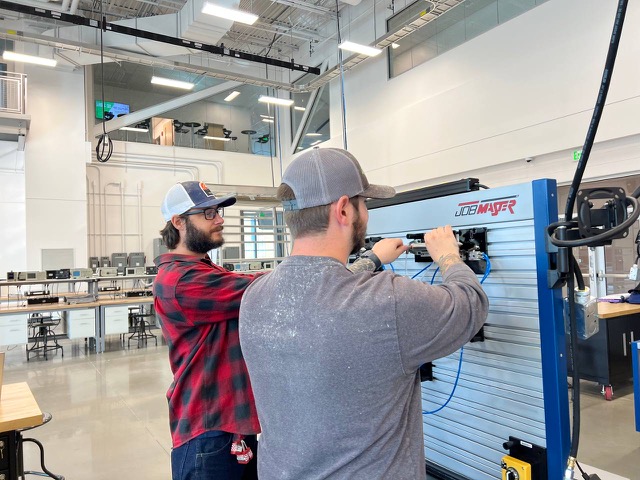
We’re also using the same company’s industrial maintenance training, which teaches mechatronics and industrial maintenance. While there is some classroom lecture and theory, the training course is mostly hands-on. Students learn most material while working on the platform itself.

4. Embed new skills into existing programs.

The PLC curriculum is embedded in automation, engineering and industrial systems programs. The automation program requires the first two PLC courses. And there are four PLC courses in the engineering program, so basically one per semester for two years.

5. Create career pathways.

Many students receive job offers before graduation, from companies they’ve interned with. The workplace employs them for an internship, and they get college credit for working there. Those companies may then offer them full-time jobs.

6. Ask your local business partners what they want.

Being able to match CTE programs to the needs of the local manufacturers was a key factor in our programs’ success. Were not teaching students how to be experts on specific equipment. We’re giving them a base of knowledge that will get them in the door. From there, the employers will train their new hires.

We now feel well prepared to train as many students as local employers need. Our team is committed to educating the next generation of manufacturing industry leaders.

Donna Moore is an automation instructor at Cleveland Community College.

Water Spurling is an industrial systems instructor at Cleveland Community College.


Read more in Techniques: VISION in the Spotlight.

Soak up the sun at VISION

ACTE’s CareerTech VISION is highly regarded as the premier annual event for career and technical education (CTE). Soon, educators, business leaders, industry professionals and students will arrive in Phoenix, Arizona, to engage with community members and learn and grow together. In 2023, attendees will be challenged to consider new technologies and new ways of thinking. You will embrace old friends and meet new colleagues.

And then, on Thursday, Nov. 30, you’ll get your time to shine. Whether at the CareerTech Expo, on stage preparing to moderate a panel discussion, or in the audience at a general session. We recall how ACTE’s Past President Scott Stone said his students knew he’d bring home many new ideas. There’s truly something for everyone! Join us for four days of professional development on high-quality CTE in the Valley of the Sun.

Level up at VISION.

Take your conference experience to the next level with a pre-conference tour. You can learn more about how CTE works in Phoenix, Arizona. Workshops conducted on-site at the convention center will offer hands-on learning and resources you can use to engage students and partners. (Note: Tours and workshops require an additional fee.)

Find Techniques on the scene.

Several of the writers appears in Techniques this fall will present educational sessions and network with attendees at ACTE’s CareerTech VISION 2023. Read their articles, then find them in Phoenix, Arizona, Nov. 29–Dec. 2.

Learn more and register to attend VISION today.

Read Techniques: Year in Review, 2022–23

As Techniques looks forward to the school year with our VISION in the Spotlight issue coming soon, we’re also looking back. Our 2022–23 Year in Review features some of the most engaging content we’ve published in print and online since the fall of 2022. Each year, in Techniques, we celebrate the strength and successes of high-quality CTE, and we’ll continue to discuss the common challenges educators face.

Read Techniques: Year in Review, 2022–23

>nbsp;

Make beats, learn to code

Your Voice is Power (YVIP) illustrates how music, computer science, and entrepreneurship can inspire social change. The YVIP educational collaboration expands computer science education to a more diverse group of students — those from underserved communities and populations currently underrepresented in technology careers. It builds confidence and helps students feel more empowered in their work. “I was able to bridge my love for coding with my interest in music,” said a 2021 YVIP student participant. READ MORE


Agriculture, aerospace >amp; data science

Today’s agriculture students are the industry leaders of tomorrow. And they must begin to learn new and innovative production methods now. Digital agriculture involves the interdisciplinary development of technology to collect, integrate and transmit data into decision-making tools. Ultimately, the adoption of digital agriculture practices will improve food and fiber production by allowing farmers to make better and more precise management decisions. The result will be an ability to produce more food on less land. READ MORE


Educator externships connect the classroom >amp; the workplace

Educators in Virginia have access to an innovative work-based learning (WBL) program known as EXCITE. That stands for Exploring Careers through Industry Teacher Externships. Teachers and counselors refine old skills, gain new ones, learn about changing industry standards and skills needed for local jobs, and make connections for students. Together, they gain an increased ability to explain the value of what students are learning, which often leads to cooperative learning and higher levels of collaboration. READ MORE


Spark a revolution in manufacturing

Students, educators and the workforce benefit from a digital apprenticeship in computer numerical control (CNC) manufacturing technology. Backed by industry partners, and used in thousands of educational institutions, digital apprenticeships can offer significant benefits. Spaces wherein curriculum is readily available, anytime, anywhere, grant flexibility and freedom for students to learn on their terms. They allow students to acquire knowledge in accordance with their learning preference when time allows. READ MORE


A juggling act in the classroom

The teacher shortage has compelled secondary school administrators to seek alternative ways of staffing CTE classrooms. school districts may hire a teacher with a bachelor’s degree through provisional licensing. In other cases, teacher preparation programs regularly get calls to hire candidates before they have completed student teaching. These unique situations provide rich opportunities for research. So, three university faculty began a yearlong study to learn about supports that may be useful for new teacher success. READ MORE


Fighting burnout in agricultural education

After my daughter was born, I began to notice that things like time and attention became much more uncomfortable to balance. I started to feel guilty because I couldn’t devote the same amount of time to my students and my school. At the same time, I felt as though I was sometimes putting my job ahead of my new baby. I was only one person, but I felt like I had to be a dynamic teacher, a superstar FFA advisor, a doting and attentive mother, and a loving wife. Something had to give. So, in early 2020, I decided that the following school year would be my last in the classroom. READ MORE


Support English learners in CTE programs

For English learners (ELs), access to CTE can be limited due to a variety of factors. These include language proficiency restrictions, limited translation services and lack of family outreach. Educators must act with urgency to support representation and engagement. For example, there may be limited outreach conducted in EL families’ home languages about the CTE programs available to students. To address this challenge, set up outreach structures. Because when ELs are intentionally included, they may succeed in whichever path they choose. READ MORE


Engaging students through global competence

Educators who understand the international connections within their career fields can help students begin to develop global competence. Integrating global competence throughout CTE programs of study can have a widespread cultural impact. It fosters a culture of learning and respect, wherein all stakeholders learn to think critically about the world, challenge their perspectives, communicate with diverse others, and take action when necessary. Becoming globally competent first means understanding what global competence means. READ MORE

>nbsp;


Lia Milgram is senior managing editor for ACTE.

Look out for the September 2023 issue of Techniques in mailboxes and online soon.

# # # # # #