Explore new CTE Learn courses

We recently added the following courses to a growing collection of on-demand professional development at CTE Learn: 

  • CS117: Teaching Professional Networking Skills for Career SuccessCS126: Goal Setting and Motivation Strategies for Career ProfessionalsED146: How Storytelling Benefits LearningCS119: Teaching Modern Job Search StrategiesExplore these and other CTE Learn courses available.

Learn & build relationships

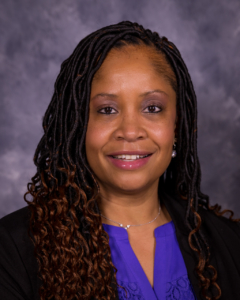
Meet Rana McVay, assistant director of business and industry services (BIS) at Tulsa Technology Center in Tulsa, Oklahoma. McVay is a founding member of ACTE’s Inclusion, Access, Equity and Diversity (IAED) Advisory Group. Her interview appears as part of a spotlight series on advisory group members and educators striving to increase access to high-quality career and technical education (CTE).  

Please share a little bit about yourself. What inspired your interest in CTE?

I started my first real job in January 1995 as a homeowners’ claims adjuster for a major insurance company. But after two years of climbing roofs and arguing with contractors, I decided to change gears. I followed my heart and applied for a teaching position. 

My first teaching role was as a business, marketing and information technology education instructor at U.S. Grant High School in Oklahoma City. I attended my first summer conference (Oklahoma’s annual CTE conference) in August 1997. And I didn’t have a clue what to expect, but that conference changed my life.   

While walking around during the lunch hour, a Black gentleman stopped me and said that I should attend a luncheon being hosted by the Oklahoma Association of Minorities in Career >amp; Technology Education (OAMCTE). It was as if the heavens had opened up. I walked into a room full of people who looked like me and who also were in love with CTE. 

That interaction jump-started my leadership journey. I served as secretary, scholarship chair, and for two terms as president of OAMCTE. Because of the knowledge gained through this experience, and through my desire to stay on the leadership path, I became president of Oklahoma ACTE (OkACTE) in August 2019. I’m proud to say that I am the first Black person to serve as president for this state organization, which supports more than 4,000 members. 

CTE and I fell in love at an early age.

Throughout my career I have worked as a classroom instructor and a CTE program supervisor, and currently, I serve as the assistant director with BIS at Tulsa Technology Center. Twenty-six years later, I’m still searching for opportunities to serve. My passion for CTE and these organizations have launched my career in directions I could not have imagined.  

What was your education experience like? What did you study?

I attended Northeastern State University in Tahlequah, Oklahoma, and obtained a bachelor’s degree in business education. I was fortunate to attend college on the President’s Leadership Class academic scholarship, which paid for my tuition, fees, and room and board. Had it not been for that financial assistance, I’m certain I would not have received my degree directly after high school. Then, with consistent encouragement from my current director, Matt Litterell, Ed.D., I went back to school in October of 2019. I received a Master of Arts in educational leadership from Southern Nazarene University located in Bethany, Oklahoma, in June 2021.One of my barriers was the expectation that I would not attend college. It wasn’t that I didn’t have the academic ability. But I didn’t have the financial means. I grew up in a single-parent household, where I was the first to graduate from high school. I am number three in a family of four girls, and both of my older sisters had children by the time they were 16 years old. Because I was determined to not become a part of that statistic, I became more involved in school activities and developed relationships with like-minded folks to help me stay the course. There were adults who noticed my determination and love for education and invested their time in me. I am where I am today because of them.   

One of my mentors is Jocelyn Payne, Ed.D., who I met when she was a vice president at Northeastern State University. And she is responsible for me applying for the President’s Leadership Class scholarship. I consider her as another mother to me. She also coordinated my wedding. 

I must say that my mother, Cheryl Adkins, was the most influential person in my life. She taught me how to carry myself and what it meant to be a woman devoted to the success of her children. She had it tough, and she was tough on us. But as an adult, I have the greatest appreciation for the unique and somewhat unorthodox teaching moments that she delivered. She was a preschool teacher for many years and watching her pour into the children of others motivated me to want to pour into the lives of others as well. 

Please briefly discuss your role with ACTE’s IAED Advisory Group.

I am one of the original members of this advisory group, and I am proud to say that I have been an active participant in redefining ACTE’s IAED community. There are so many unforeseen challenges to this work. But after deliberation and a host of constructive conversations, we agreed on a path forward to develop the IAED Mentorship Program. This would open a door to building relationships and a better understanding of how ACTE serves underserved and underrepresented populations. 

I have volunteered as a mentor for the past two years, and the relationships developed from this work are priceless. Because of that, I’m encouraged to stay the course. I am dedicated to the work associated with IAED, and I am determined to remain engaged. 

In your opinion, what are the greatest challenges facing education today? And how can CTE leaders act courageously to develop stronger, more inclusive learning environments for all? 

Our greatest challenges are people. People don’t fully respect or appreciate one another and their differences. If people did those things, there would be no need for initiatives and programs that address inclusion, access, equity and diversity. But we can’t stop talking about IAED.  We have to continue to be uncomfortable until we can get more comfortable.  Sharing and training others on how to build relationship must continue; it’s how we deliver it and how we share it that’s going to have the greatest impact on our society. 

What can Techniques readers expect to gain from participating in ACTE’s IAED activities? And why do you think they are important to offer the larger ACTE community at this time?  

There’s a huge opportunity to network. If you’re not familiar with the IAED work, that’s okay! Showing up is one of the most important steps. Through these networking opportunities, there is exposure. There is increased awareness, and there is relationship building. You could experience a type of growth that you may not otherwise, just by being present. 

ACTE is a national organization with a membership of diverse individuals.  

As educators, we’re always seeking best practices to influence students as well as our colleagues. With the support of resources and activities led by ACTE, there are many more conversations to be had — within institutions and our homes — to strengthen IAED relationships across the country and the world. 

Is there anything else you’d like to share?

Thank you for allowing me to participate and share my point of view. Education, not just CTE, is my passion. I try to walk in my truth each and every day and I pray that as we continue to learn from one another that we get to know each other as well. I’m an open book who is willing to have a conversation with anyone. If we talk together, we grow together. 


Learn more and join the book club

Book club will occur as the culminating event of ACTE’s 2022–23 IAED in CTE webinar series — in April 2023. Those who wish to participate are encouraged to read one or both books listed below. Then consider how the work of Glenn E. Singleton, Ijeoma Oluo, Donald Walker and you can change people and hearts and entire organizations.

Courageous Conversations About Race: A Field Guide for Achieving Equity in Schools

Schools, like all organizations, face a nearly insurmountable hurdle when addressing racial inequities — the inability to talk candidly about race. In this timely text, author Glenn E. Singleton enables you to break the silence and open an authentic dialogue that forges a path to progress for racial equity.

So You Want to Talk About Race 

The stakes could not be higher, and the task ahead seems daunting. Ijeoma Oluo guides readers of all races through subjects ranging from police brutality and cultural appropriation to the model minority myth in an attempt to make the seemingly impossible possible: honest conversations about how racism infects every aspect of American life.


Learn more about CTE education leaders working to advance IAED in CTE.

>nbsp;

CTE teaching is awesome!

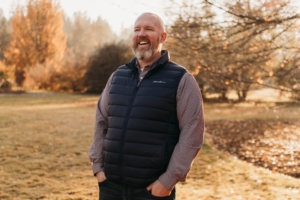
Meet Matthew Green, a career and technical education (CTE) teacher, instructional coach and building leader at On Track Academy in Spokane, Washington. Green’s interview appears as the latest installment in a spotlight series on education leaders and members of ACTE’s Inclusion, Access, Equity and Diversity (IAED) Advisory Group.

What inspired your interest in CTE?

After 10 years teaching math at a comprehensive high school in Spokane, I joined the staff at the Riverpoint Academy (RA). RA was a radically collaborative, interdisciplinary, project-based high school located in a neighboring school district. And there I taught engineering, design, rapid prototyping and computer science.  

The school district paid for each of us to earn CTE certification. So, my teaching partner and I designed and built a makerspace and supported making across the curriculum. It was an incredible opportunity and one that changed my trajectory for teaching and leading forever.  

What was your education experience like? What did you study?

I was a good enough student in high school, and during college and graduate school. I had a home, supportive parents and enough financial resources. And I recognize that I am a child of privilege.  

I earned a Bachelor of Arts in mathematics from Whitworth University and a graduate. degree in educational technology from Boise State University. I’ve also completed coursework for a Doctor of Philosophy in mathematics and science education at Washington State University. I’ve come and gone from that program twice, leaving each because my deep love for the study of teacher education was eclipsed by my present work in innovative learning spaces. And by my desire to be a good partner to my wife and dad to my children. Maybe I’ll get another degree someday. Maybe not =) 

I am self-taught in most things I teach now. This has involved lots of false starts, many experiments and a very circuitous route to expertise. But the journey has helped me become a savvy, flexible learner >amp; teacher.  

What barriers did you face in pursuit of education?

I said it before, traditional education “worked” for me. By most metrics, I succeeded. But after 20 years of teaching in a variety of environments, I can say with confidence that I didn’t really engage in learning. High school didn’t really feel like it was for me. I got through it. I was active in sports, and I got along well enough socially, but I never felt all that connected with what I was learning. 

Please briefly discuss your role with ACTE’s IAED Advisory Group.

The work of IAED is close to my heart. I believe the gifts and opportunities I have been given are for sharing with others. I feel a beautiful obligation to make room for everyone. As a white man, I won the privilege lottery and am driven to help eliminate the deep systemic inequities that exist in our society.  

I care deeply about each student’s access to high-quality learning experiences. I have had the chance to work closely with educators, students and their families, and I’m convinced that radical access and co-design are the means to increasing student agency and buy-in. Humans crave the opportunity to shape their own experiences. All students can flourish if we work with them to eliminate the barriers in our learning environments. 

In your opinion, what are the greatest challenges facing education today? And how can CTE leaders act courageously to develop stronger, more inclusive learning environments for all? 

Students need access, belonging, personalization, agency, and the opportunity to find meaning in their work. As educators we share a beautiful obligation to strive ever onward. Co-create high-quality learning experiences alongside students. If we work to recognize that the student, guide (educator) and environment are equally important in any learning endeavor, and that students and guides all influence the environment, then we may gain the tools we need to work together. 

ACTE is excited to host its IAED book club this month! What can Techniques readers expect to gain from that experience?

I’m excited about the conversations that come from book club! I’m a CTE/STEM educator who could have been just as content in the humanities. I love the opportunity to connect with other people and share experiences and ideas. Book clubs, and the discussions they foster, can meet so many needs. They can spur and inspire. They can challenge; they can encourage and validate. I’m optimistic that those who choose to engage will find value for themselves and others. I hope you’ll join us so we can be inspired and learn from you! 

Is there anything else you’d like to share?

CTE teaching is awesome! It comes with so many opportunities! But they do come at a cost. More paperwork, more time, more details, more challenges. I think CTE teachers can feel unappreciated or unseen.  

We see you! We see how much extra time you put in to develop pragmatic and meaningful learning experiences. Your work will springboard them into the future. Thank you! 


Learn more and join the book club

Book club will occur as the culminating event of ACTE’s 2022–23 IAED in CTE webinar series — in April 2023. Those who wish to participate are encouraged to read one or both books listed below. Then consider how the work of Glenn E. Singleton, Ijeoma Oluo, Donald Walker and you can change people and hearts and entire organizations.

Courageous Conversations About Race: A Field Guide for Achieving Equity in Schools

Schools, like all organizations, face a nearly insurmountable hurdle when addressing racial inequities — the inability to talk candidly about race. In this timely text, author Glenn E. Singleton enables you to break the silence and open an authentic dialogue that forges a path to progress for racial equity.

So You Want to Talk About Race 

The stakes could not be higher, and the task ahead seems daunting. Ijeoma Oluo guides readers of all races through subjects ranging from police brutality and cultural appropriation to the model minority myth in an attempt to make the seemingly impossible possible: honest conversations about how racism infects every aspect of American life.


Learn more about CTE education leaders working to advance IAED in CTE.

>nbsp;

Fighting burnout in agricultural education

On one hot summer day in August 2001, I walked into my first classroom as a teacher. I had been waiting my entire life to have a class of my own. And though this was a little different than what I had expected, I was excited to get started. I trained to be an agricultural educator, but geography limited my options and I began my educational career as a middle school science and social studies teacher.

But, true to my agricultural roots, I needed to have something alive in my classroom. So I went to the local discount store and purchased a small jade plant in a four-inch pot. Though succulent plants are a huge trend today, years ago this strange looking plant intrigued the seventh-grade mind. I would come into class and notice that leaves had been pinched, broken or punched with holes. And soon I realized that if my plant was to survive, I had to move it behind my desk where students could admire it from afar but not touch it.

After two years of teaching middle school, I received a call; I was being considered for a position teaching agriculture at a local high school. This also happened to be the same school where my newlywed husband was already teaching agriculture. It was a perfect situation for my career and our tiny little family.

I packed up my jade plant, which had begun to fill up its little pot, and we moved to high school.

Life was great. Our course numbers were growing, and our FFA chapter was a success. The greenhouse was thriving. And we were fundraising to build an on-campus livestock facility. Our family was growing as well. I actually found out that I was pregnant with our first child while I was at the National FFA Convention in 2005.

After my daughter was born, I began to notice that things like time and attention became much more uncomfortable to balance. I started to feel guilty because I couldn’t devote the same amount of time to my students and my school. At the same time, I felt as though I was sometimes putting my job ahead of my new baby. I was only one person, but I felt like I had to be a dynamic teacher, a superstar FFA advisor, a doting and attentive mother, and a loving wife. All of the things in my life pulled at me, and I was suffocating.

Even my little jade plant felt the strain. Its leaves began to turn yellow and wilt because I hadn’t had time to upgrade the pot. When I finally approached this task, I found a tangled mess of roots that just wound around and around the soil. It was as though they were trying desperately to spread out and survive. But they had been
bound by the small space to which they were confined. I felt so guilty, or at least I thought I did.

Guilt vs. shame

You bring a sensible and frugal lunch from home only to have your coworkers talk you into ordering takeout. But then, with each french fry, you feel a little worse about yourself. That’s guilt. It’s a little nudge that tells you that maybe the decision you’ve made wasn’t the right one for right now. In the appropriate quantities, a little bit of guilt may be a good thing because it can help us make more thoughtful decisions. Shame is another thing altogether, though, and that’s where I found myself.

Brené Brown, Ph.D., defined shame as an “intensely painful feeling or experience of believing that we are flawed and therefore unworthy of love and belonging.” There it was. That was me. I wasn’t feeling guilty because I missed out on an FFA officer meeting or fell asleep before the bedtime story one night. No, I was ashamed because I wasn’t enough. I no longer felt worthy of the attention and success that our FFA chapter received. My husband and teaching partner should receive those accolades. I saw my children’s accomplishments as things that they were able to do despite me, not because of me.

So, I started expanding my roles and responsibilities and trying to grasp at things that would make me worthy of the reputation I had built and the accolades I had been given. I felt like that plant, rootbound and desperate to find a safe space.

The funny thing about repotting a plant, though, is the pain involved in the process.

Back when I was a high school student, several poor-looking plants were donated to our school. But I was assured that time and effort would make them beautiful. I wasn’t sure. I thought they would never recover. Then I watched as my teacher took a sharp razor blade and sliced right through the roots, ripping and tearing them apart before resettling them gently. I was horrified! How in the world was this poor, broken and now injured plant going to survive? Little did I know that the brief pain would lead it to grow and flourish.

Burnout

Using what I’d learned in high school, I broke up the roots of that little jade plant and placed it into a bigger pot, where it thrived until it became rootbound again. I took a similar approach to my career. The more dissatisfied I was with myself, the more I grasped at every opportunity that came across my desk. I was looking for fulfillment. I tried to find something that would make me worthy, to make me feel like enough. In doing so, I became so entangled in activities and responsibilities that I felt rootbound. My carefully choreographed life left no room for mistakes and no time for self-care.


The social scientist Christina Maslach, Ph.D., has done extensive research on burnout, defining it as “a psychological syndrome emerging as a prolonged response to chronic interpersonal stressors on the job.” Clinically, it’s measured by a burnout inventory scored on three domains:

  1. Emotional exhaustion
  2. Depersonalization
  3. Low personal accomplishment

I recognized myself in this research. I was experiencing burnout. Life had become about going through the motions of doing more and more, year after year, in an attempt to fill the growing void. The thing about fire, though, is that at least one element of the fire triangle — fuel, heat or air — must be removed to stop the burning. I had to figure out how to take something away.

Stopping the burn

In early 2020, I decided that the following school year would be my last in the classroom. I didn’t know where I intended to go, but I knew that I wanted to help others. At first, that meant stepping aside to allow for new growth. And since then, two former students have returned to the community to teach. There’s a new sense of vigor in both the middle and high school agriculture programs.

As for me, I accepted a job as a career development coordinator in a neighboring school. Now I have the opportunity to support students and teachers along pathways to fulfilling careers. Further, because I had always wanted to go back to school, I enrolled at a local university and plan to receive a doctorate in education with a focus on school leadership in the spring of 2024. I’m learning to make sure that my actions align with my goals. Because my favorite part of my job is mentoring young teachers as they pave their own paths in education.

Oh, and what about the jade plant? It’s still in the greenhouse at my former school. I stopped trying to find newer and bigger pots because it grew so big that it was difficult to manage. Giving each of my students a leaf from the plant had more impact on my life and theirs. They placed the leaves in pots and, through care and nurture, created new plants of their own. That one little four-inch jade I purchased 22 years ago has produced literally thousands of new plants. This is the type of influence we should strive for — leaving little pieces of ourselves with each person we encounter. Only then can we find true satisfaction.


Kaye Harris is a career development coordinator at Kings Mountain High School in North Carolina. Prior to her current position, she taught agricultural education at Crest High School. She has served as both president of the North Carolina Agriculture Teachers’ Association and the North Carolina Association for Career and Technical Education. She is currently pursuing a Doctor of Education at Gardner-Webb University.

Read more in Techniques.

Equipping the technical workforce

The agriculture equipment industry is clamoring to staff its technical workforce. But it’s becoming more and more difficult for agriculture teachers to help these students connect with the industry that needs them. Enter AgCentric, a Minnesota-based center that promotes agricultural education by connecting education and industry. And the center’s director is Keith Olander, who has had a long career in agricultural education — teaching at both the secondary and postsecondary levels.

Under Olander’s direction, AgCentric conducted a survey of high school agriculture programs in Minnesota and found that the pathway with the highest student enrollment is also the pathway that teachers reported feeling least comfortable teaching: agricultural mechanics. And there are several reasons why.

  1. Fewer teachers come from an agriculture production background, so they may not have had the opportunity to work with ag equipment.
  2. Giving students hands-on experience with equipment requires expensive tools, access to equipment or parts, and a lot of lab space.
  3. Equipment technology is evolving at a breakneck pace, which can make keeping current feel like a Sisyphean task.

Blue and orange graphic reads, Equipping the Technical Workforce


An opportunity to grow the technical workforce

“Educational systems are notoriously slow,” said Curt Yoose, an agriculture instructor who specializes in agricultural mechanics and precision agriculture at Ridgewater College in Willmar, Minnesota. “Industry says ‘We need this.’ And it might take a year or two, by the time you get through all the approvals and curriculum is developed. Now industry says, ‘That was good two years ago, but we’ve moved on to something else.’”

Leaders at the Curriculum for Agricultural Science Education (CASE) heard this same message from all corners of their stakeholder groups. They realized the agricultural mechanics pathway is full of opportunity — not to mention industry demand. There didn’t seem to be a good solution for students who want to pursue agricultural mechanics but who don’t necessarily want to become engineers. So CASE created Technical Applications in Agriculture (TAA). This new course will establish a well-defined pathway into careers as equipment technicians.

In the CASE ecosystem of courses, students complete the foundational Ag Power and Technology, then Mechanical Systems in Agriculture. After that, they can choose from either Agriculture Research and Development or Technical Applications in Agriculture as a capstone course.

CASE and AgCentric received a grant from the National Science Foundation to fund research and development for TAA.

“My hope is that the curriculum will give teachers without a mechanics background the confidence to dive into a course like this. Because the industry is starving for for technicians,” said Chris Smith, an assistant professor and program coordinator of the John Deere Agricultural Technology program at SUNY Cobleskill. “Equipment is becoming very complex. Previously there has not been a good pathway for students to get there. They didn’t even realize those jobs existed.”

The development process

With a team of stakeholders that included secondary and postsecondary educators as well as industry partners, CASE held a two-day meeting to gather input. This group included technical workforce representatives from Kubota, Case IH, John Deere and other influencers in the agriculture equipment technician space.

“We had a hydraulic group, an electrical group, powertrains, precision and diesel. We asked each of the groups to identify things that we must cover throughout the course,” said Carl Aakre, assistant director for CASE. “Electrical came up in every group. And so did the Controller Area Network (CAN) bus.

“Someone from Kubota said, ‘I teach CAN bus all the time. Here’s an easy way to teach it.’” Without industry groups at the table, Aakre said the CAN bus concept may have been left out of the curriculum altogether, simply because others weren’t aware of how that component plays into the work performed by agricultural equipment technicians.

Once core concepts were identified, the CASE team integrated them throughout the course and began writing lessons. “TAA really focuses on technical skills,” said Aakre. “The value of CASE is how we scaffold technical skill in a purposeful way. Everything is meaningful for students. For instance, most technical problems are electrical. So, we have electrical analysis and troubleshooting spiraled throughout the course.”

Training and teaching the technical workforce

CASE Institutes lead teachers through the curriculum lesson by lesson, wherein teachers become students and actually complete labs during the training. The intent is to help them feel confident with the content and delivery as they prepare to implement the curriculum.

“They have to build a curriculum that can be taught in any location, at any time of year, with resources we aren’t sure everyone has,” said Smith. “I’ve been impressed with how they were able to keep materials and resource costs down (for TAA) but bring practical skills and knowledge to students.”

CASE set a goal to connect every teacher teaching TAA with an agricultural equipment dealership near their program. Julie Davis, senior director of workforce development with AEM, has been instrumental in making this happen, beginning with the 15 teachers who signed up to pilot the course during the 2021–22 school year.

Industry connections can grow into opportunities for students and teachers too.

Even teachers who felt comfortable teaching agricultural mechanics before TAA have seized the new opportunities. Mark Meyer is a 34-year veteran agricultural educator who was involved in the development of the course. After piloting TAA, now he teaches the revised version at Marion High School in Marion, Kansas. “There was a gap before, between what I wanted to do and what I could do. I just didn’t have the time. But the TAA curriculum is so well-written, in the way that it builds on concepts. This is something I can teach and feel comfortable with.”

Real-world impact on the technical workforce

Grace Godfrey, an agriculture teacher at Worland High School in Worland, Wyoming, also helped pilot the TAA curriculum. And she said, of the things she appreciates most, the lessons about employer expectations resonated strongly — another piece that would not have been possible without help from industry partners.

“That’s really important for kids to know,” she said. “Things like how to fill out a work order. Are they on time? Are they safe? These things can be hard to evaluate in a classroom setting, but now I have a form I can fill out to give feedback. ‘You did a good job, but you need to work on your team-building skills.’”

The Technical Applications in Agriculture course has been a success with teachers and their students.

After completing the pilot phase of development, CASE launched a training open to teachers from around the U.S. That Institute filled so quickly they added another, which also filled immediately. TAA gives students who are interested in agricultural mechanics one more path into this growing career field. It gives teachers one more block they can use to build their own confidence in teaching this popular pathway.

Additionally, students who complete the course may earn an equipment technician certification offered by AED. “We aligned our curriculum to those standards so when students complete the course, they can show proficiency and receive the credential from AED,” said Aakre. “Our next step is to tie it to dual credit at technical colleges.”

“We’re looking at where we are and building forward,” said Olander. “Technology is accelerating at a tremendous rate, and the demand for highly skilled graduates is there. We’re creating a complete pathway.”


Julie Fritsch is a freelance writer who specializes in the agriculture industry and agricultural education. She resides in Paris, Kentucky.
Read more in Techniques.

Bristol Aggie invests in the future

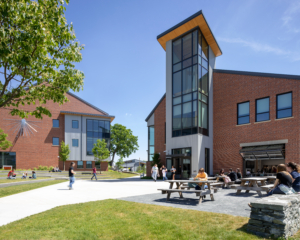
A project team of education stakeholders in Massachusetts gained tremendous knowledge about inclusion and student engagement as they worked to complete a 196,000-square-foot construction project. Bristol County Agricultural High School (Bristol Aggie) already had a strong reputation for its hands-on, skills-based education with programs in natural resource management, agricultural mechanics, animal sciences, floriculture, arboriculture, environmental engineering and landscaping. But an overhaul of the campus provided a perfect opportunity to articulate a new vision and rethink the delivery of career and technical education (CTE).

Bristol Aggie helps students develop into curious, capable >amp; well-rounded individuals.

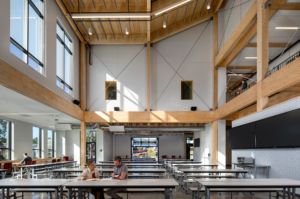
The project scope involved constructing four new buildings and renovating two others on the 220-acre rural campus with a working farm in Dighton, Massachusetts. New buildings include the Center for Science and the Environment, the Student Commons, a net-zero energy ready dairy barn, and a lab shared by the landscaping and arboriculture departments. The central academic and agricultural mechanics buildings were renovated. To connect the old and new components, a newly created pedestrian thoroughfare and nonformal learning areas unite the formerly siloed programs and foster cross-disciplinary collaboration.

Bristol Aggie’s new facilities represent a significant civic investment in high-quality CTE. The multifaceted nature of a project this size deserves thoughtful planning. And to ensure long-term success, should include input from all stake.holders. Three important steps contributed to a successful outcome.

Facilitate an inclusive visioning process.

Solicit active participation from staff, students, families, and community members. Because diverse perspectives are so important. Finding time that works for all parties can be a challenge, but it’s possible with careful planning. You might consider the benefits of asynchronous design feedback.

Ask questions about how the school has operated in the past and how it should operate in the future. Certain topics are crucial, such as admissions, student engagement and creating a welcoming place for all. At Bristol Aggie, this approach sparked an important discussion about balancing a skills-focused CTE program with academics embedded to create greater appeal for a diverse student population.

Further, an effective visioning process engages participants in the whole project from design through to occupancy and future use. These efforts can generate renewed investment in high-quality program development and a supportive culture. Most importantly, input from diverse sources helps prioritize and build consensus around project goals.

For Bristol Aggie, stakeholders agreed upon five goals to shape the character of the buildings, campus, culture and learning experience.

Design facilities that enhance hands-on learning opportunities while serving as learning tools themselves.

  • Strengthen academic achievement through tighter integration of academic and skills-based programs.
  • Create a hub for students within the school to encourage greater social and academic interactions.
  • Develop a welcoming, accessible and unified campus where the outdoor environment is an integral part of the social and academic experience and the student motto — “Cultivating Excellence” — is manifest.
  • Integrate sustainability, resiliency and student well-being into every aspect of the physical campus and educational programs.

Photo by Ed Wonsek

Collaborate on design decisions.

With goals established, the project team asked: How can we turn the design process into a learning opportunity for students? And they worked in collaboration with faculty to make it happen. Bristol Aggie students participated in several different ways, which reinforced their academic work and helped create a sense of agency.

Landscaping and arboriculture students met with the design team early on to learn about the process. In turn, they familiarized the designers with the on-site arboretum that hosts a range of tree and plant species. With help from the students and faculty, the landscape architects came to appreciate the diversity of tree and plant species on the campus. Later, as initial designs were generated, students discussed how they might contribute to the installation of new trees and plants.

The design team returned frequently to faculty and students for ideas, and to better understand their needs.

Then as the construction documents developed, students learned about specifications and installation details and provided input. In the future, landscaping students will learn how to install benches along the main pedestrian walkway, while arboriculture students will plant trees around the campus. And floriculture students will maintain planting beds near the classrooms.

Augment faculty and architect expertise when needed.

Substantial project benefits were realized by bringing in outside experts from a variety of disciplines to consult on the design of the new school. This happened most notably at the dairy barn. Although the campus already had a knowledgeable dairy herdsman on staff, advice from specialists in robotic milking, manure removal and cow health was necessary to design a facility for the future. The herd gained a modern, comfortable home. And students now thrive in a technologically advanced learning environment. The skills they develop by using, gathering data from, and maintaining the equipment will better position them for employment and professional growth.


Photo by Ed Wonsek

Additionally, public safety officials and building inspectors must provide input on every project. So the project team reached out early to Dighton officials, both for guidance and to foster transparency around plans and goals. This created a culture of open communication in all project phases. For instance, the town’s plumbing inspector worked with the team to get approval from the state for the composting toilets that were installed.

Bristol Aggie is also home to community-based activities that use the campus throughout the year. Agricultural groups such as 4H and the regional Beekeepers Association meet regularly in the school, so their input was valuable. Including local groups such as these in the process of high-quality CTE facility design will build support, trust and a sense of community.

Conclusion

Cohesive and inclusive teamwork was necessary to plan, design and construct this campus-wide improvement project. All stakeholders share in its ultimate success. At the ribbon-cutting ceremony held on May 23, 2022, former school Superintendent Adele Sands echoed this sentiment. “Bristol Aggie is an extraordinary place,” she said. “The students deserve school buildings that support the education they receive every day. And now we have them, thanks to all of you.”

Laura Wernick, FAIA, LEED AP, is a senior principal with HMFH Architects in Cam.bridge, Massachusetts.

Read more in Techniques.

Inspiring careers with augmented and virtual reality

In Stanislaus County, California, students connect with careers through augmented and virtual reality. As middle school counselor Erin Collins observed students programming robots, she was struck by their dedication to problem solving. “If something doesn’t work, they go right back to the computer and try again.”

Collins, of Sylvan Union School District in Modesto, California, spends her days with students at the Stanislaus Career Inspiration Center (CIC), where focused problem-solving activities are an everyday occurrence. The CIC serves students from seventh to 12th grade in Stanislaus County by partnering with 10 county school districts and houses both hands-on and virtual tools for career exploration in many pathways. Students can practice medical procedures on human or animal mannequins to learn about health careers. They explore game design in Unity, a real-time development platform. And they practice programming robots and drones.

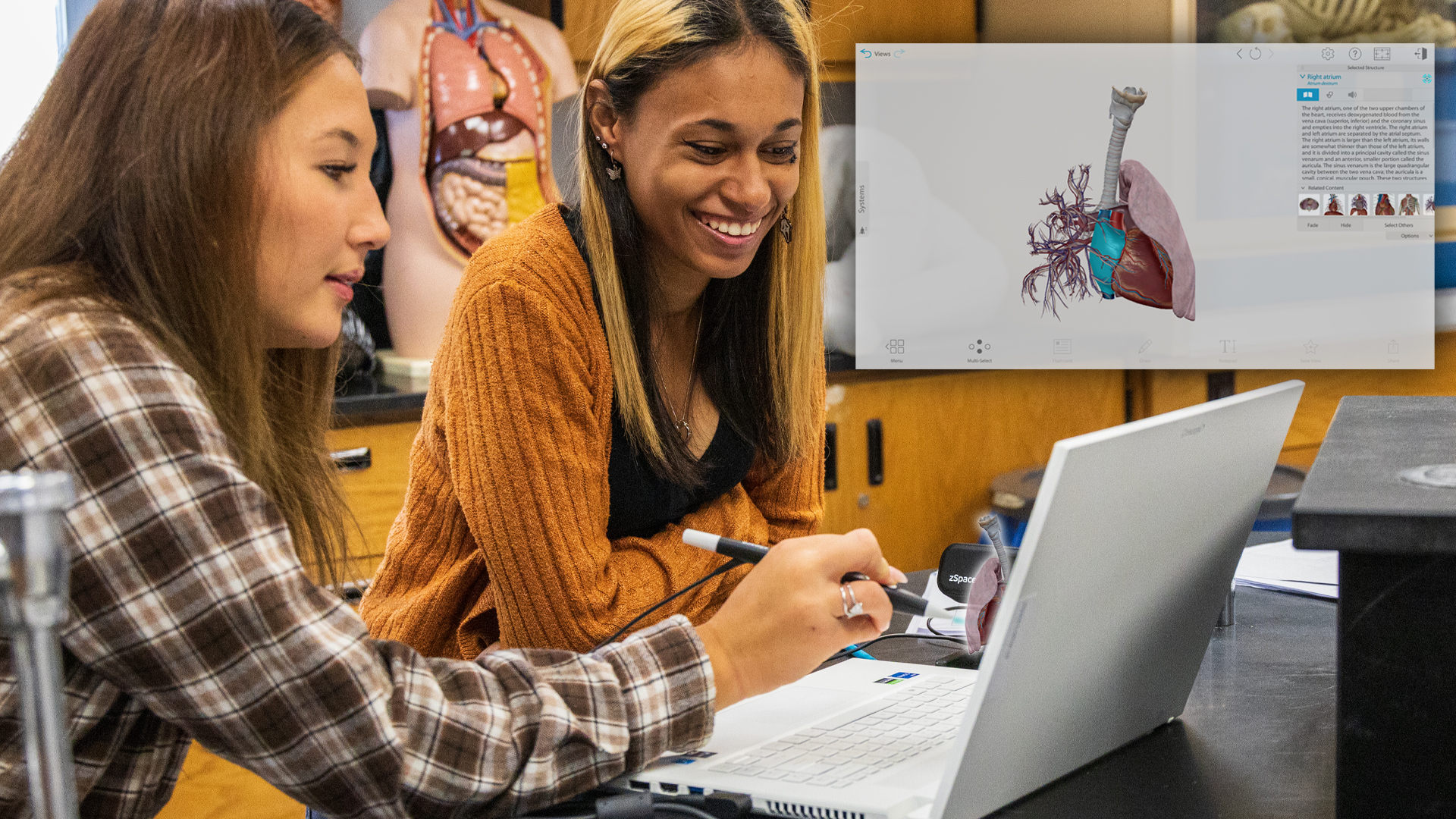
Alongside those tools are 3D printers and a multitude of augmented and virtual reality (AR/VR) equipment. This includes an Anatomage Table, which allows students to simulate dissections, and the Oculus headset VR system. The students also use laptops from zSpace. Using a combination of augmented and virtual reality and 3D visualization, students explore complex concepts and ideas in a new way.

Augmented and virtual reality have been shown to boost academic performance.

Research shows students using zSpace achieve gains averaging a 16% improvement (pre-/post-test) in elementary, middle and high school courses (Hite et al., 2019). Using AR and VR also improves skills essential for the 21st century workforce, such as critical thinking, persistence, resilience and grit (Parlier, 2020).

An increase in performance and skills is part of the appeal of VR. But Sanjay Bhan, CTE coordinator at the CIC, has seen firsthand how technology can help motivation and excitement blossom as well. “The CIC allows students to explore diverse career opportunities and get them thinking about what they’re interested in and what they might be passionate about, that they didn’t know about previously,” Bhun said. “Our hope is to continue to expose them to new things.”

zSpace at the CIC

zSpace was the first augmented and virtual reality partner of NOCTI. And today they offer pathways that can help students earn up to 33 industry credentials. The content and lessons were just a few of the reasons the CIC chose zSpace as an AR/VR partner. zSpace offers several different immersive learning devices, including the newly released Inspire, which allows users to view and manipulate 3D content without a head-mounted display.

The students at the CIC learn with easy-to-use, all-in-one VR/AR laptops that include lightweight eyewear and styluses. They use their devices to explore health science, manufacturing, agriculture and robotics. With the stylus, learners can pick up a virtual item, manipulate it, zoom in, zoom out and blow it apart. Users can dissect a whale. Or they might take apart an airplane engine — experiences that would be impossible to recreate in a classroom.

“I got an opportunity to pick up a heart and go inside of it,” said Demitria Etche.garay, a teacher in Stanislaus County. “It makes me excited to bring this to my students because, frankly, they want to learn. This is going to spark their interest and give them that hope they need to go out into the world and get jobs.”

Other immersive learning activities include:

  • Building virtual circuit boards while learning about the principles of low-voltage electrical appliances
  • Using lifelike models to examine dental structures and perform procedures
  • Engaging students in electrical, hydraulic, mechanical and pneumatic principles with advanced industrial robotics activities


As with all augmented and virtual reality solutions, these activities do not replace real-life, hands-on learning. But they do provide many advantages, such as allowing students to practice in safe, low-stakes environments. Students also can work with virtual equipment that would be too large or too expensive otherwise. AR and VR tools do require an investment. But they are often far less costly than real equipment and live experiments.

Leaders in the next generation of work

By using AR and VR in their learning environments, students gain more than specific subject knowledge. AR and VR are expected to become a major part of the work environment itself. Virtual surgeries, remote design visualizations in manufacturing and immersive gaming experiences. These are just a few of the real-life examples already happening today. Companies like Delta and IKEA use AR and VR technologies. By learning within VR and AR, students can start to prepare themselves for the workforce.

Staff at the CIC encourage all partner districts to visit and engage in activities that supplement what students are learning in the classroom. Students get the opportunity to try new things. And they can experience how aspects of different industries overlap and intersect.“This is a great opportunity for all Stanislaus County students,” said Bhun.


zSpace offers several different immersive learning devices, including the newly released Inspire, which allows users to view and manipulate 3D content without a head-mounted display.

Read more in Techniques.

Increasing access to culinary arts education

With an aging population of tradespeople and a shrinking number of new entrants to replace them, nearly every skilled trade is facing a gap between the volume of work to be done and enough workers to meet that need. And the COVID-19 pandemic only exacerbated this problem. In fact, a recent report from Angi (formerly Angie’s List) found that most believe the labor shortage is getting worse.

The truth is, while as many as 85% of young people know that the trades can be good career options, many fewer have considered such careers for themselves. Career and technical education (CTE) programs offer the training necessary for entry into these jobs, but what else can they do? How can educators propel students toward careers in the skilled trades?

Account for the reasons why.

Lack of access is a significant barrier for many young people. They may not be able to afford to delay their careers for several years while they get their education. Solutions-oriented educators (and employers) must meet people where they are and help them forge pathways to fulfilling careers.

Consider, for example, tuition assistance programs. Employers providing some form of tuition assistance is nothing new. But often, these arrangements involve paying for employees’ graduate degrees. Tradespeople have often been left out of this narrative, either learning on the job or completing apprenticeship programs. And while this hands-on education is absolutely valuable, additional classroom learning can infuse the “why” behind the “how.” Creating partnerships to support prospective CTE students with tuition assistance can help meet the unique needs of all.

Offer flexible learning opportunities in culinary arts.

Auguste Escoffier School of Culinary Arts was an early innovator in online education, pioneering one of the first 100% online culinary programs paired with in-person industry externships. Students can complete their programs from their home kitchens to establish the fundamentals. Then they carry these new skills into a professional
kitchen environment.

Culinary industry stakeholders must attract interested candidates and provide a path for them to get the skills and work experience they need to grow and be competitive. This is the goal of Escoffier’s Work >amp; Learn apprenticeship program. The school partners with restaurants, bakeries and other foodservice businesses to create growth opportunities for students and their employers in several related pathways:

  • Culinary arts
  • Baking and pastry
  • Plant-based culinary arts
  • Hospitality and restaurant operations management


Denise Sullivan, vice president of enterprise solutions at Escoffier, explained the approach further. “Career seekers want to start more lucrative careers or advance their current careers,” she said. “They need employer support to help them identify and prepare for those opportunities. Programs like Work >amp; Learn help employees develop knowledge, skills and behaviors that bring full competence to their roles.”

Meet employers where they are.

Part of the program’s success comes from providing flexibility to employers. While Escoffier offers a variety of curricula, employer partners can choose which programs they want to support. A vegan restaurant, for example, may only participate in Work >amp; Learn for the plant-based culinary arts program. Also, they can choose to allow students to work toward a degree or diploma, at their discretion. Some employers aim for a zero-debt program, providing their own tuition assistance and helping students to source scholarships — in addition to a scholarship provided by Escoffier. And, in some instances, this may eliminate a student’s need for loans.

“Hospitality, restaurant and service companies are all vying for the same culinary talent,” said Sullivan. “Companies who embrace continuing education are seeing positive results.”

Tim Condon, chef and owner at the Angry Cactus in San Angelo, Texas, is so invested in this partnership! In fact, he is planning to add a dedicated educational kitchen to his restaurant where up to 12 students can work on their culinary arts program. Online education is uniquely positioned to foster partnerships with business owners like Condon.

Of course, we know that not all schools offer online education. And many pathways in CTE are difficult to teach in an online format. That was the common belief in the culinary industry, until Escoffier led the way.

Work closely with employer partners; maybe even ask if the employer can provide some of the necessary training. Educators must be flexible to meet the unique needs of their industry to attract employers and students. By shifting focus out of the classroom and into the workforce, educators can help people improve their skills and help to fill the shortages facing the trades.


Auguste Escoffier School of Culinary Arts offers both online and on-campus programs in culinary arts, baking and pastry, hospitality and restaurant operations management, and more.

Read more in Techniques.

Influence policymakers at NPS

Engage policymakers at National Policy SeminarJoin CTE professionals from across the nation at ACTE’s National Policy Seminar (NPS) to voice your vision on key education policy topics.


Engage policymakers on key CTE issues

Attendees will also learn about best practices for influencing federal policy, related to CTE advocacy and messaging. NPS 2023 happens in Arlington, Virginia, March 19–22.

Learn more and register to attend.

“What is the purpose of NASA?”

The student video challenge returns! ACTE, host of CTE Month, and NASA HUNCH are excited to collaborate once again.

Enter the 2022–23 student video challenge!

The contest engages students to showcase CTE and project-based learning programs in high-demand career fields on Earth and in space. This year’s theme: “What Is the Purpose of NASA?” Interested students should feature CTE pathways, courses, and careers of the future to fuel and cultivate NASA’s future missions.

Image depicts the logos of CTE Month (with text including Celebrate Today, Own Tomorrow!) and NASA HUNCH, promoting the student video challenge

Submit a two-minute video by April 1.

# # # # # #