A Resource for Understanding Character Traits

A large part of leadership is understanding, reflecting on and enhancing your personal character traits, as well as those of your employees and potential leaders
within your organization. Aligning jobs, tasks and goals to dominate character traits can help an individual or organization become more productive and successful. Alternately, aligning professional development opportunities to less prominent traits will help develop well rounded leaders and employees.

Providing information and resources for the development of character traits is the mission of the Via Institute. “The VIA Institute on Character is a non-profit organization dedicated to bringing the science of character strengths to the world through supporting research, creating and validating surveys of character, and developing practical tools for individuals and practitioners.”

Through the VIA institute website, leaders can take a survey that will rank and describe the character traits that they exhibit. Survey participants will receive a report with descriptions of each trait. The website then provides a deeper look at each trait which includes identifying the key concepts that support the trait, ascribing a motto to the trait and offering suggestions to practice/develop the trait. Additional research regarding how character traits can be used for personal and professional growth, a variety of tools and resources and links to online courses can also be found on their website.

These materials align with the research and recommendations of writers such as John Maxwell, Shawn Achor and Kim Cameron and can be a beneficial addition to the professional development of current and prospective leaders.

>nbsp;

Resources:

https://www.viacharacter.org/nas/content/live/acteonline/Character-Strengths-Survey

http://www.actionforhappiness.org/media/52486/340_ways_to_use_character_strengths.pdf

Preparing for the Road Ahead

What a wonderful time to be in CTE! We as educators have the opportunity to prepare students for the future. It can be exciting and scary at the same time. Barnett Kristy I have the pleasure of working with students with disabilities.  This means that the student has qualified under the Individuals with Disabilities Education Improvement Act (IDEA), under Section 504, or ADA.  Too many people see the “dis” in disability instead of the word “ability.” People with disabilities are the same as non-disabled people because they have individual abilities, interests, ideas, and needs also.

We get the opportunity to level the playing field and eliminate barriers in CTE for students with disabilities.  The most important thing we do for students with disabilities is to prepare them with a skillset that they can take with them into the workforce.  At Great Plains Technology Center, Lawton, Oklahoma we have students with disabilities enrolled in every career major offered. We are preparing individuals for success in work and life so that they can provide better opportunities for their families.

We help to prepare students by getting them on a career plan by using OK Career guide www.okcareerguide.com which helps them to explore and guide their future.  Students with disabilities are connected with various resources to assist with future employment.  Students are able to apply for internship programs, apprenticeships, are connected with transition programs, and Vocational Rehabilitation services.

It is a group effort to bring all parties to the table to benefit students with disabilities.  It is rewarding to see students that were lacking confidence and had low self-esteem be determined to receive training and knowledge pertaining to their specified skillset.  So are we preparing students for the road ahead? Yes, yes we are!! So again, it is a wonderful time in CTE to be able to train the future workforce for all students including those students with disabilities.

The Art of Listening

The end of the school year is rapidly approaching, which means the midway point of the 2018 ACTE Fellowship is on the horizon.  It has been an amazing experience
so far!  Each month, our Fellowship group meets online and we discuss multiple topics related to the profession of career >amp; technical education.  One of our requirements is to read leadership books and engage in chapter discussions.  During our last monthly Fellows meeting, another colleague was covering a chapter in John C. Maxwell’s “The Leadership Handbook:  26 Critical Lessons Every Leader Needs” book.  The name of the chapter was titled, “The Best Leaders are Listeners,” and it occured to me just how important the skill of listening has been in my professional career!

I currently serve as an administrator in a comprehensive high school and I find that I use my listening skills often.  I previously served as a high school counselor before entering my administrative journey and my graduate coursework in school counseling prepared me to succeed in both roles.  Regarding quality listening skills, I relate well to Stephen Covey’s book “7 Habits of Highly Effective People,” which mentions that people should “seek first to understand” when engaging in communication.  I enjoyed reading Covey’s book, especially this piece, and I have often looked at this particular habit, which is posted in my office as a reminder to reflect upon.

In Maxwell’s book, he states that leaders are more effective if they possess excellent listening skills.  When you listen well, you can learn a lot about people and start to forge solid relationships.  Listening also helps you learn about a person’s concerns.  Many times, I have had parents enter my office and I take time to genuinely understand their issues.  More often than not, listening skills, along with validating thoughts, have helped me quickly diffuse situations with parents.  This same skill set has also helped me effectively work with students and staff members.

In closing, Maxwell quotes in his book that Author Jim Rohn says, “One of the greatest gifts you can give anyone is the gift of attention.”  I couldn’t agree more!  Listening has  helped me earn trust with people in my building and it keeps problems from turning into bigger situations!  As a takeaway, I plan to use Maxwell’s advice and write an “L” on my notepad in future meetings, as it’s a good reminder to focus on listening when communicating with others.

Elementary and Middle School Career Development

It is very important to start career exploration at an early age for students to start thinking about career development. The conversations need to happen to get students career ready so that they are able to attain educational achievements and performance levels needed to reach personal and career goals. Career development gets the wheels turning in students minds so that they can start putting a plan in place for their future.
At Great Plains Technology Center-Lawton, Oklahoma career development starts at our Technology Center in the fifth grade. Fifth grade students attend a career development program called Discovery Zone. The purpose of Discovery Zone is for fifth grade students to start thinking about career exploration and awareness. The students are provided with hands-on activities and rotate through different career major modules that are offered at Great Plains Technology Center.

In the eighth grade, students attend Tech Know Zone. Tech Know Zone provides eighth grade students the opportunity to get hands-on knowledge regarding traditional and non-traditional career fields. Eighth grade is a crucial time because middle school students are transitioning into high school. Tech Know Zone allows for students to have more knowledge of programs offered so that the student can make an informed decision pertaining to their four year individual career academic plan.
Another career development opportunity offered at the middle school level is the Career Connection camp which is a two week, all day, camp offered to sixth through eighth grade students. Career Connections is an opportunity for middle school students to experience some of the exciting hands-on educational experiences offered to high school students at Great Plains Technology Center.

In order to get students career ready it is best if career development starts at an early age. At Great Plains Technology Center, we are able to see our hard work pay off because the students that attended Discovery Zone, Tech Know Zone, and Career Connections camp have become our high school students and enrollment and retention has increased! By implementing these opportunities to elementary and middle school students we are able to provide individuals with the training and skills necessary at the high school level for students to be successful and competitive in the workforce.

Top Notch Teachers

Recent studies have shown that less than one out of three U.S. workers feel that they receive adequate recognition or praise for their work. Further, the two out of three that don’t feel adequately recognized are twice as likely to leave their job within the next year.

Early this school year, I read these statistics about employee recognition and it led me to ask this question: Are we doing enough to let the amazing group of CTE teachers that we have at Hays CISD know that we see the effort they are putting into their work and that we appreciate what they add to our department? My honest answer to the question was “No”, and I began to search for a way that we could highlight the good things that happen every day within our programs.

My research and conversation with our CTE leadership team led to the creation of a weekly “Top Notch Teachers” email which goes out every Wednesday morning to all of the CTE teachers at our two district high schools. Putting the email together is truly a team effort, as the CTE Instructional Coach, Internship Coordinator, Bookkeeper, and I each set aside time on Tuesday afternoon to select at least one teacher from each campus and write a paragraph or two detailing what those teachers have done that was deserving of recognition. To ensure that we don’t leave any teachers out, we maintain a shared Google Sheet with all of our teacher’s names and the dates which they were recognized in “Top Notch Teachers.” The first Top Notch Teachers recognition email went out to our teaching staff on December 6. Many of the teachers in our department responded by congratulating their colleagues and reaching out to me to say thank you for recognizing the work that they and their peers were doing in the classroom.

What we have experienced in the months since we began the weekly Top Notch Teachers recognition is that the recognition teachers have received motivates them, gives them a sense of accomplishment, and helps to make them feel valued for their work. In addition to motivating those teachers who are highlighted in each week’s email, Top Notch Teachers provides incentive and ideas to other teachers on how they can be more successful in their classrooms. The act of putting the spotlight on those who are excelling reinforces the culture of excellence that we are building in our programs and has led to teachers collaborating with one another to enhance the learning environment for our students.

>nbsp;

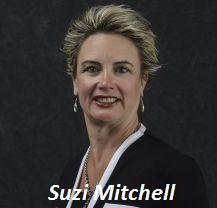
Suzi Mitchell

CTE Director

Hays CISD

Career Pathways and Dreams: Necessary and Sufficient for Success and Told in the Words of Career and Education Graduates

In preparation for my presentation at the NYS Joint Career and Technical Educator conference in late June, I am struggling to express to my audience, in words, the gratitude that
our students had for CTE education in our CTE Medical Laboratory and Assisting Program. Over twenty years and 1000 graduates, we constantly revised the health care curriculum, committed ourselves to incorporate, at least, one activity or idea from every national and regional ACTE professional development meeting which we attended, and collaborated
diligently with our university and business partners which included: CUNY at the College of Staten Island and Hunter College, SUNY at Cobleskill and Rutgers University at Newark and
Bio-Rad Explorer Program (Biotechnology).

The program outcomes are phenomenal because we undertook the planning and development of our program according to the Career Pathway model first articulated for us by NYSED Commissioner Mills and CTE Director Jean Stevens in 1998. In 2002, our program was one of three CTE sequences from an NYC comprehensive schools which was featured in the
“Tools for Schools “series to roll out NYSED plans. Recently, Dr. Han Meeder (2016) has provided the blueprint for crafting a program of study (POS) that leads to a learning, growth
mindset and success in future careers, entitled: “ The Power and Promise of Pathways. How to Prepare All American Students for Career and Life Success. I can attest to the success
career pathways model because I met so many students after their college graduation and at their jobs who embodied the criteria for success that Hans described:”whatever the mix of
strategies employed, the end game is for students to internalize knowledge, and develop the creativity, problem-framing and problem-solving skills so the challenges of the real world” are
conquered and owned by the student. The career pathway model has instilled these qualities in every CTE graduate whom I met in recent years.

However, I realized that I described only half the formula for success of our students. I take inspiration from Dr. Randy Pausch’s “The Last Lecture” which I recently re-read to
encourage my son at his 8th-grade graduation this June. Randy’s lecture is about “Really Achieving Your Childhood Dreams”, and the influence of vital teachers/mentors who
revitalizes ,as noted by Joseph Campbell, and enables others to dream. CTE programs are not offering a parchment and evidence of approval by Trustees in the college-for-all stampede, but
cultivating mastery of skills and validation of childhood dreams of empowerment and career success. Education cannot be reformed only by pedagogical methods and behavioral
management techniques. CTE resonates and inspires students to conquer the real world constantly. Randy dreamed as a child to be an Imagineer for Disney; he did that through his
educational experiences and enabled by his mentors. Then he created a coding program, Alice, which will enable millions to follow and exceed his dreams. CTE teachers love what they
do and do that within an academic framework of career pathways by sparking a creative imagination from childhood dreams.

Because we were the same age, I am sure that Randy watched every Sunday night the Disney hour with Walt himself, and “dreamed upon a star”. I know Randy believed also, as I did, in
JFK’s career challenge . President Kennedy challenged us to go to the moon and do these things “not because they are easy, but because they are hard and the goal will serve to
organize and measure the best of our energies and skills” (JFK, 9/12/62) of our dreams. When you connect with students’ dreams through CTE, students are connected to education and
committed for life as a learners who master skills as opposed to accumulating degrees.

Let me tell you in my students own words. I choose the emails that the following students sent
to me because they contacted me several times over many years after graduation as they were reflecting upon their CTE experience.

Dateline: 3/22/07 from Michael S. who graduated from the CTE Medical Laboratory and Assisting Program in 2005“

Dear Dr. Marraccino:

I wanted to thank you for everything with the Med-Tech Program. Because of my
experiences in your class I was able to due better than almost everybody else in my Biology courses. I also have a job in a cancer research lab and I am presenting the research to the
northeast region meeting of BBB national biological honor society on Saturday. I just want to thank you for all of the insight into college biology. ( I even have a 3.92 major GPA. I hope the
program is still going well.”

Mike did well because he graduated from Monmouth University in 2009 and had several interviews to medical school. He was able as a Freshman to get into a laboratory and publish two papers as an undergraduate because he demonstrated, early in his undergraduate career, a mastery of basic microbiology and biotechnology techniques from the CTE laboratory in high school. Moreover, Mike nominated me for an award from the Roberts’ Foundation and Trustees of the University: Outstanding Secondary School Teacher who most influenced him
and helped in his career success.

Mike later wrote in 2009 in an e-mail: “ he (Dr. Marraccino) was able to engage his whole class
in active learning… I feel that I will never have made it this far without my good grades and research skills, which all stem back to Dr. Marraccino.’’ I will like to correct Mike this one time;
it all stem back to CTE career pathway.

Greg D. tells a different story in his three e-mails because he learned confidence to succeed.
Dateline: 8/30/2009:“hey doc, it Greg from last year. I wanted to say im. like a week and half into bio201 and chem201 and combined they cover every singled that we did in your class. i
wanted to say thanks because the syllabi contains so much familiar stuff……” Dateline: July 13/2013: “hello Dr. Marraccino, this is Greg…I saw you the other day in the hospital..after graduating…
went to sync new waltz for 4 years and majored in molecular bio and a minor in anthropology, took mcat 2 times went from pretty bad to pretty well and was accepted to NYIT college of
osteopathic medicine….”Dateline: 12/16/16:“…I graduate medical school in May….Thank you so much……Your program, it was one of the biggest factor of why I’m here today. I am very thankful for that

On the last of school in high school, Greg asked me if he could be a doctor because he never felt encouraged by his family to go down that career pathway. ”Could?” I said. You can be the
“little -train- that -could” – a book I often read in class to encourage my CTE students. Greg represents a “trajectory through projection” into a career that characterizes a learning growth
mind set.

Finally, Jill C. contacted me through “Linkedin” after graduating fourteen years ago from the CTE program and Jill represents to me the quintessential CTE student who is ever striving
and achieving. Jill’s published motto is: “ Learn it as many times as you need to” and she has and blossomed into her new career in nursing. Jill attained a four year biology degree but
focused on the clinical laboratory practices which we stress in the first half of our CTE sequence, worked in clinical laboratories and then went back to nursing school and as of 11:13
AM on 5/4/18: “ Hey Dr. M Passed my final;) officially graduating nursing school.” and she received an award of academic excellence for the highest GPA from Union County College,
Trinitas School. Wow! Jill demonstrated a fourteen year commitment to a learning growth mindset of “confidence through success.”

I believe that an educational model that enables students to attain a learning, growth mindset produces the most successful outcomes in academic achievement and career success. The
concept of a growth mindset is derived from the research of Dr. C. Dweck (2006). “ People who believe that their future is fixed, fail to change their future. Those of a growth mindset believe
that educational opportunities can change their trajectory into the future. “ This belief, growth mindset necessary for students to benefit from any educational experience, but a framework
of a CTE career pathway is also necessary and sufficient for students to achieve their goals, just ask: Mike, Jill, or Greg.
Need help with instructional strategies? There’s a coach for that!

As the perception of Career and Technology Education (CTE) changes across the country and communities and school districts see the importance of these programs to students, industry, and communities, the number of teachers required to staff our programs is growing too fast for traditional teacher education programs to keep up. In order to meet the demand for teachers, many states have adopted alternative teacher certification programs for those in industry that are interested in changing careers and becoming teachers. As a result, more and more CTE positions are being filled with individuals that are content experts who are motivated to become great educators, but lack the experience and pedagogical training to get there on their own.

At Hays Consolidated Independent School District (Hays CISD), we are fortunate to have a number of teachers who have left careers in the field to join us in providing quality education for our students. Over the years, we have hired professionals from Audio/Video Production, Automotive Technology, Biomedicine, Commercial Photography, Computer Science, Cosmetology, Criminal Justice, Culinary Arts, Engineering, Graphic Design and Health Science and have helped them to assimilate into the classroom. Our experience has shown that despite the training and assistance alternative certification programs provide, taking the knowledge that one possesses for the workplace and transferring that knowledge to a classroom full of high school students is a considerable challenge. We began to look at ways we could assist teachers in that transition through existing programs in our district and had some success using Mentor Teachers, but realized we were asking those teachers to take time away from their own classroom preparation which wasn’t fair to them or their students.

In our quest to find a solution, we looked to the core courses to see what they were doing to provide support to their teachers. Our district, like many others throughout the country, utilized Instructional Coaches for each of the core subject areas, but not for any of the elective areas. For those of you not familiar with instructional coaches, I will use the words of Jim Knight, the foremost expert on the role of instructional coaches, to help you understand the position. According to Knight,

Instructional coaches partner with teachers to help them improve teaching and learning so students are more successful. To do this, ICs collaborate with teachers to get a clear picture of current reality, identify goals, pick teaching strategies to meet the goals, monitor progress, and problem solve until the goals are met. We define instructional coaching as follows: “Instructional coaches partner with teachers to analyze current reality, set goals, identify and explain teaching strategies to hit the goals, and provide support until the goals are met.”

After discussion with our district Curriculum and Instruction leaders, we decided that we would add a CTE District Instructional Coach position beginning with in the 2017-18 academic year. The person in this position is responsible for working with Hays CISD’s fifty plus CTE teachers housed on our two high school campuses to assist them in improving their pedagogical approach. This year, our Instructional Coach has developed training that was incorporated into our Professional Development days, has completed multiple classroom observations for each of our teachers and provided feedback to assist the teachers, has initiated mentoring sessions for all teachers new to Hays CISD, and has assisted numerous teachers on project and lesson plan ideas and implementation. Many of our teachers have been outspoken about how beneficial it is for them to have someone willing to help them as they work on creating lessons that will engage their students in the activity and lead them to deeper, more critical thinking as they study the material. So, as you look for ways to help those in your district that may be new to teaching, or to support those who are experienced but are motivated to keep improving, I would encourage you to consider the addition of an Instructional Coach to your CTE department.

>nbsp;

>nbsp;

Suzi Mitchell, Hays CISD CTE Director, and Rick Bough, Hays CISD CTE Instructional Coach

Hays CISD CTE – Leading The Way

At Hays Consolidated Independent School District, one of the fastest growing school districts in Texas, we are always looking for the partners and programs that
best prepare our students for success after high school. One such partnership began in 2001 and is not only going strong, but is actually growing as we approach the end of the 2017-18 academic year. In 2001, Hays CISD was one of the first schools outside of the state of New York to join the Project Lead The Way (PLTW) family, when we began offering PLTW Engineering classes to the students at Hays High School.

Eighteen years later, we still offer the PLTW Engineering program at Hays CISD. As their Engineering course offerings have increased and improved, we have grown with Project Lead The Way and now offer Introduction to Engineering Design, Principles of Engineering, Computer Integrated Manufacturing, Digital Electronics, and Engineering Design and Development at our district’s two, soon to be three, high school campuses. Our school board and administration support the program financially, purchasing both schools milling machines, laser cutters, robotic arms, VEX equipment, and top of the line 3-D printers to produce prototypes of student designs. Now students have a physical representation of their design concepts that can be shared with college recruiters and potential employers.

Over time, as our district developed a stronger working relationship with PLTW, we began to offer the Project Lead the Way Gateway program at all six of our district middle schools. Initially designed as support for the Engineering programs, these classes have expanded as Project Lead The Way has expanded into the areas of Computer Science and BioMedical Science. Students spend their middle school years exploring Engineering, Computer Science, and Biomedical Science related problems and are able to use the projects to determine what they are passionate about and how that relates to their future career options.

Our district’s strong belief in the value of Project-Based Learning led to the adoption of the PLTW Biomedical Science curriculum in 2013-14 and the addition of the Computer Science curriculum two years ago. This school year, we were selected as a PLTW Biomedical Science Showcase school and were able to share with other districts the benefits of the PLTW program. One benefit of the transition from a Health Science curriculum to the Biomedical Science that we were able to share at the showcase and at CTAT Winter conference in January is that, unlike Health Science, Biomedical Science does not require that the teacher have a professional medical certification in order to teach the course. That change has made finding teachers certified to teach courses for students interested in health careers a much simpler task. An added benefit to the switch to Biomedical Science has been an improvement in our student performance on the Certified Clinical Medical Assistant (CCMA) test that our fourth-year students take in May. This year is the first class we have had go through all four years of PLTW Biomedical Science and we have already seen a significant increase in raw scores and the passing rate over past years.  To date we have had eight biomedical seniors pass the CCMA exam this school year.

Just this year, we began offering the Project Lead The Way Launch program to students at several of our district’s elementary schools. Now students as young as Kindergarten have the opportunity to work on hands-on activities in a collaborative, problem-solving environment. Here, through discovery learning, they can develop creative solutions to problems and learning becomes fun! As you can see, I am a strong proponent of Project Lead The Way. If you are considering adding the PLTW curriculum to your district’s CTE offerings, feel free to contact me at Suzi.Mitchell@hayscisd.net. I would be happy to answer any questions you may have.

>nbsp;

>nbsp;

Suzi Mitchell

CTE Director

Hays CISD

Heating It Up in Hays CISD

What began as a suggestion from one of our community partners at the Hays CISD CTE Advisory Committee meeting in October of 2016 has become a
program that is life-changing for our present and future students.

As a result of our Emergency Medical Technician (EMT) program partnership with the Kyle Fire Department (KFD), we chose to hold our Fall 2016 Advisory Committee meeting in the KFD training room. KFD Fire Chief Kyle Taylor was in attendance along with numerous business and industry leaders from our community. When the discussion turned to what new programs committee members thought would be beneficial to our community, Chief Taylor spoke up and said that he would like to see us begin a Fire Academy. He knew many departments in the area, including his own, were having a difficult time filling open positions and believed that a Fire Academy would be beneficial to the department, our community, and our students. Chief Taylor offered to join with us to research existing Fire Academy programs and to work together in developing the Hays CISD Fire Academy.

A few weeks later, Chief Taylor and I, along with Capt. Freddy Rolon, the KFD Training Officer, visited LBJ High School in Austin, TX to observe the long-standing program they run in conjunction with the Austin Fire Department. Through that visit and conversations with other districts, Chief Taylor and Captain Rolon worked together to develop a list of equipment and materials that would need to be purchased in order to begin offering the program for our students. Hays CISD administration and the Board of Trustees approved the addition of the program in the early spring of 2017 and we began recruiting students to be a part of the inaugural class that fall.

After months of preparation, the program began in August of 2017 with eleven juniors, including nine from Hays High School and two from Lehman High School. Among the eleven students enrolled in the class were three female students from Hays High School. The Fire Academy meets for two class periods a day at Hays High School with additional training opportunities taking place at Kyle Fire Department and other training facilities throughout the greater Austin area. During their first year, cadets have completed CPR/AED certification, Community Emergency Response Team (CERT) training, four Federal Emergency Management Agency (FEMA) training modules, Traffic Incident Management System (TIMS), and Wild Land Firefighter training. In their second year, Fire Academy students will finish their Fire Fighter certifications in the Fall semester and will complete EMT certification in the Spring semester.

As our first cohort of students has moved through the program, our district’s relationship with the Kyle Fire Department has grown closer as we work together toward a common goal. In early 2017, the first of our EMT program graduates was hired at KFD and Captain Rolon has stated that there are students in our Fire Academy that he would hire today if he could. The Hays CISD Fire Academy program provides Chief Taylor, Captain Rolon, and their staff an opportunity to evaluate the skills of our students on a daily basis, essentially providing the students with a two-year long working interview. Soon, because a community partner spoke up and we listened, a young firefighter will be working alongside their brethren and serving our community.

>nbsp;

Suzi Mitchell

CTE Director

Hays CISD

# # # # # #